// diagrams
Architecture diagrams, ready to use.
29 diagrams, each explained in its own guide. Open any of them in archhy, change it, and make it yours. No account needed.
AWS
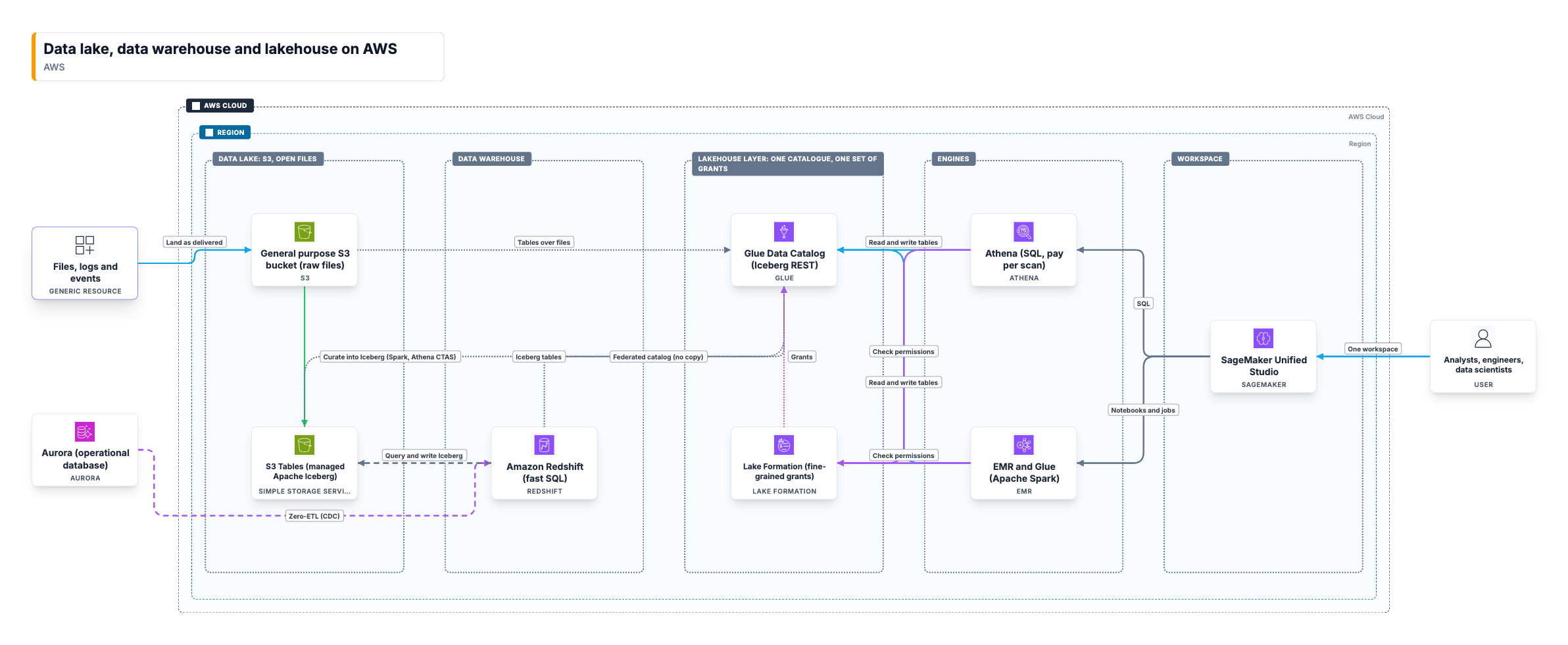 AWSData lake, data warehouse and lakehouse on AWSS3, Glue and Athena vs Amazon Redshift vs Apache Iceberg tables under one catalogue: what each is on AWS, where each fits in one diagram, and which to start with.
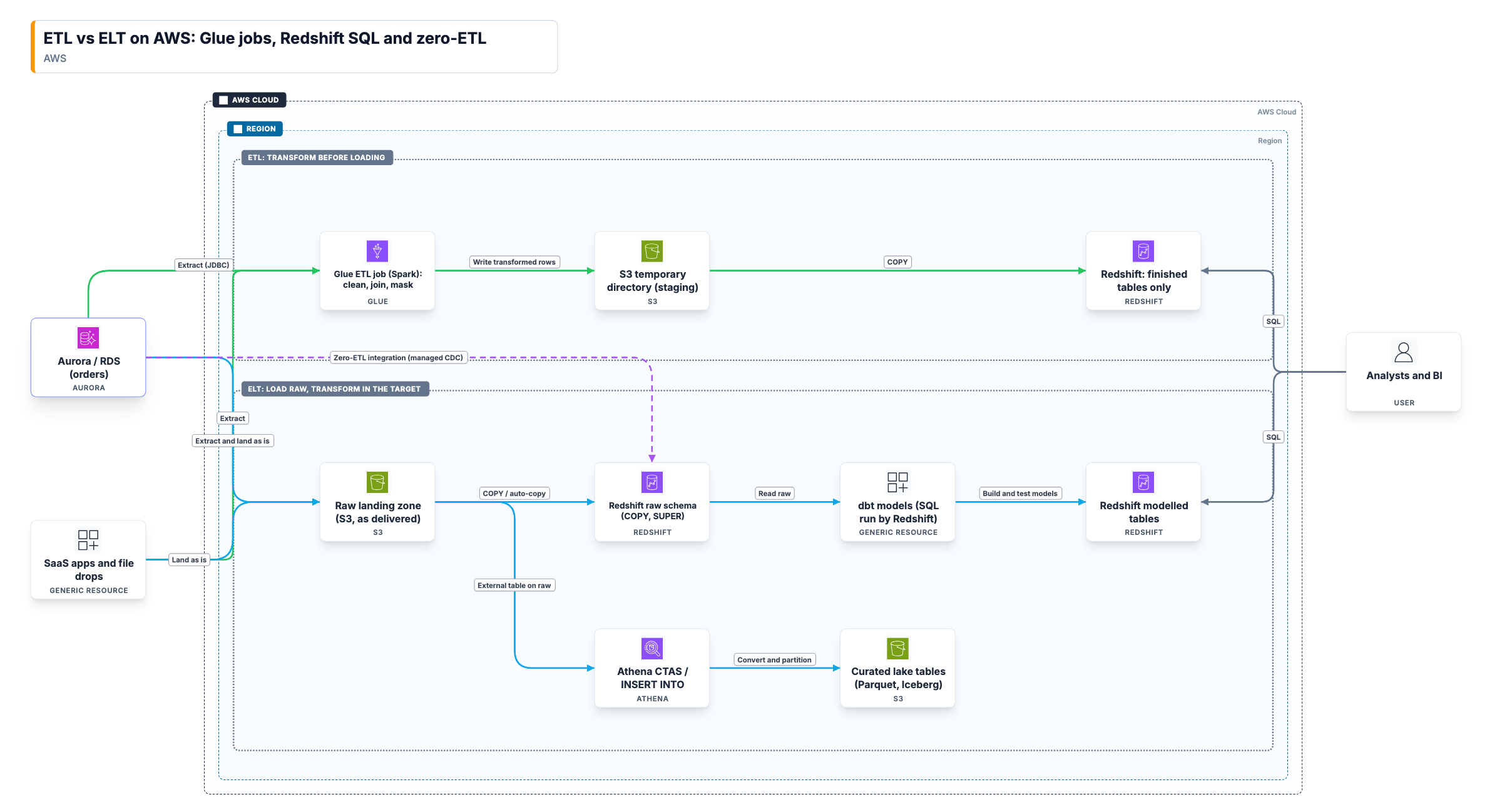 AWSETL vs ELT on AWS: Glue jobs, Redshift SQL and zero-ETLETL vs ELT on AWS, drawn side by side: Glue Spark jobs that transform before loading, raw loads transformed in Redshift or with Athena, and where zero-ETL fits.
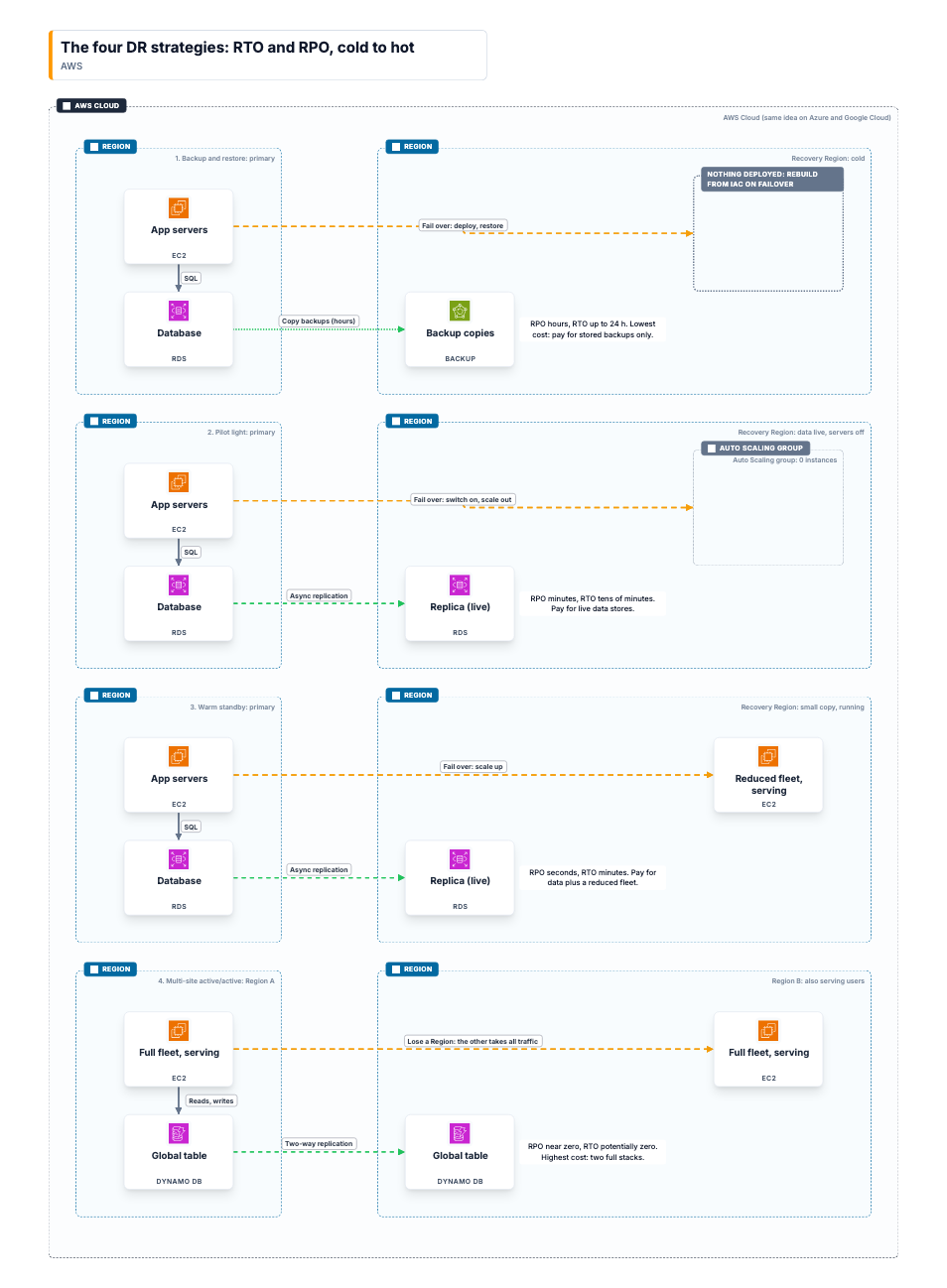 AWS · Azure · Google CloudThe four DR strategies: RTO and RPO, cold to hotWhat RTO and RPO mean, with a worked example, and the four disaster recovery strategies from backup and restore to active/active: what runs, what it costs, and how to choose.
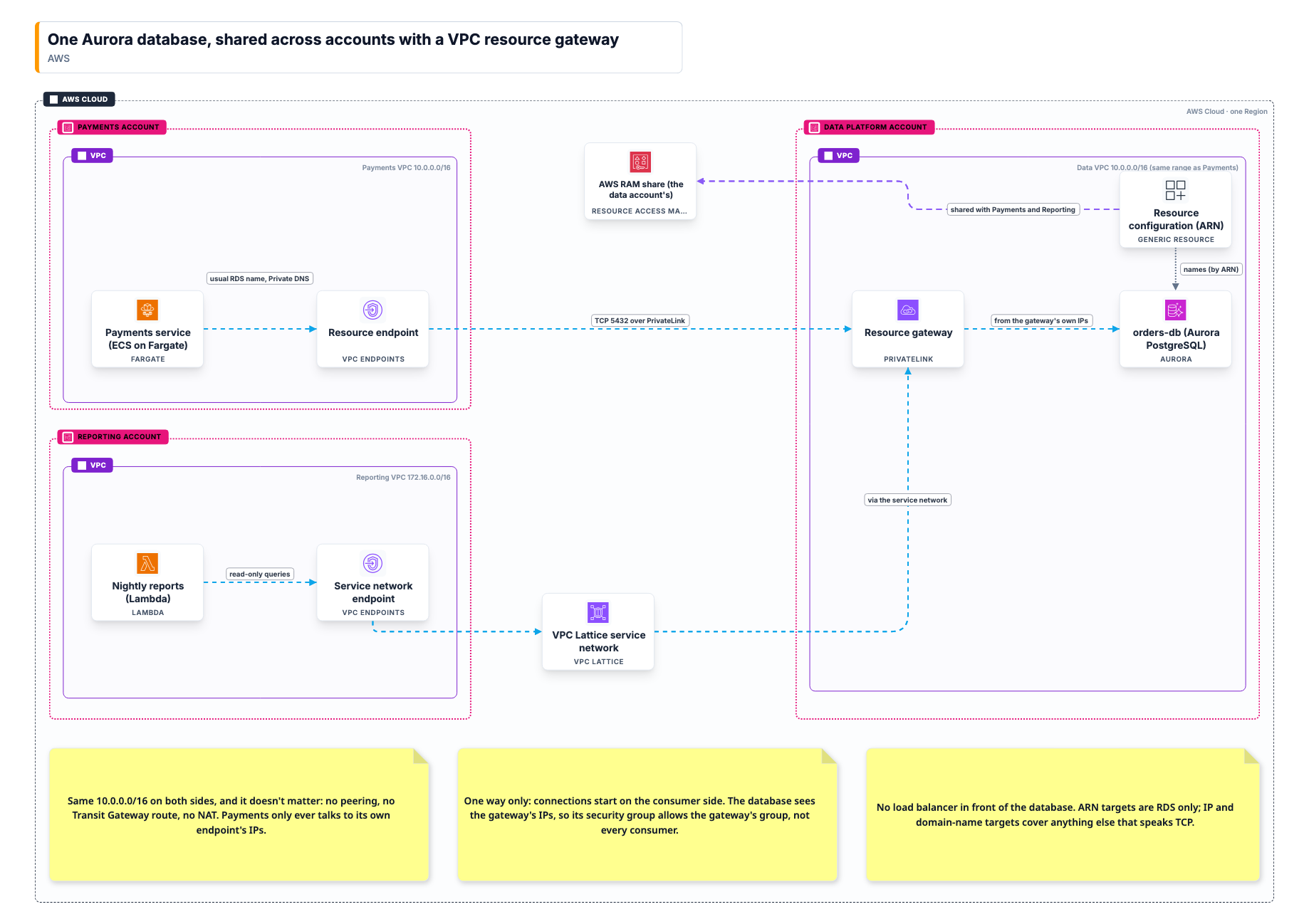 AWSOne Aurora database, shared across accounts with a VPC resource gatewayOne Aurora database reached from two AWS accounts, without VPC peering, a Transit Gateway or a load balancer: how resource gateways, resource configurations and resource endpoints fit together, even with overlapping CIDRs.
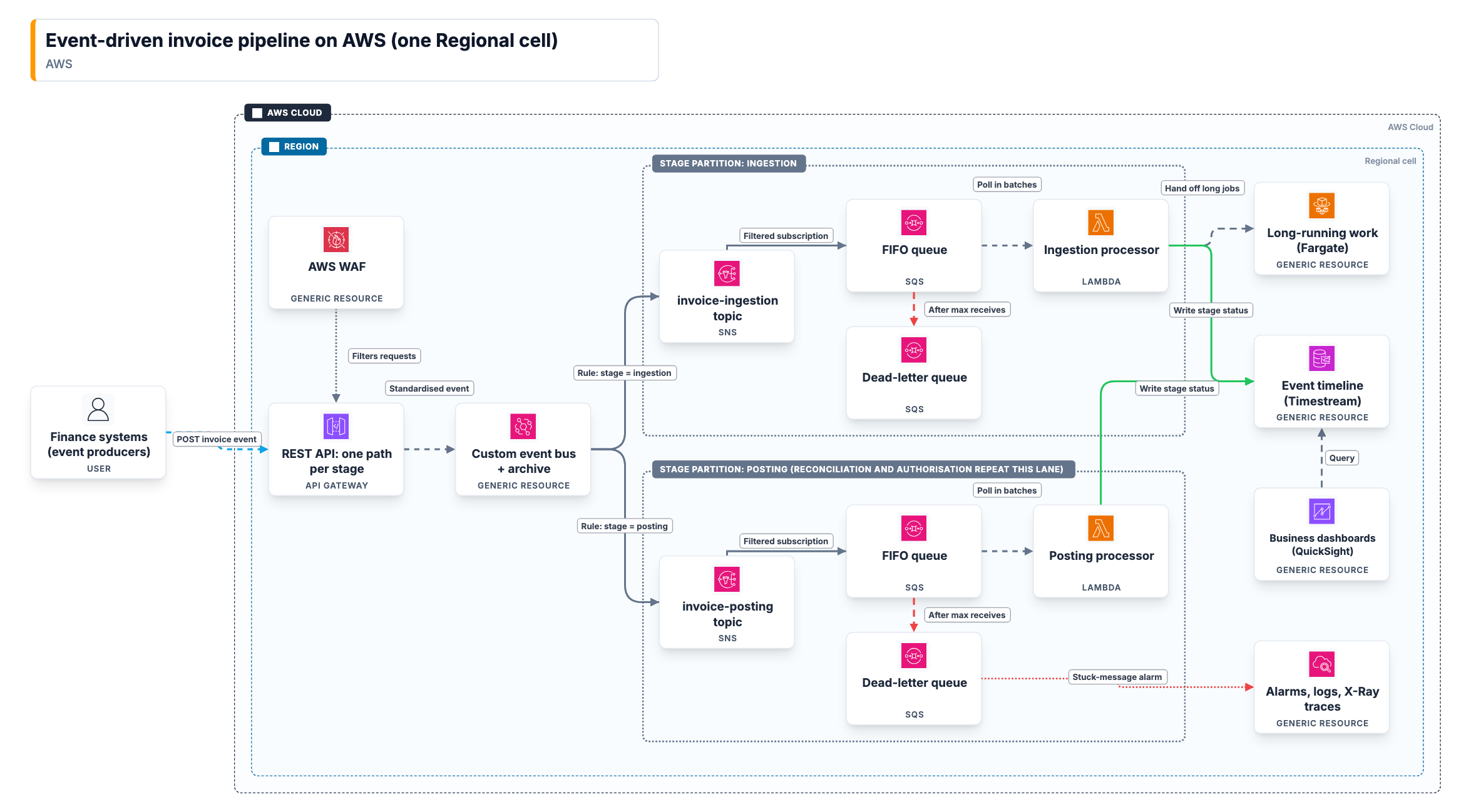 AWSEvent-driven invoice pipeline on AWS (one Regional cell)How an event-driven pipeline on AWS tracks every invoice through four stages with API Gateway, EventBridge, SNS, SQS and Lambda, and what to watch: duplicates, quotas and stuck messages.
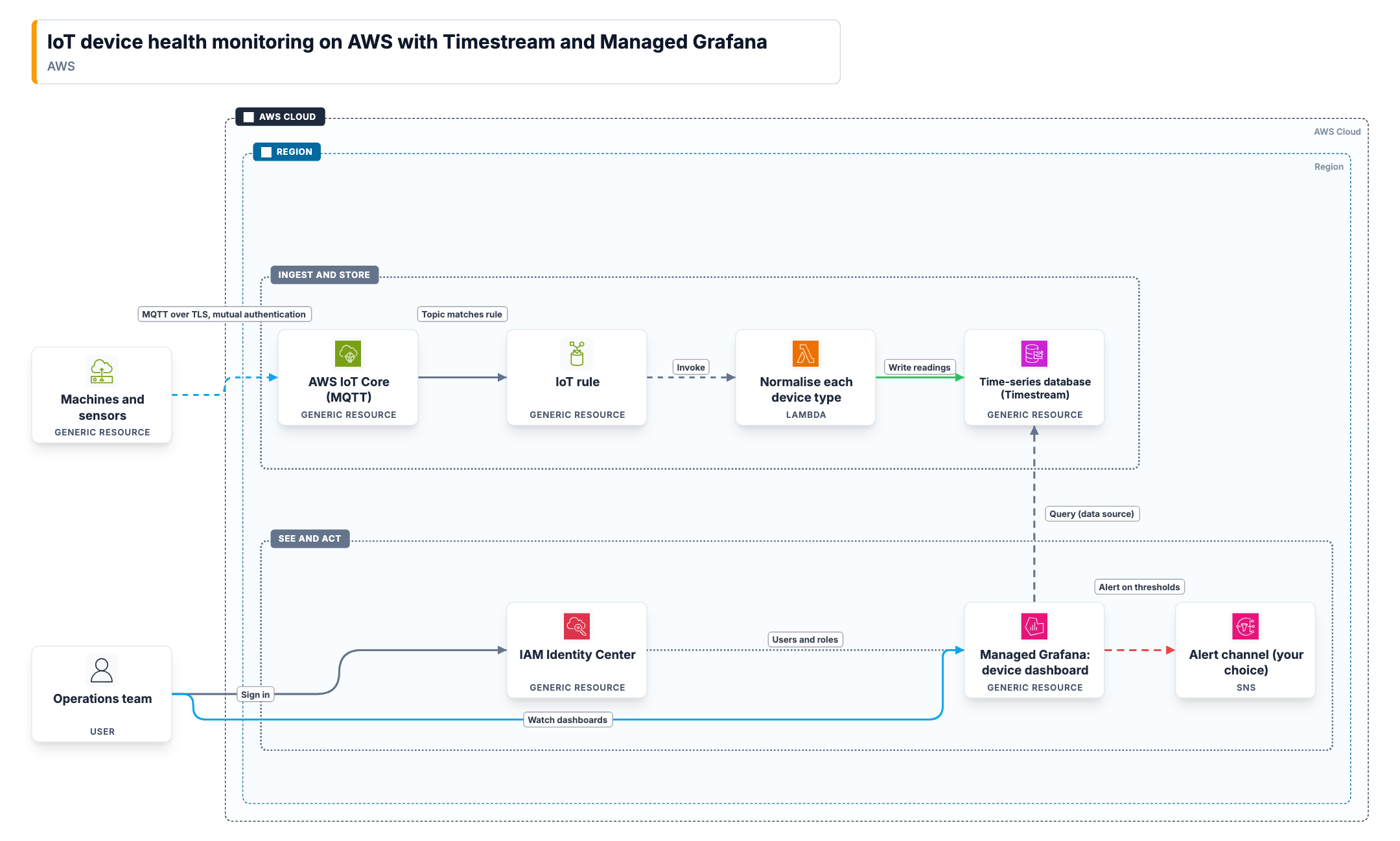 AWSIoT device health monitoring on AWS with Timestream and Managed GrafanaMonitor device health on AWS: devices to IoT Core over MQTT, a rule and a normalising Lambda, a time-series store and Managed Grafana dashboards, plus what changed for Timestream in 2025.
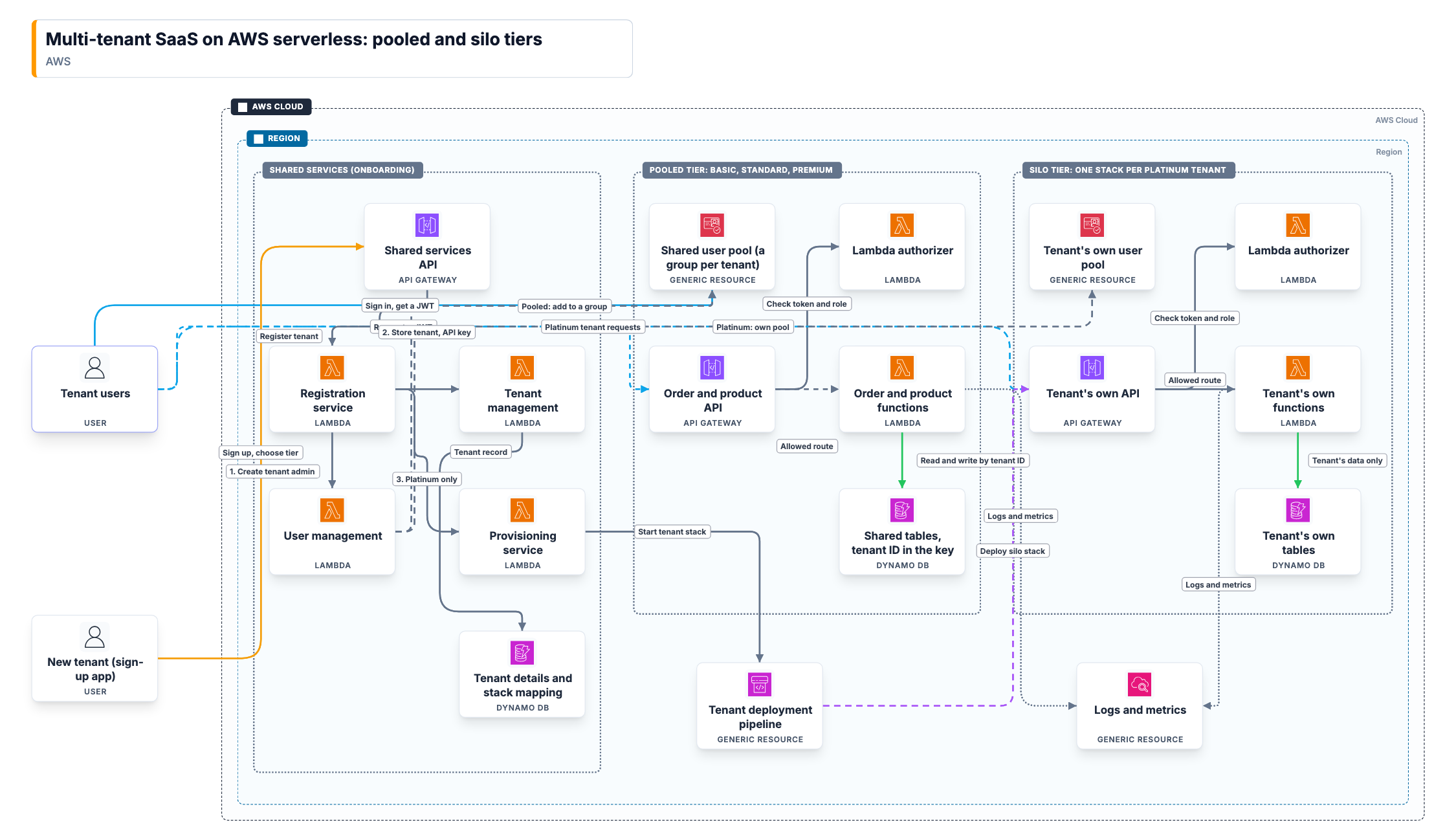 AWSMulti-tenant SaaS on AWS serverless: pooled and silo tiersA serverless multi-tenant SaaS design on AWS: a pooled tier on shared API Gateway, Lambda and DynamoDB, a silo tier for premium tenants, onboarding services, and how to keep tenants apart.
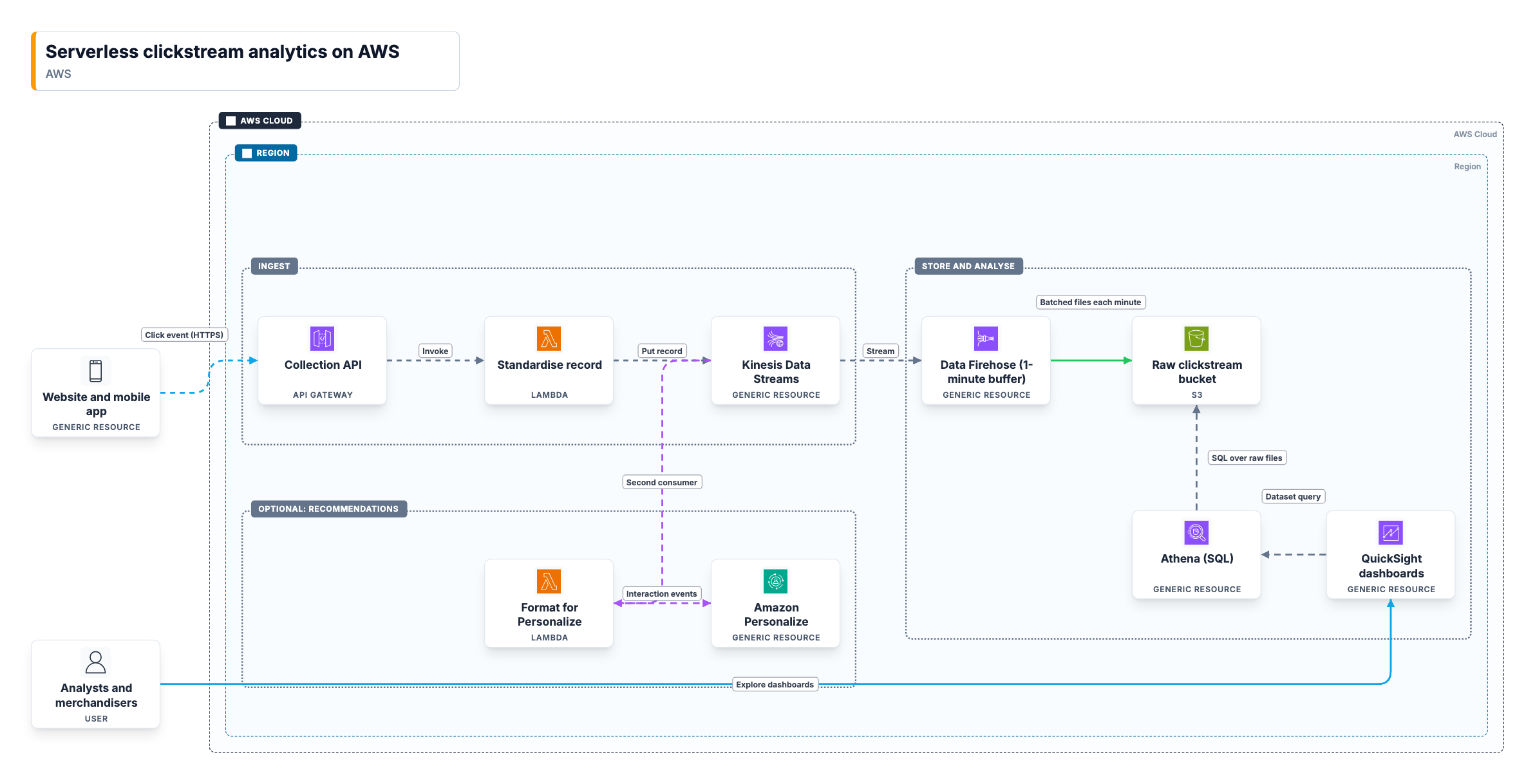 AWSServerless clickstream analytics on AWSOwn your clickstream: API Gateway and Lambda collect events, Kinesis and Firehose land them in S3, Athena and QuickSight answer questions. Why each piece is there and where the costs hide.
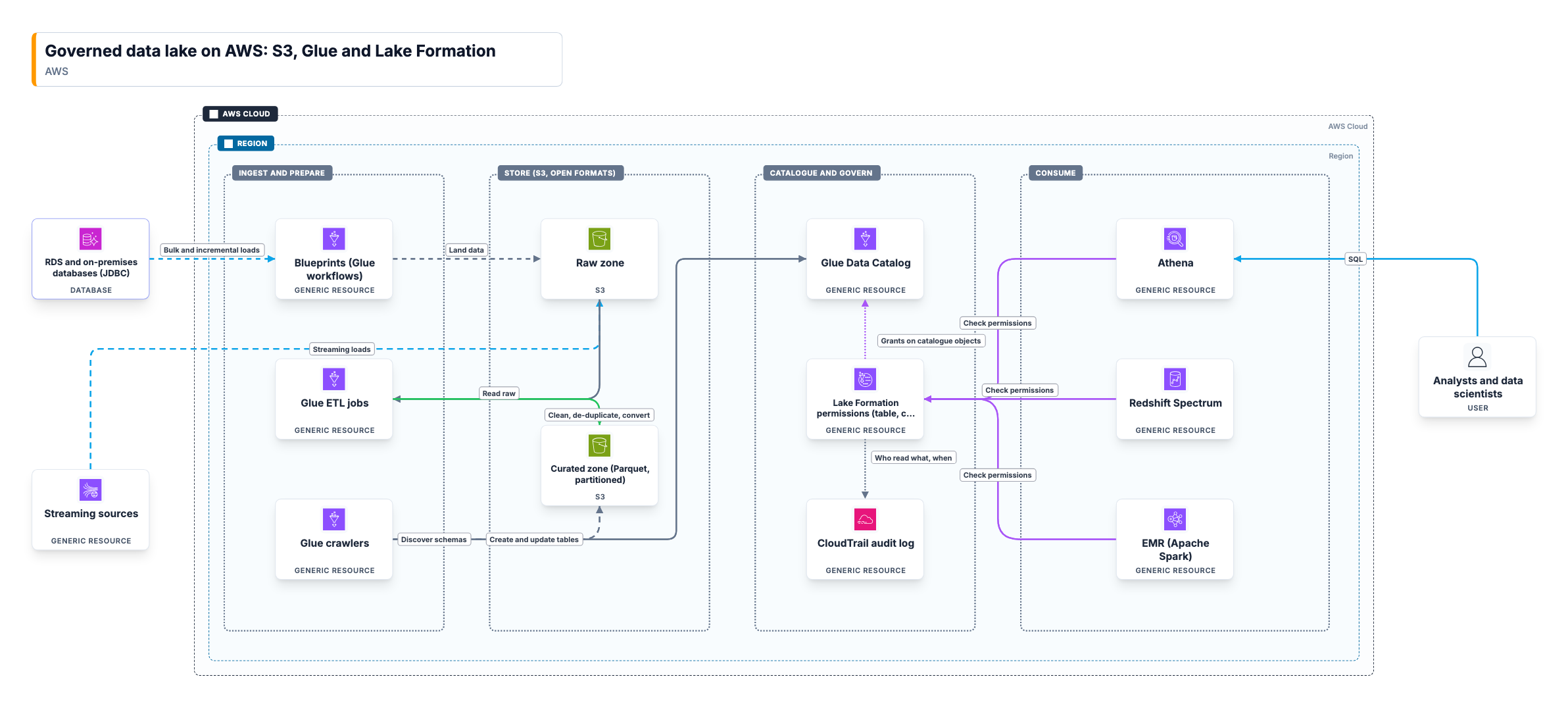 AWSGoverned data lake on AWS: S3, Glue and Lake FormationHow to build a data lake on AWS: ingest with Glue, store in S3 zones in Parquet or Iceberg, catalogue and govern with Lake Formation, then query with Athena, Redshift Spectrum and EMR under one set of permissions.
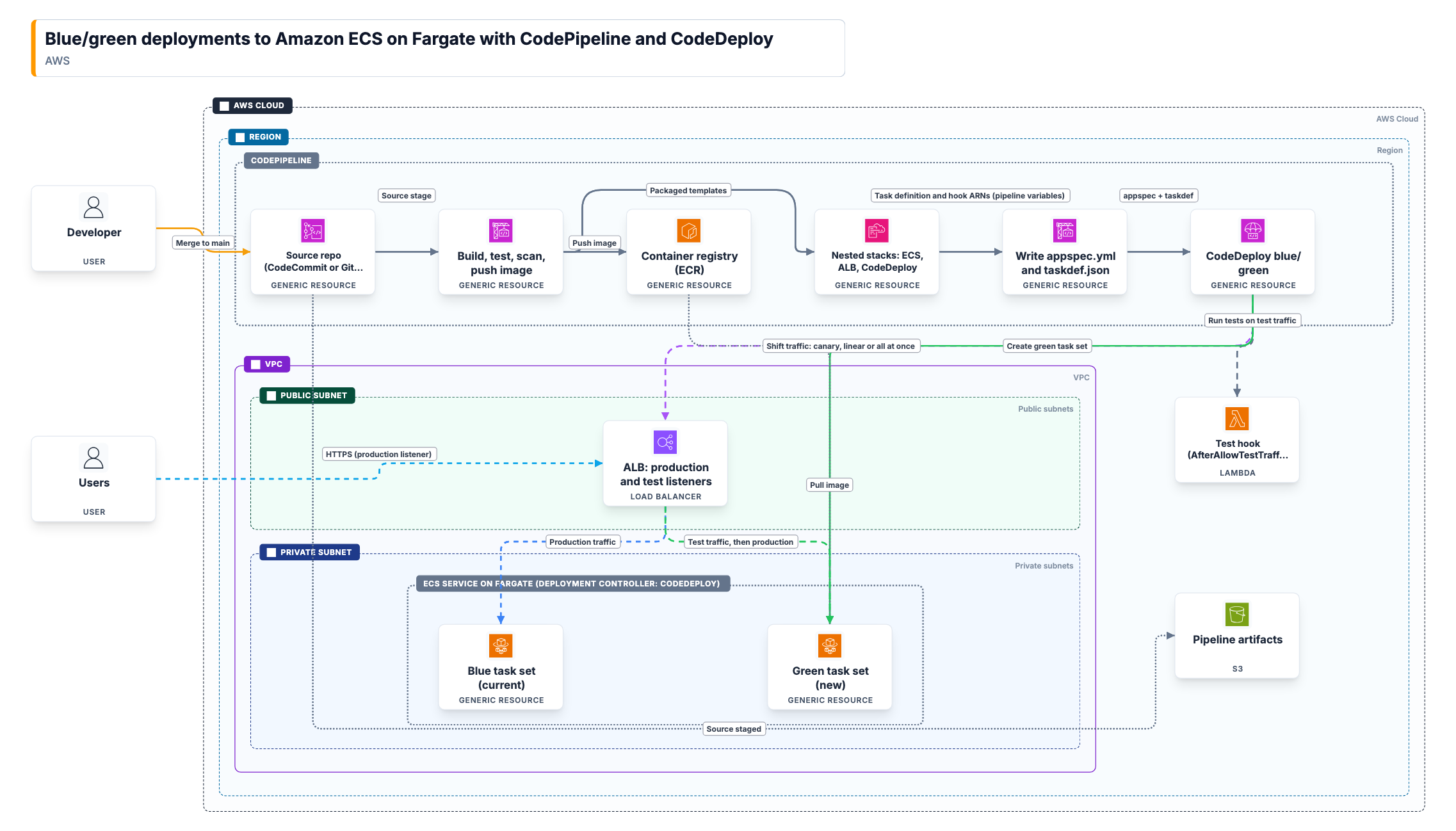 AWSBlue/green deployments to Amazon ECS on Fargate with CodePipeline and CodeDeployA full CI/CD pipeline for blue/green releases to Amazon ECS on Fargate: CodePipeline, CodeBuild, CloudFormation and CodeDeploy, the workarounds it needs, and when ECS's built-in option is better.
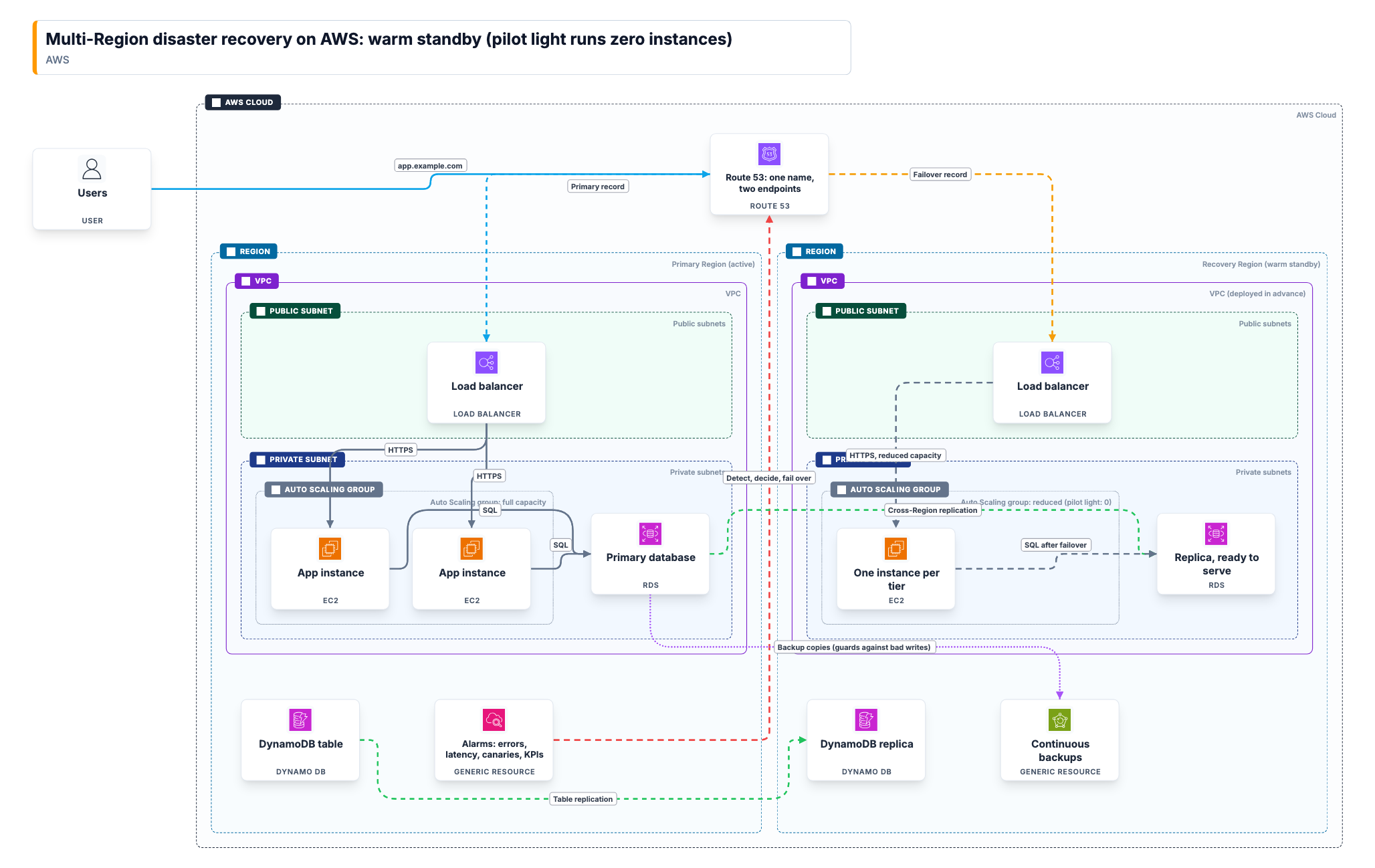 AWSMulti-Region disaster recovery on AWS: warm standby (pilot light runs zero instances)Pilot light and warm standby both keep your data live in a second AWS Region. This diagram and guide show what else is running in each, how recovery works, and how to choose.
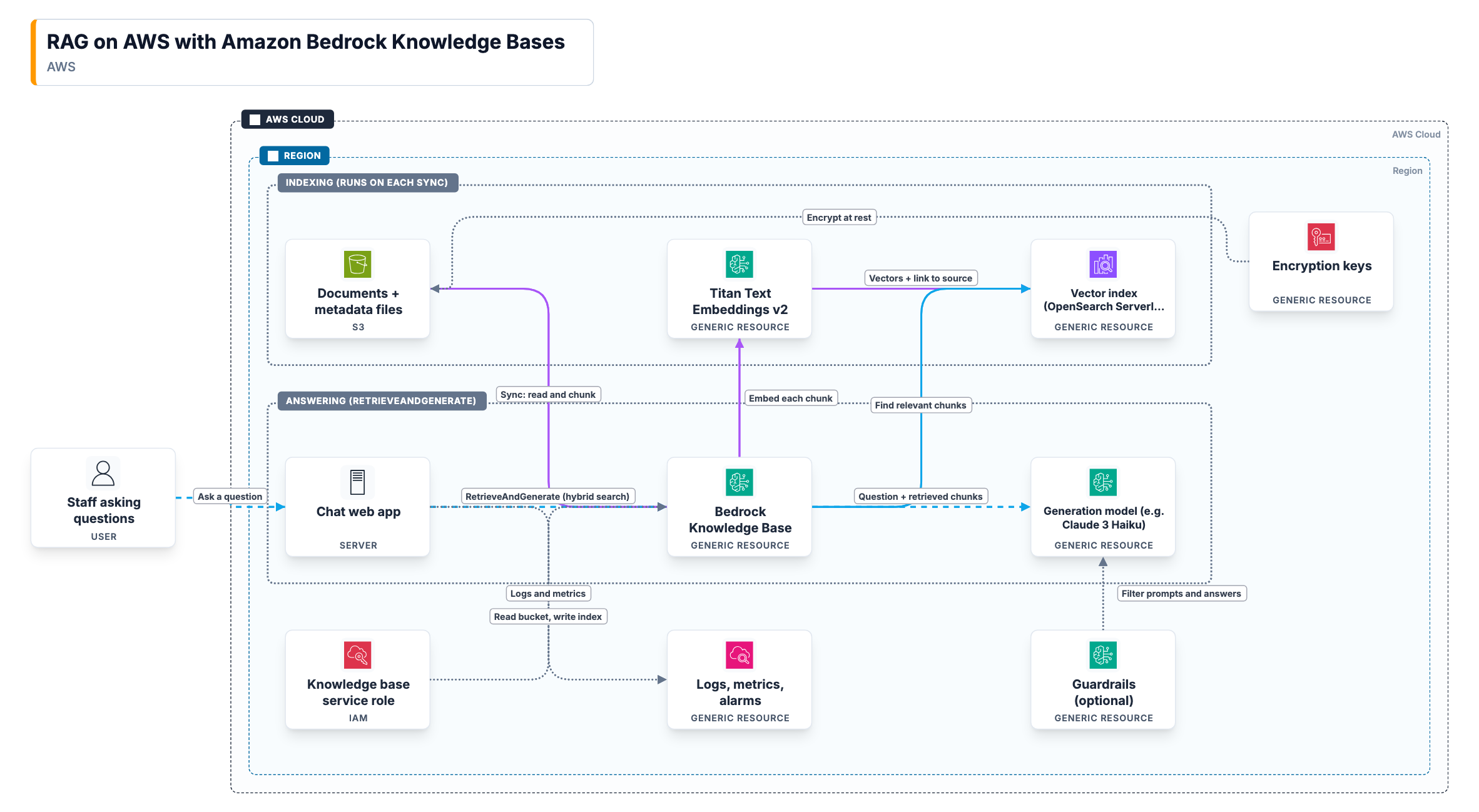 AWSRAG on AWS with Amazon Bedrock Knowledge BasesA retrieval-augmented generation design on AWS: documents in S3, a Bedrock knowledge base, a vector index and a generation model, plus the permission, freshness and quality decisions that matter.
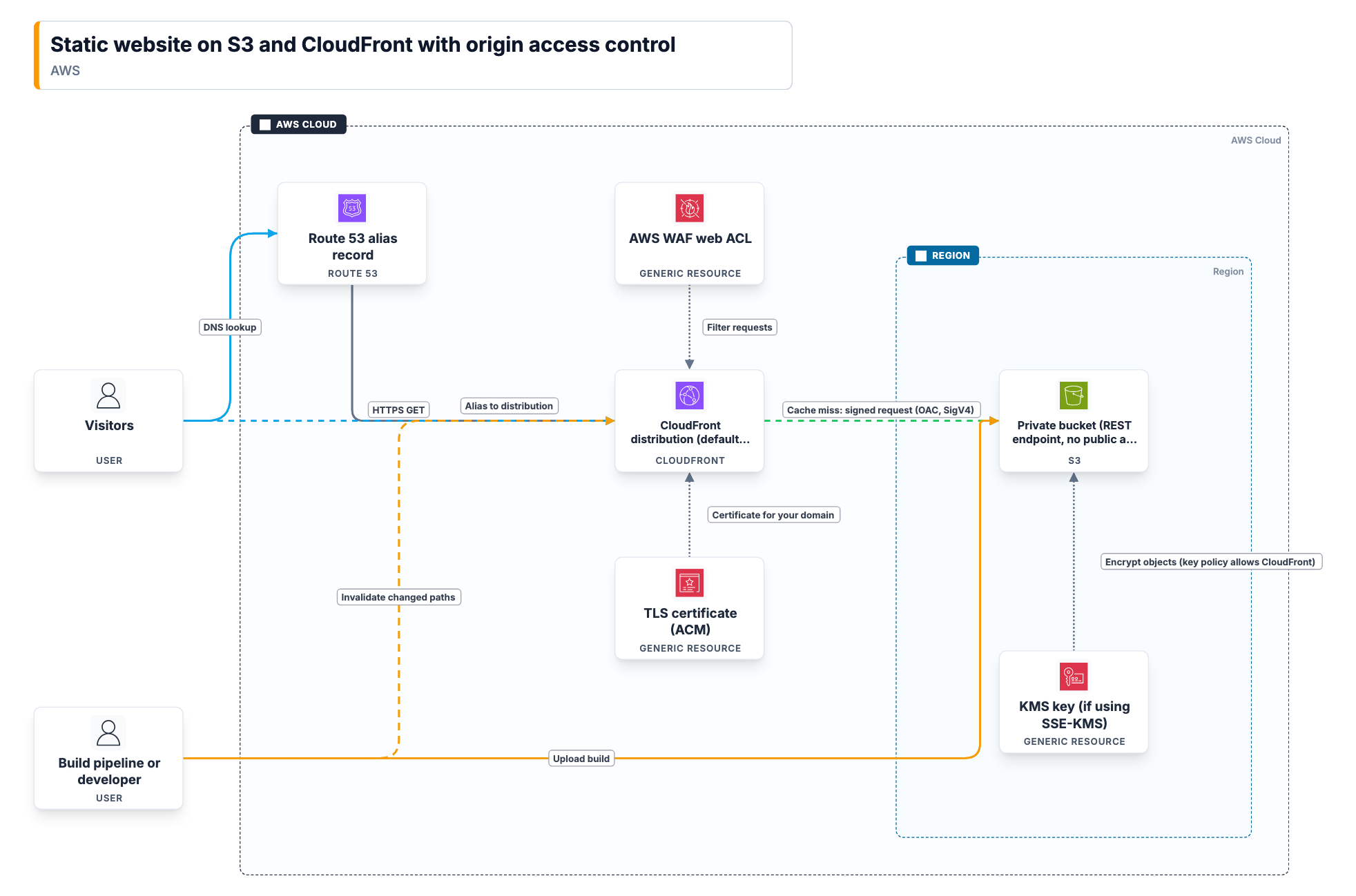 AWSStatic website on S3 and CloudFront with origin access controlHost a static site on a private S3 bucket behind CloudFront with origin access control: the architecture, the bucket policy, the website-endpoint trap, and how to migrate from OAI.
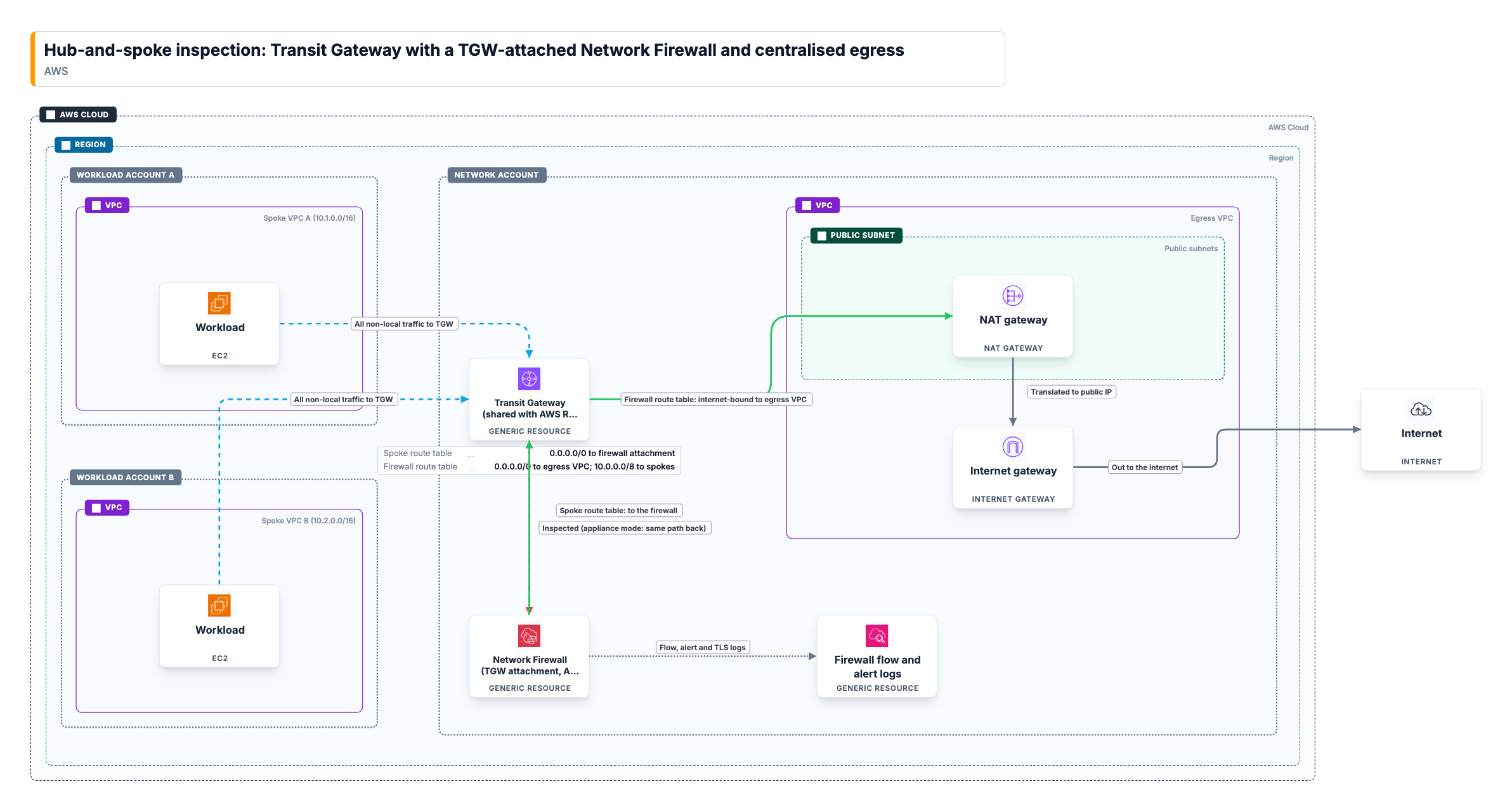 AWSHub-and-spoke inspection: Transit Gateway with a TGW-attached Network Firewall and centralised egressA hub-and-spoke network on AWS with a Transit Gateway-attached Network Firewall and centralised egress: the routing, why egress crosses the gateway twice, costs, and when to go distributed.
Azure
AWS · Azure · Google CloudThe four DR strategies: RTO and RPO, cold to hotWhat RTO and RPO mean, with a worked example, and the four disaster recovery strategies from backup and restore to active/active: what runs, what it costs, and how to choose.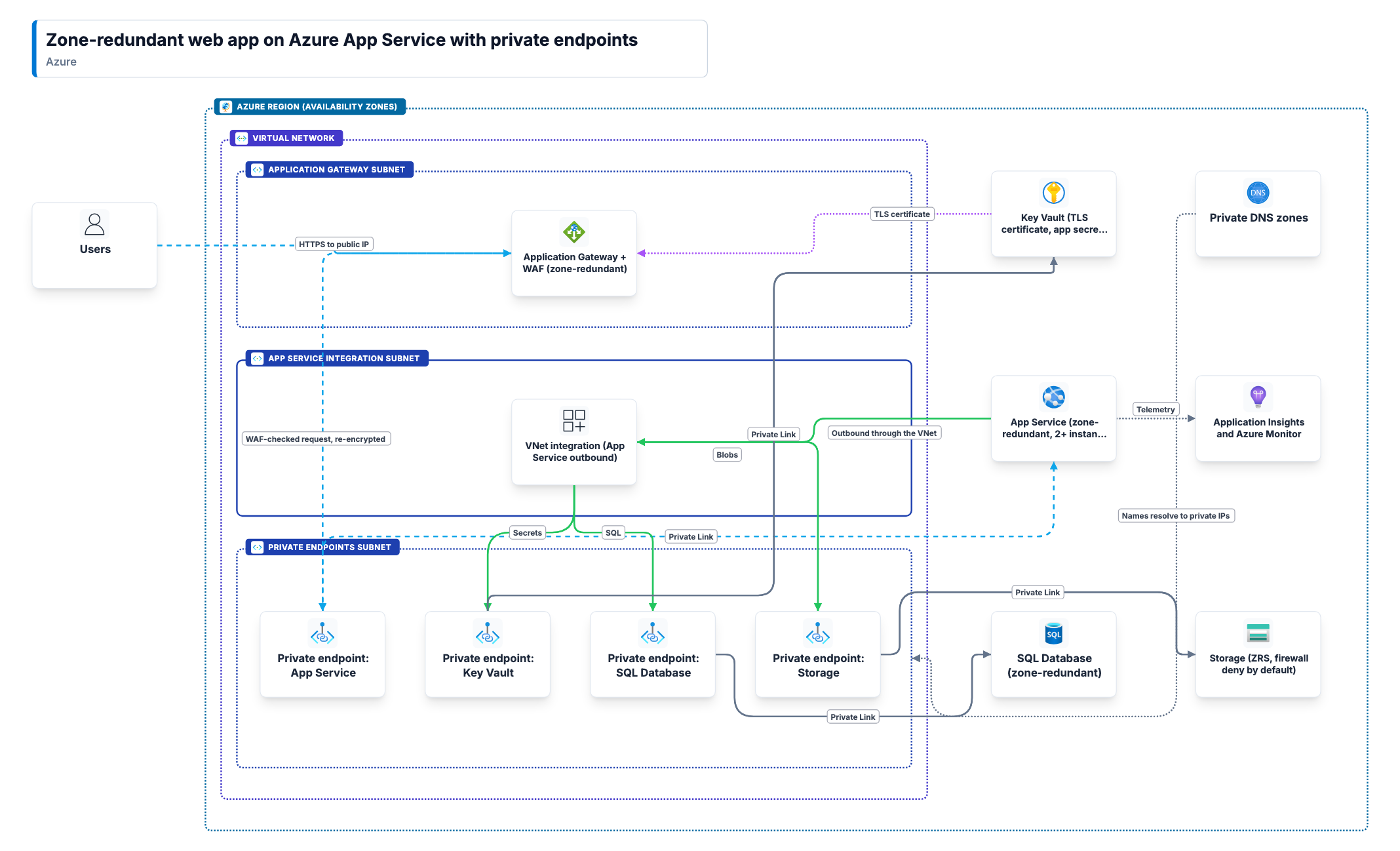 AzureZone-redundant web app on Azure App Service with private endpointsMicrosoft's zone-redundant App Service baseline, drawn and explained: Application Gateway with WAF, private endpoints, VNet integration, private DNS, and what it costs to run and deploy.
Google Cloud
AWS · Azure · Google CloudThe four DR strategies: RTO and RPO, cold to hotWhat RTO and RPO mean, with a worked example, and the four disaster recovery strategies from backup and restore to active/active: what runs, what it costs, and how to choose.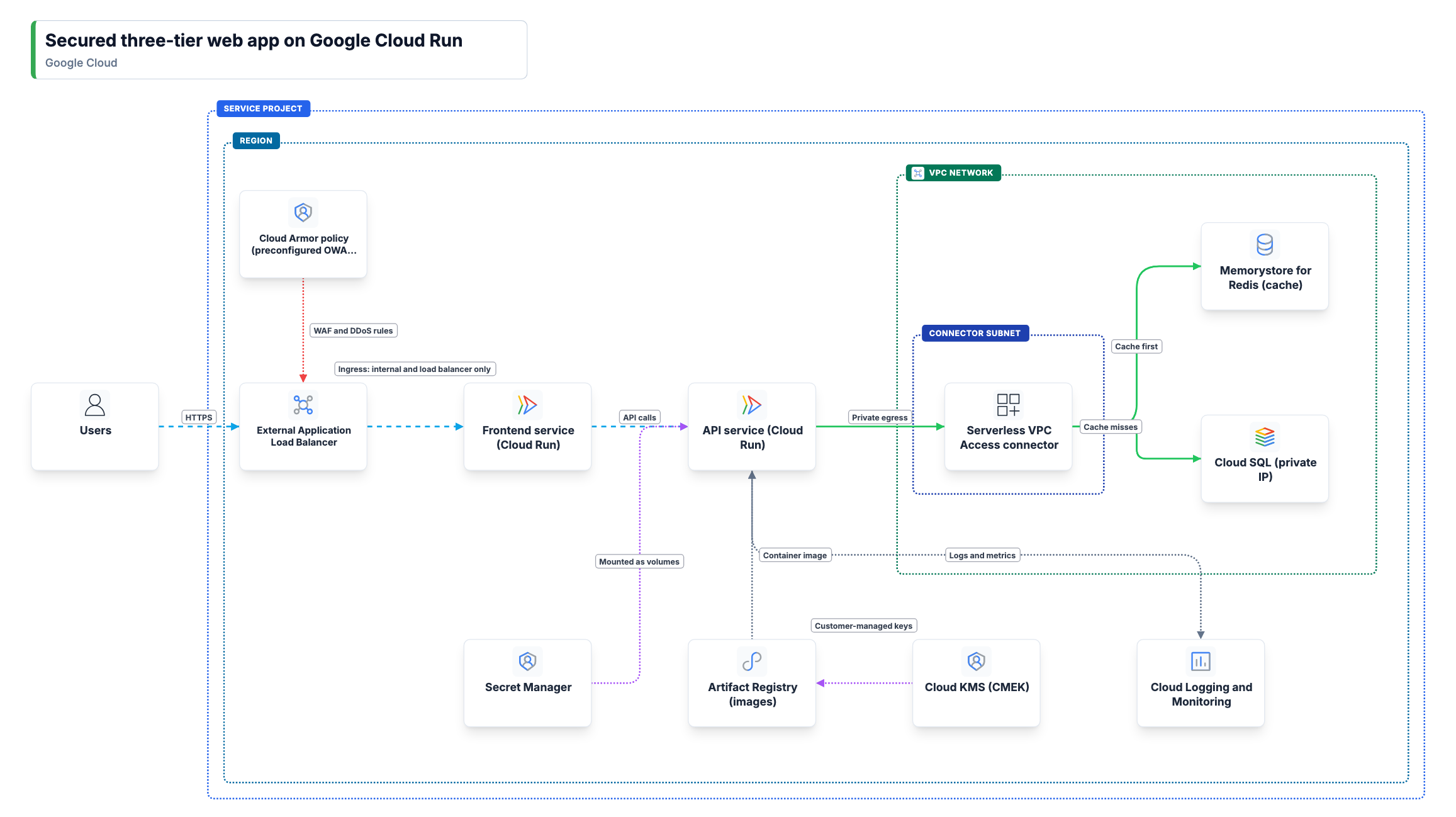 Google CloudSecured three-tier web app on Google Cloud RunA secured three-tier web app on Google Cloud Run: load balancer and Cloud Armor in front, separate frontend and API services, Memorystore and Cloud SQL on private addresses, and the costs that do not scale to zero.
Kubernetes
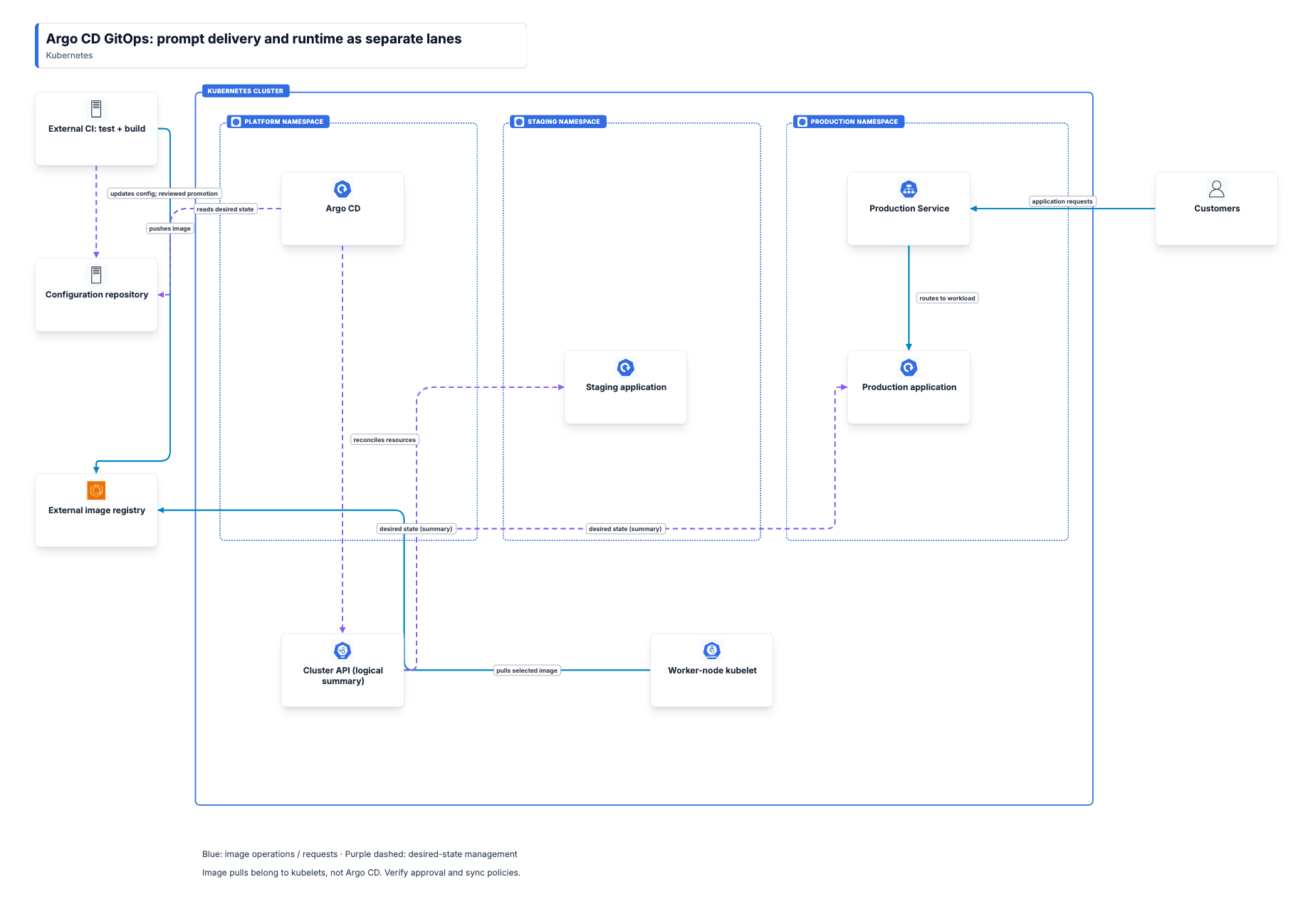 KubernetesArgo CD GitOps: prompt delivery and runtime as separate lanesAn Argo CD GitOps diagram should show how desired state reaches the cluster while keeping customer traffic separate. This example draws a short delivery chain and makes production promotion a repository change that a reviewer can identify.
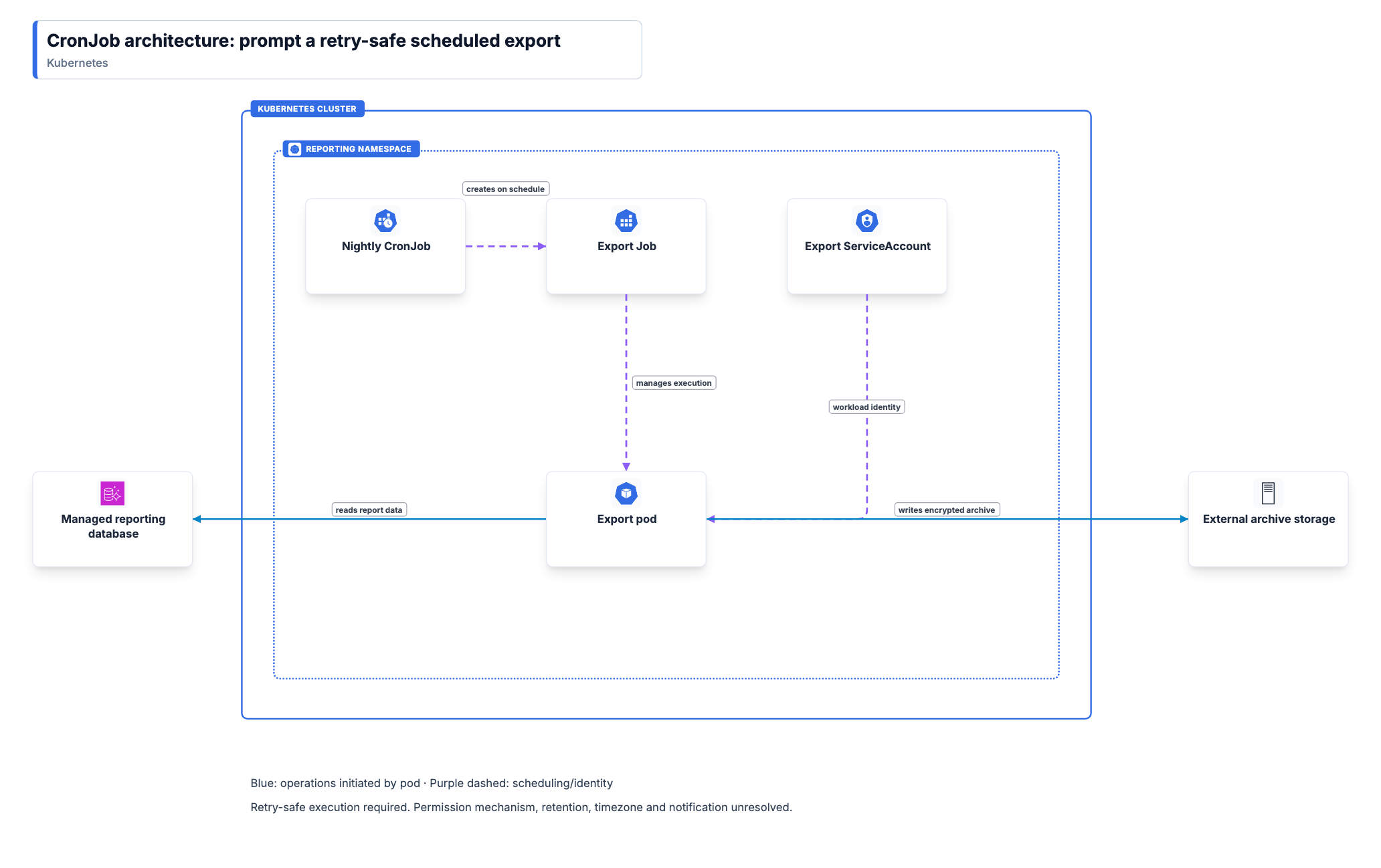 KubernetesCronJob architecture: prompt a retry-safe scheduled exportA Kubernetes CronJob diagram can explain more than a clock pointing at a pod. This example follows a reporting export from its schedule to an archive, while showing where permissions and recovery assumptions belong.
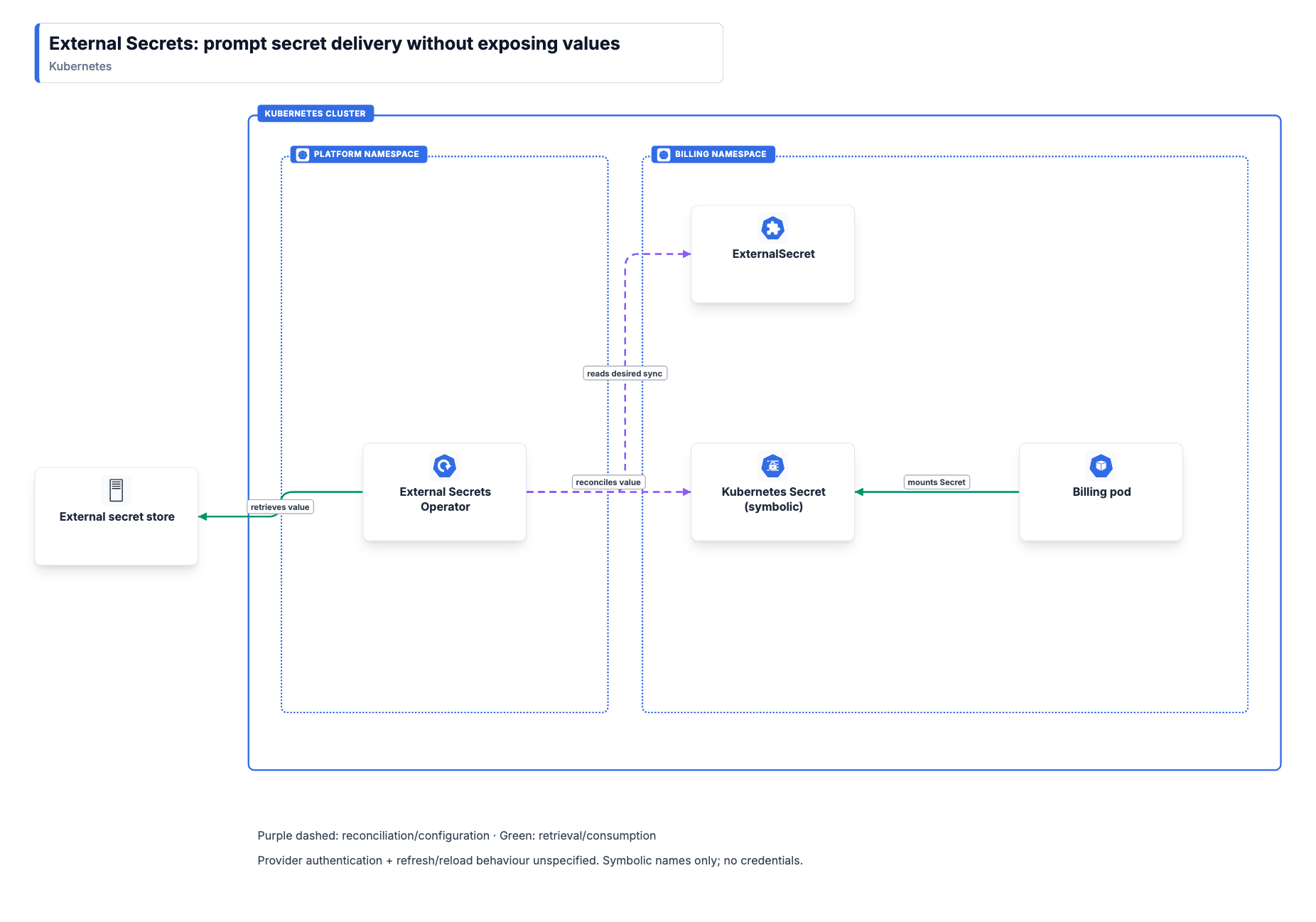 KubernetesExternal Secrets: prompt secret delivery without exposing valuesA Kubernetes External Secrets diagram should explain how an application receives a value without containing that value. This example draws the reconciliation and consumption paths using symbolic names, with authentication left explicit rather than guessed.
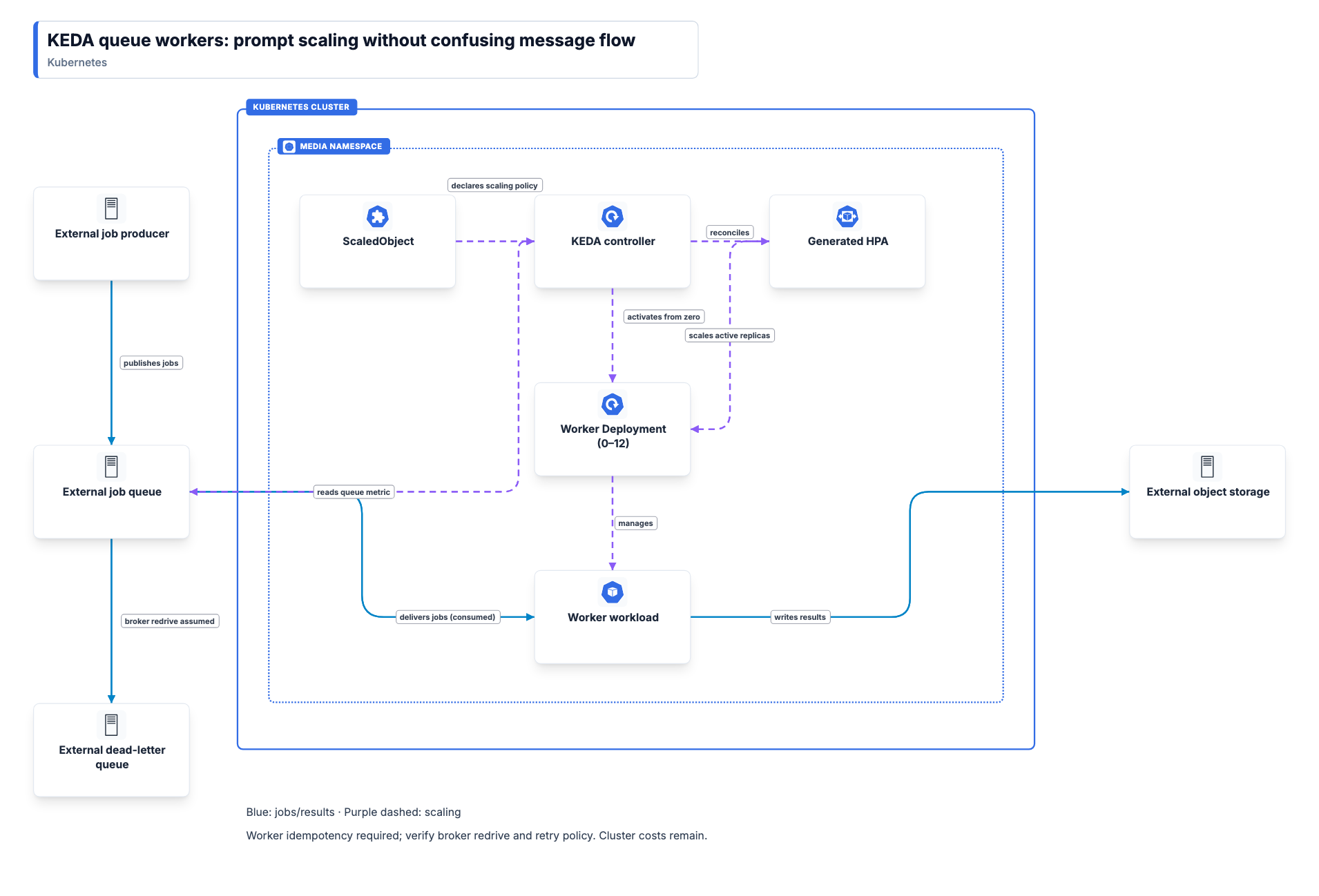 KubernetesKEDA queue workers: prompt scaling without confusing message flowA KEDA Kubernetes diagram needs two stories: workers processing jobs and controllers deciding how many workers should exist. This example keeps the queue, object store and failure destination outside the cluster, and makes scaling a separate management relationship.
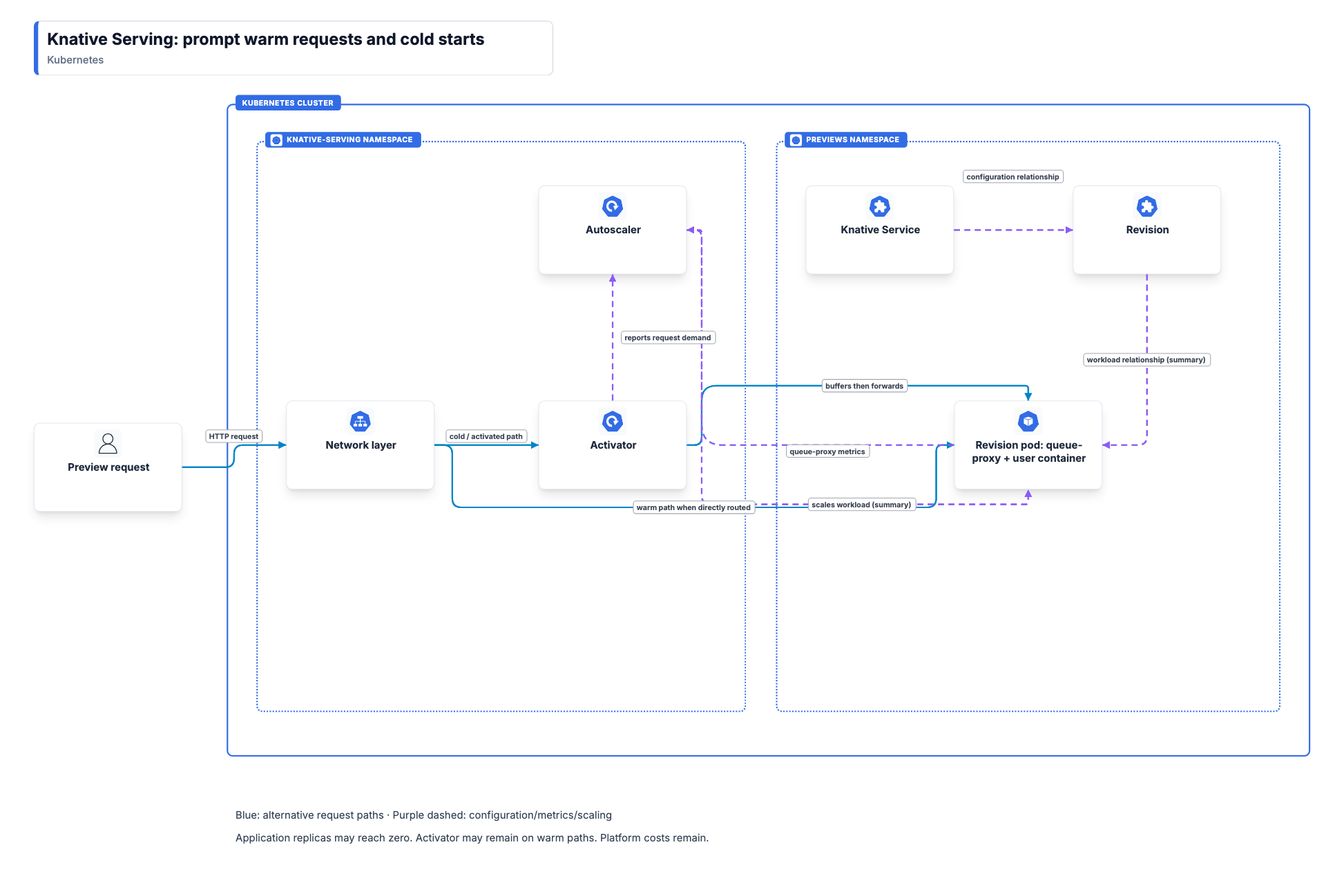 KubernetesKnative Serving: prompt warm requests and cold startsA Knative Serving diagram should make the conditional cold-start path clear. This example separates platform resources from the application, then shows how the request path changes when application replicas have scaled down.
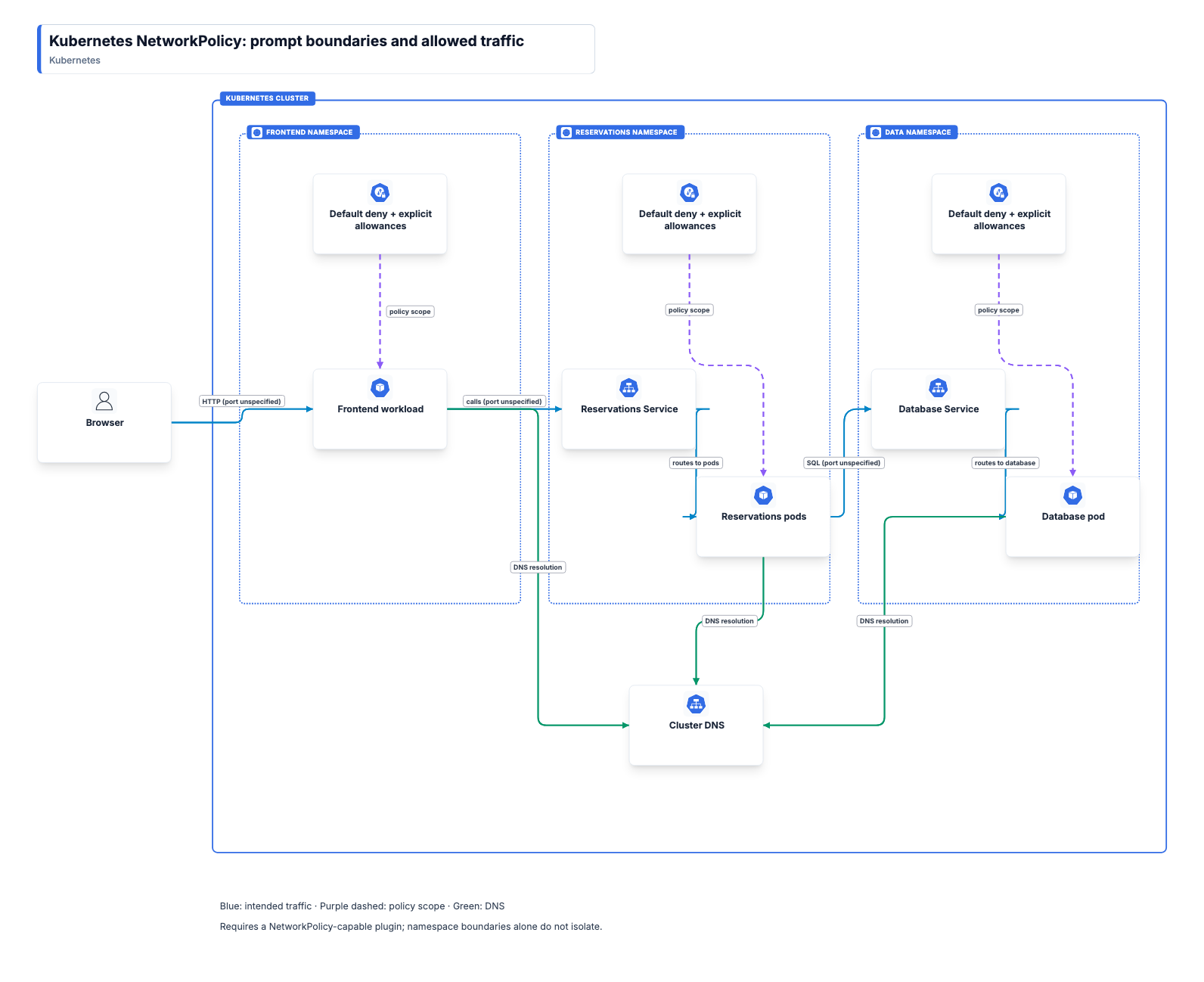 KubernetesKubernetes NetworkPolicy: prompt boundaries and allowed trafficA Kubernetes NetworkPolicy diagram should explain which traffic is intended to be allowed, without making a namespace look like a firewall appliance. This example uses a booking application to distinguish visual grouping, workload selection and the connections an operator needs to verify.
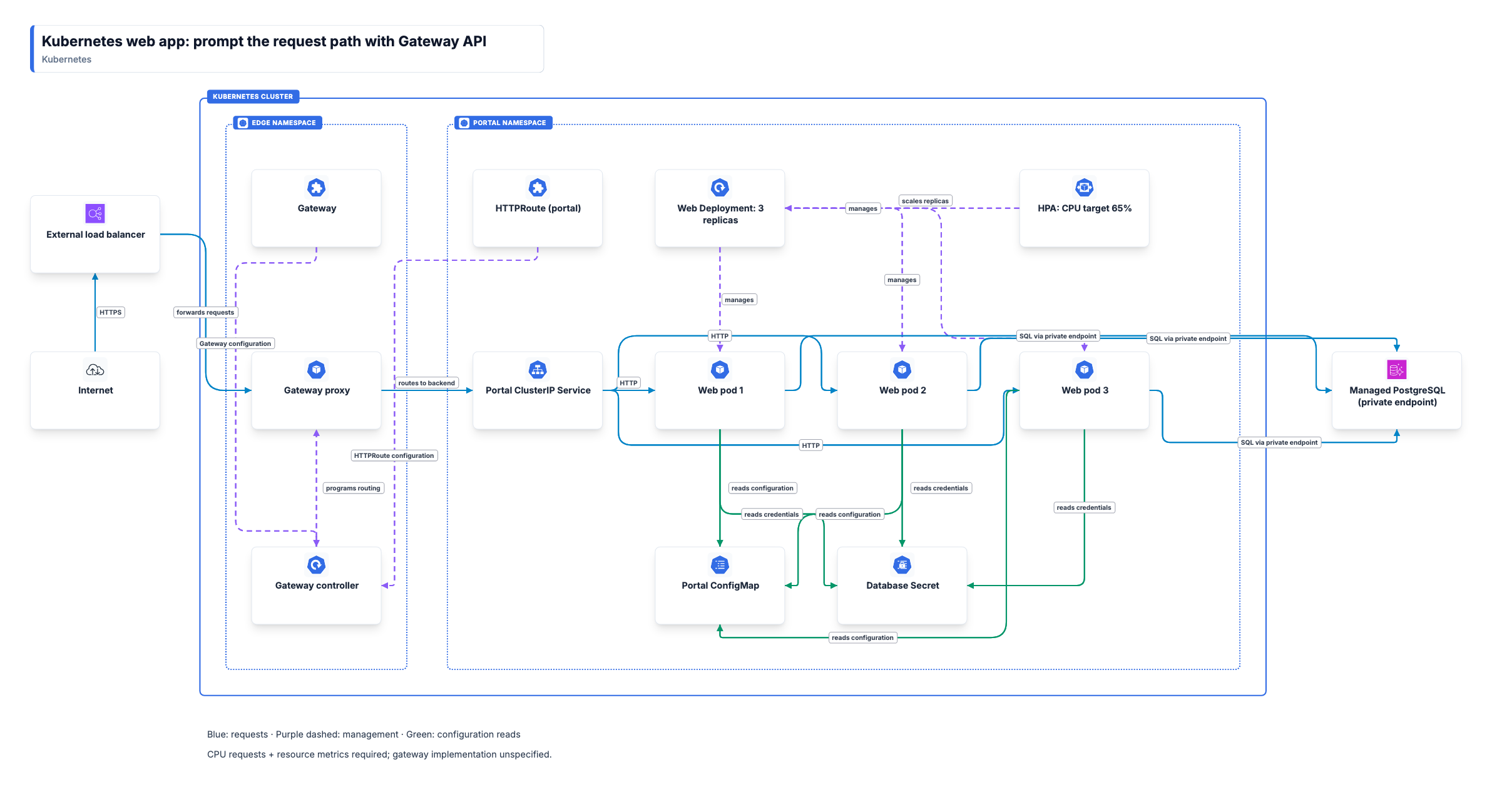 KubernetesKubernetes web app: prompt the request path with Gateway APIA Kubernetes Gateway API diagram is most useful when the reader can trace a customer request without mistaking configuration for another network hop. This first example in our prompting series draws a small customer portal, then separates its runtime path from the objects that configure and scale it.
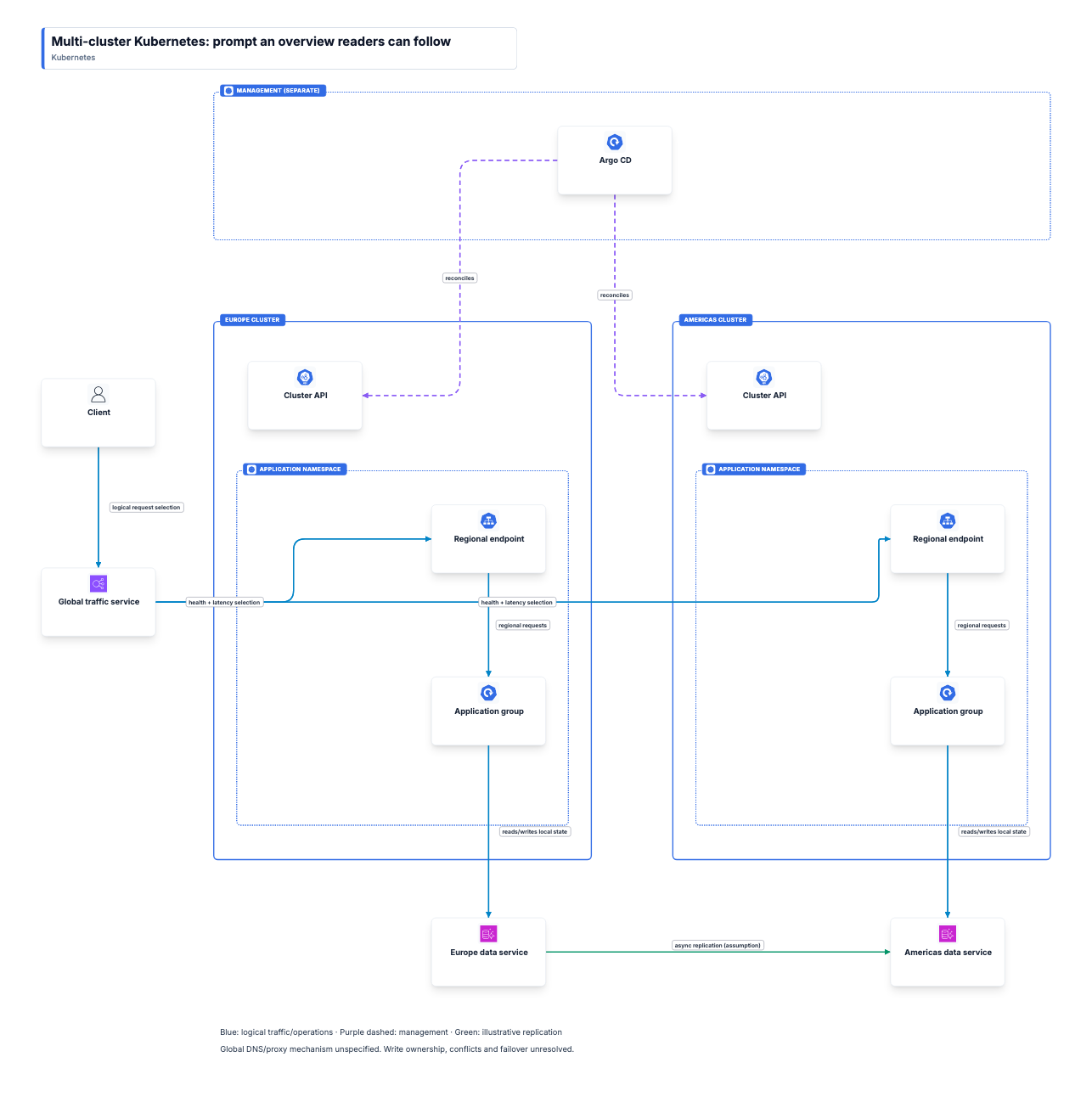 KubernetesMulti-cluster Kubernetes: prompt an overview readers can followA Kubernetes multi-cluster diagram can become unreadable before it explains anything. This example stays at the regional overview level: traffic selection, two independent clusters, management and application state replication.
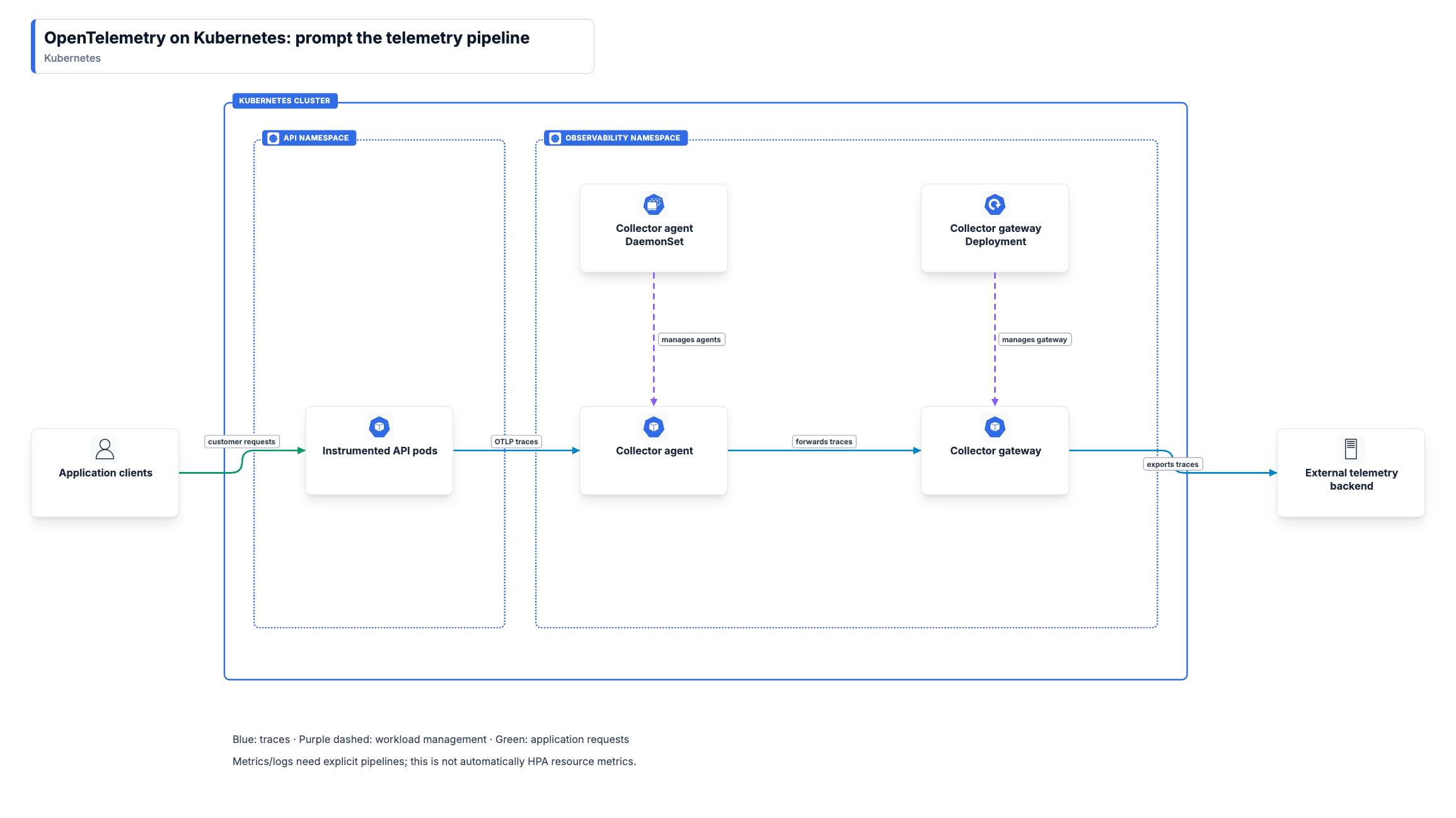 KubernetesOpenTelemetry on Kubernetes: prompt the telemetry pipelineA Kubernetes OpenTelemetry diagram is a view of telemetry delivery, not another diagram of every application dependency. This example uses a Collector agent and gateway pattern to explain how traces reach an external backend.
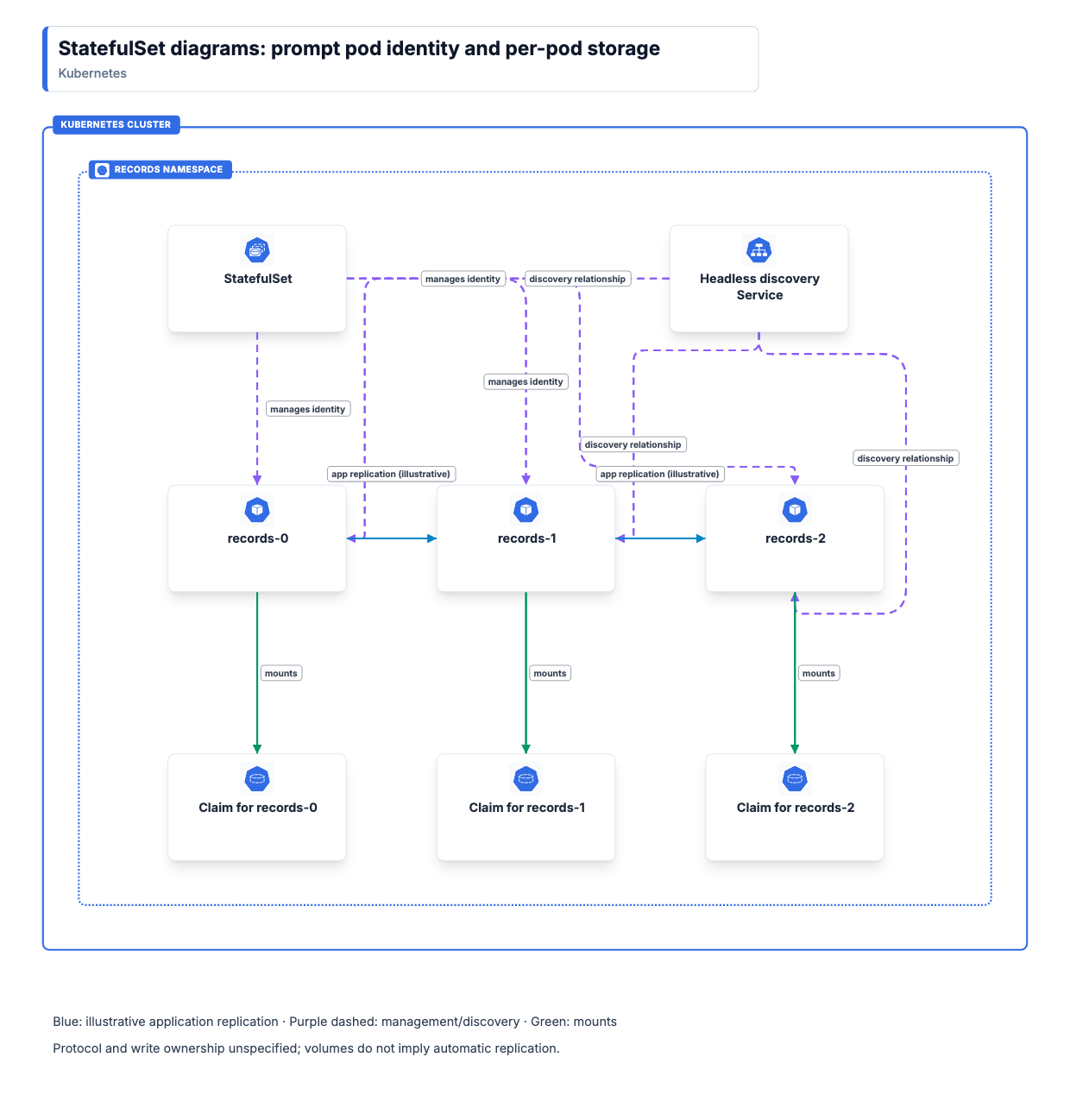 KubernetesStatefulSet diagrams: prompt pod identity and per-pod storageA Kubernetes StatefulSet diagram should make stable identity and storage ownership easy to inspect. This example draws three members of a generic stateful application, then deliberately separates discovery, volume mounts and application replication.
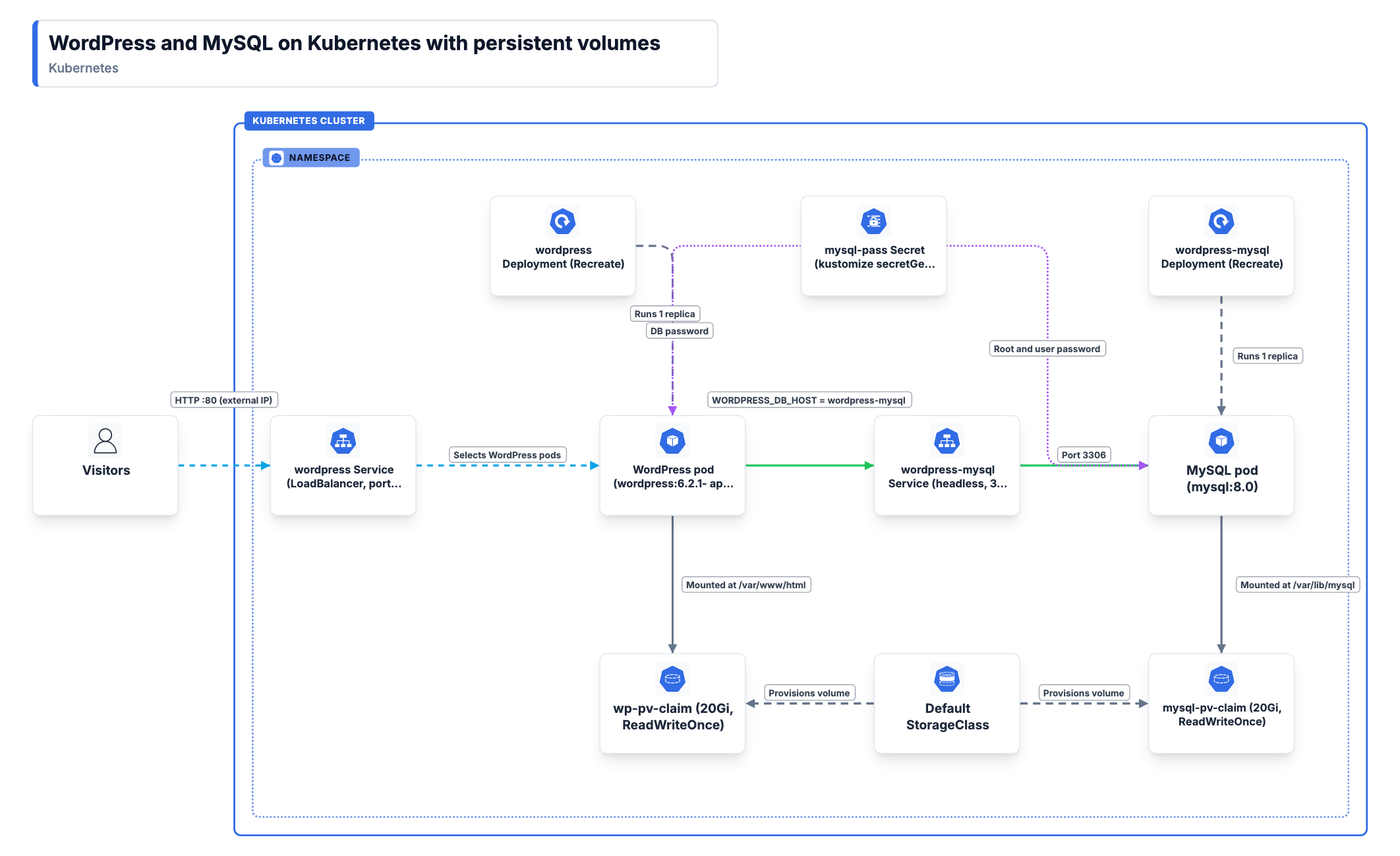 KubernetesWordPress and MySQL on Kubernetes with persistent volumesThe official WordPress and MySQL tutorial on Kubernetes, drawn object by object: Deployments, Services, PersistentVolumeClaims and a Secret, then what to change before real visitors arrive.
Security, identity and more
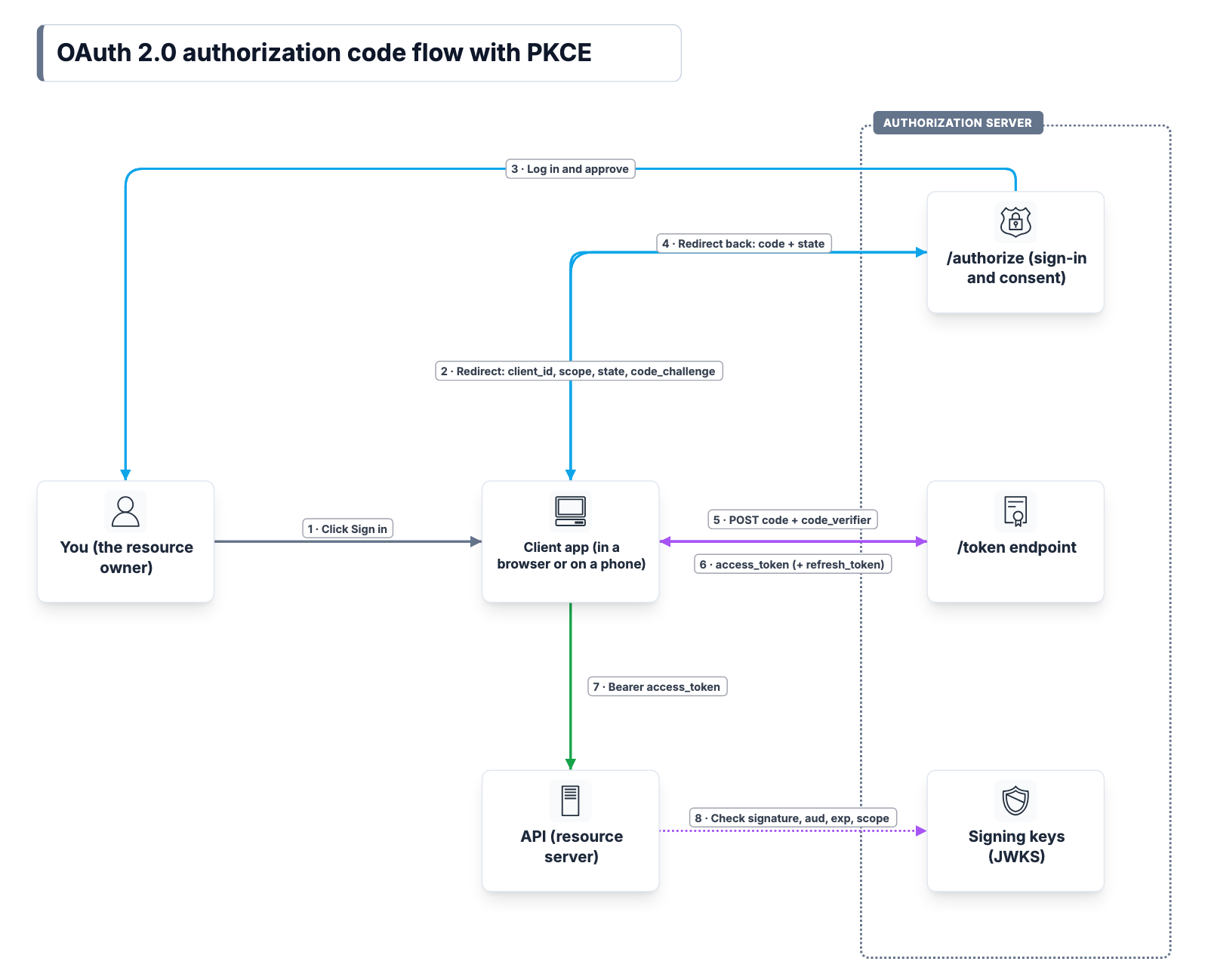 SecurityOAuth 2.0 authorization code flow with PKCEOAuth 2.0 lets an app act for you without seeing your password. Here is every flow drawn step by step: authorization code with PKCE, with and without a client secret, the retired implicit flow, client credentials and the device flow, and which one to use.
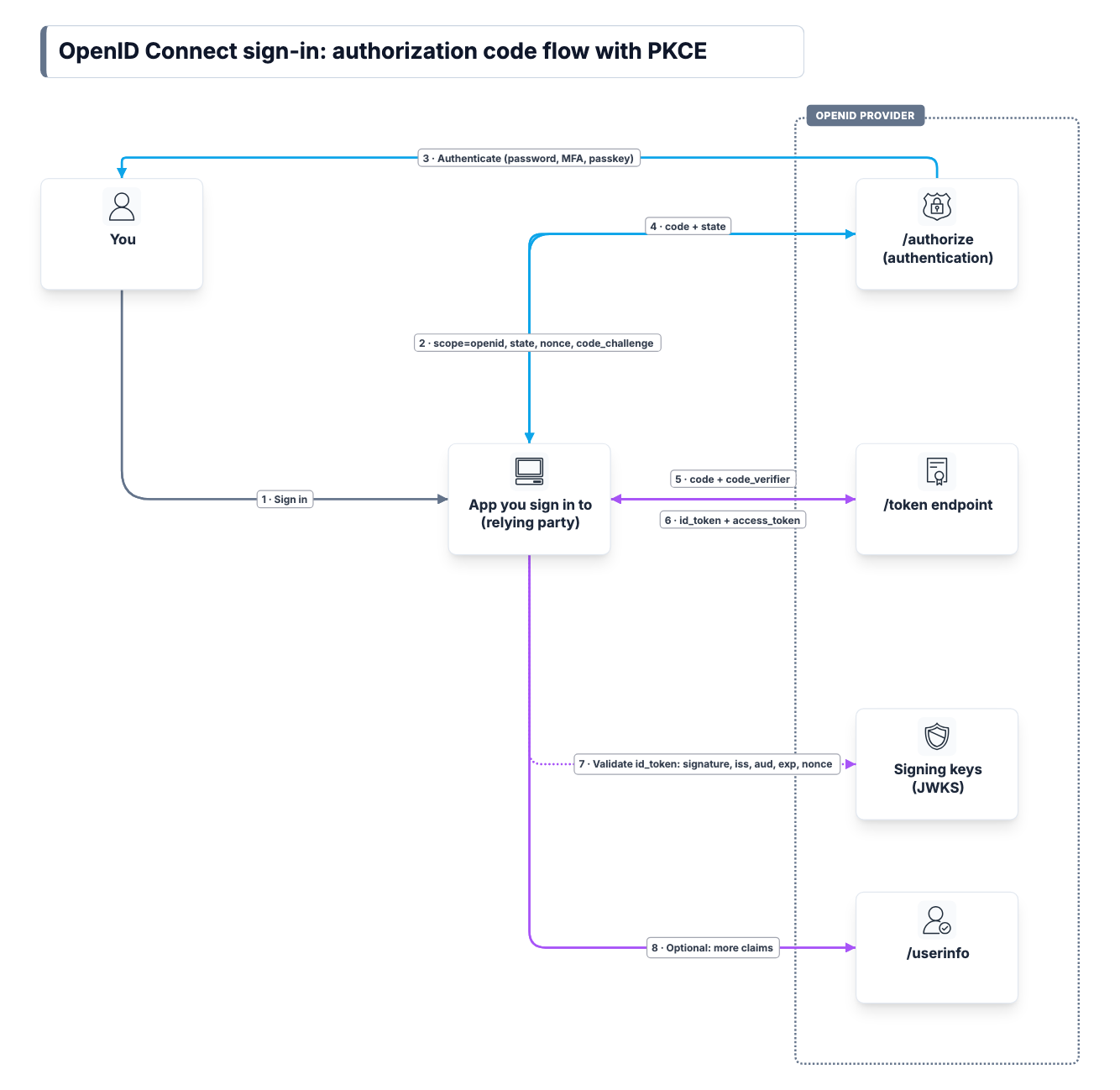 SecurityOpenID Connect sign-in: authorization code flow with PKCEOpenID Connect adds identity to OAuth 2.0: a signed ID token that tells an app who signed in. The sign-in flow drawn step by step, what is inside an ID token and how to validate it, which token goes where, logout, and when to use OIDC, OAuth or SAML.