Hub-and-spoke inspection: Transit Gateway with a TGW-attached Network Firewall and centralised egress
A hub-and-spoke network on AWS with a Transit Gateway-attached Network Firewall and centralised egress: the routing, why egress crosses the gateway twice, costs, and when to go distributed.
Opens a copy in the editor, in a new tab, ready to change. No account needed.
What’s in this diagram
services and parts
- Workload
- Transit Gateway (shared with AWS RAM)
- Network Firewall (TGW attachment, AWS-managed VPC)
- NAT gateway
- Internet gateway
- Firewall flow and alert logs
- Internet
groups
- AWS Cloud
- Region
- Workload account A
- Spoke VPC A (10.1.0.0/16)
- Workload account B
- Spoke VPC B (10.2.0.0/16)
- Network account
- Egress VPC
- Public subnets
Key points
- Spoke VPCs send everything non-local to the Transit Gateway; a static route sends it on to the firewall attachment.
- The firewall attachment lives in a VPC AWS manages for you. You cannot put a NAT gateway there, so internet egress still needs its own VPC.
- Egress traffic crosses the Transit Gateway twice, and each crossing has a per-GB charge.
- Inspecting inbound traffic through this attachment is not recommended. Inspect it at the edge instead.
The whole story, step by step: Transit Gateway network firewall architecture on AWS.
More diagrams
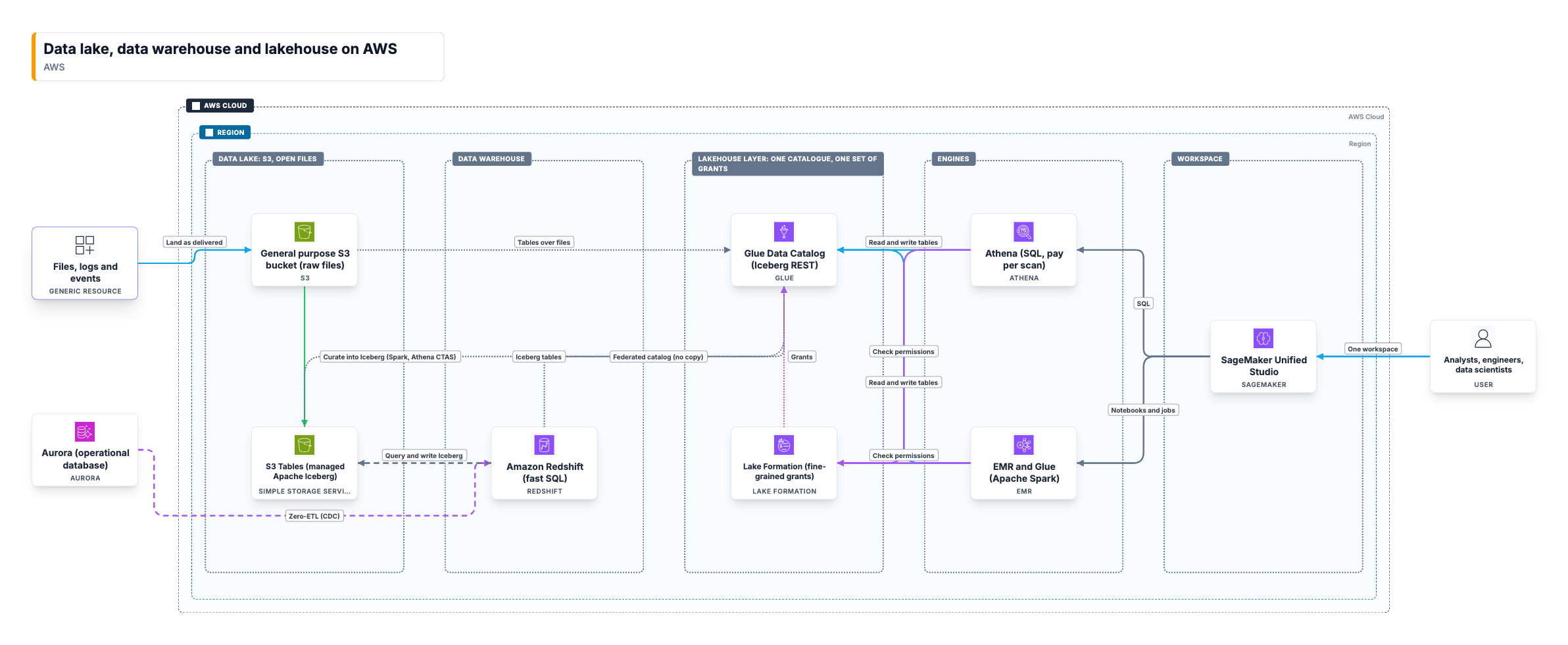 AWSData lake, data warehouse and lakehouse on AWSS3, Glue and Athena vs Amazon Redshift vs Apache Iceberg tables under one catalogue: what each is on AWS, where each fits in one diagram, and which to start with.
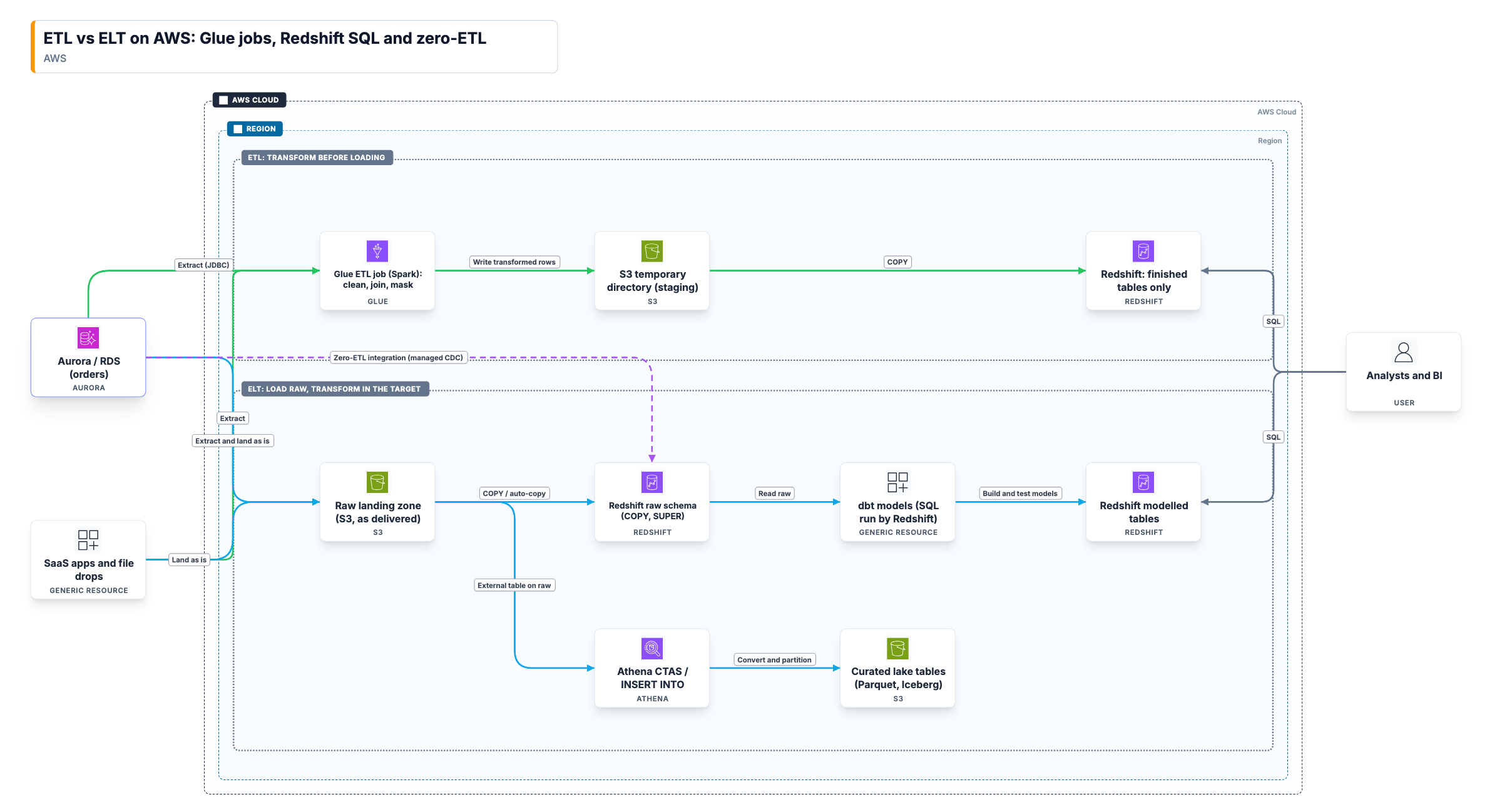 AWSETL vs ELT on AWS: Glue jobs, Redshift SQL and zero-ETLETL vs ELT on AWS, drawn side by side: Glue Spark jobs that transform before loading, raw loads transformed in Redshift or with Athena, and where zero-ETL fits.
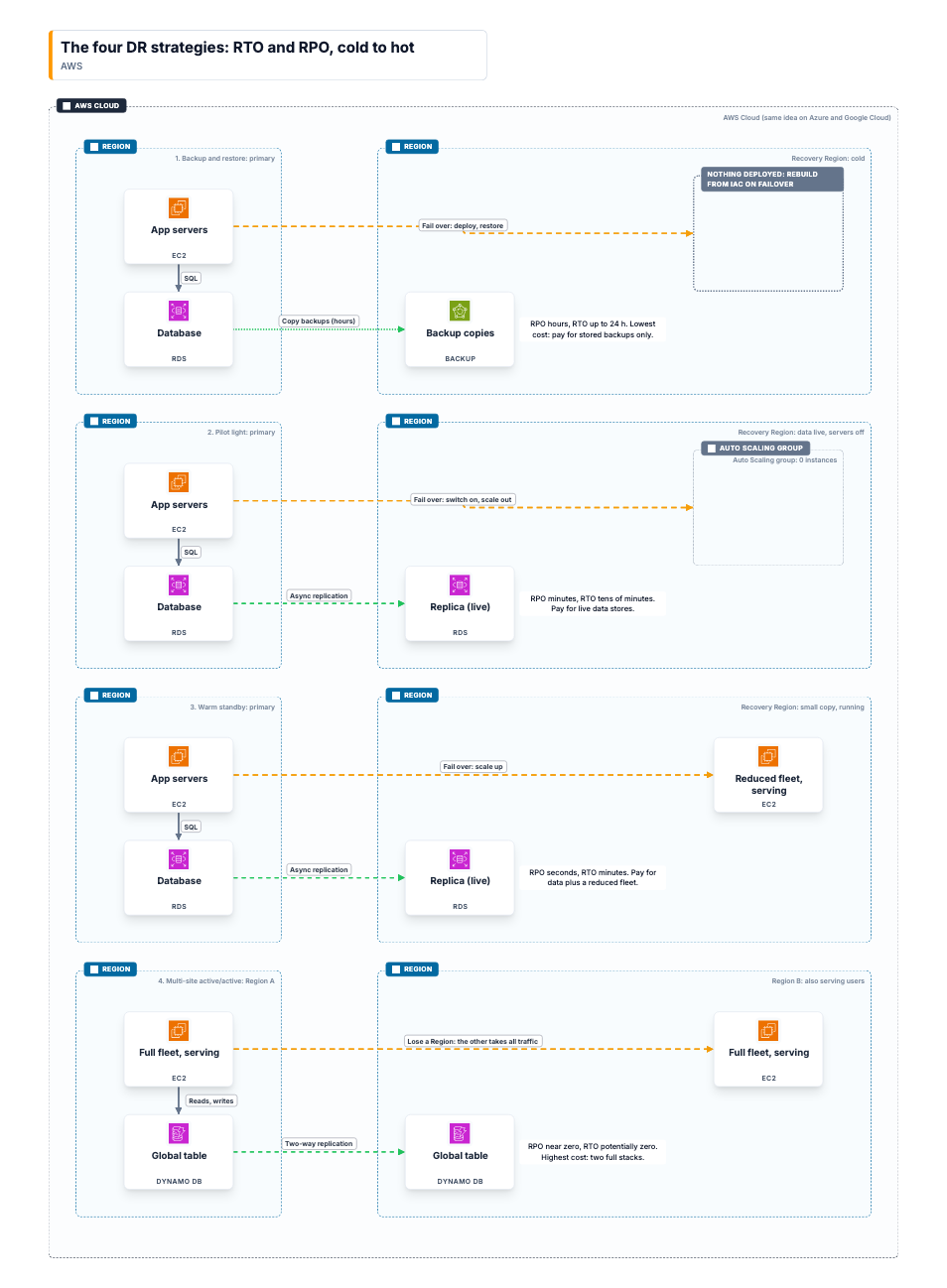 AWS · Azure · Google CloudThe four DR strategies: RTO and RPO, cold to hotWhat RTO and RPO mean, with a worked example, and the four disaster recovery strategies from backup and restore to active/active: what runs, what it costs, and how to choose.