Multi-Region disaster recovery on AWS: warm standby (pilot light runs zero instances)
Pilot light and warm standby both keep your data live in a second AWS Region. This diagram and guide show what else is running in each, how recovery works, and how to choose.
Opens a copy in the editor, in a new tab, ready to change. No account needed.
What’s in this diagram
services and parts
- Users
- Route 53: one name, two endpoints
- Load balancer
- App instance
- Primary database
- DynamoDB table
- Alarms: errors, latency, canaries, KPIs
- One instance per tier
- Replica, ready to serve
- DynamoDB replica
- Continuous backups
groups
- AWS Cloud
- Primary Region (active)
- VPC
- Public subnets
- Private subnets
- Auto Scaling group: full capacity
- Recovery Region (warm standby)
- VPC (deployed in advance)
- Auto Scaling group: reduced (pilot light: 0)
Key points
- Data is handled the same way in both, so recovery point objectives are similar. Recovery time is what differs.
- Pilot light: infrastructure in place, no running servers. Cheaper, slower to recover.
- Warm standby: a small working copy that can take traffic at once. Costs more, recovers faster, and can be tested every day.
- Replication is not backup. Keep continuous backups in the recovery Region as well.
The whole story, step by step: Pilot light vs warm standby: AWS disaster recovery diagram.
More diagrams
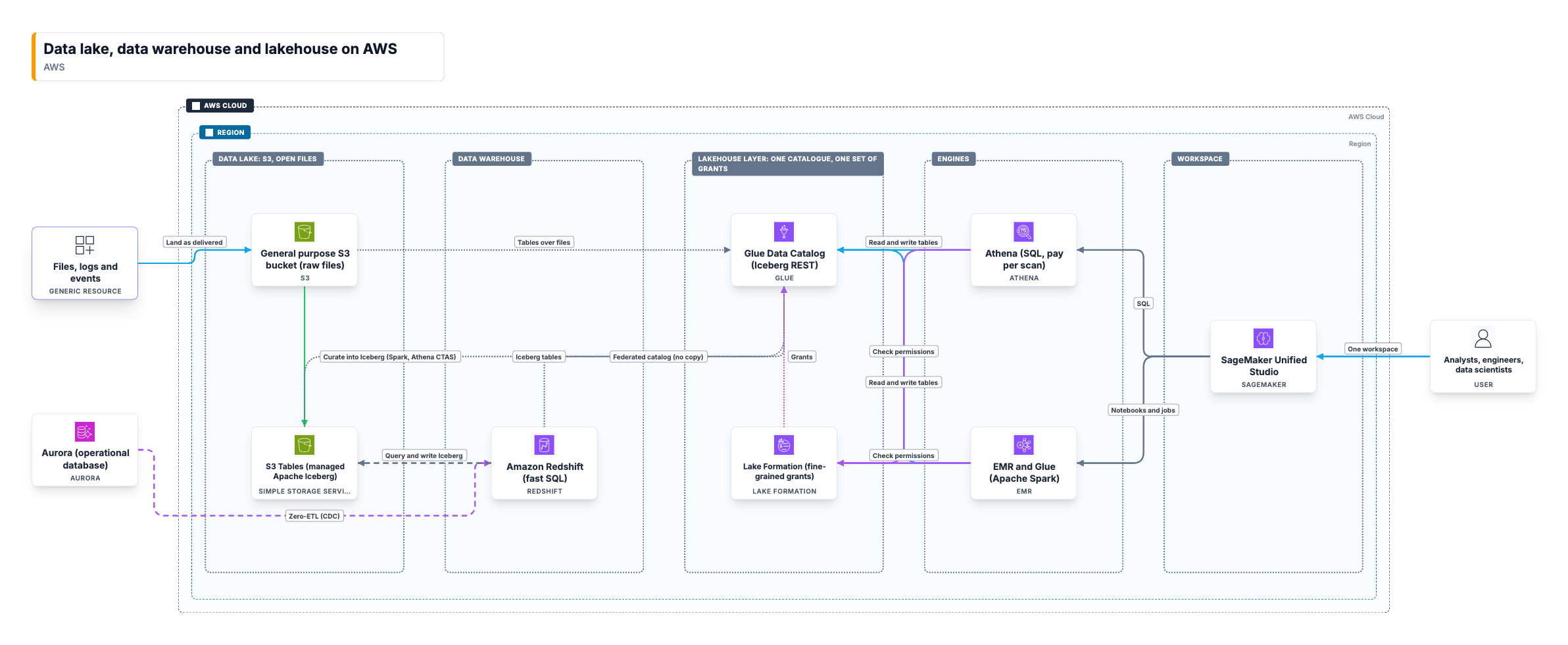 AWSData lake, data warehouse and lakehouse on AWSS3, Glue and Athena vs Amazon Redshift vs Apache Iceberg tables under one catalogue: what each is on AWS, where each fits in one diagram, and which to start with.
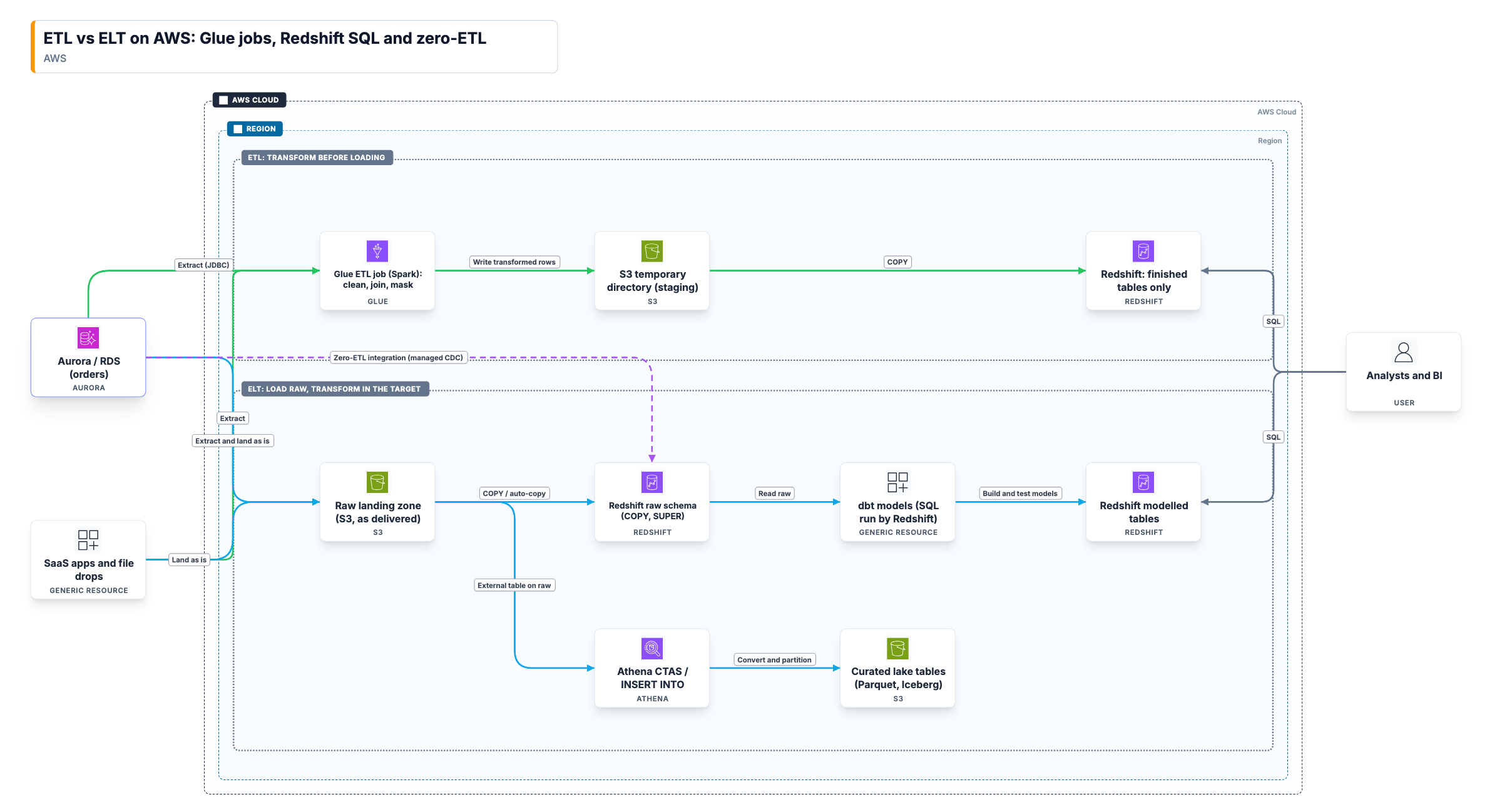 AWSETL vs ELT on AWS: Glue jobs, Redshift SQL and zero-ETLETL vs ELT on AWS, drawn side by side: Glue Spark jobs that transform before loading, raw loads transformed in Redshift or with Athena, and where zero-ETL fits.
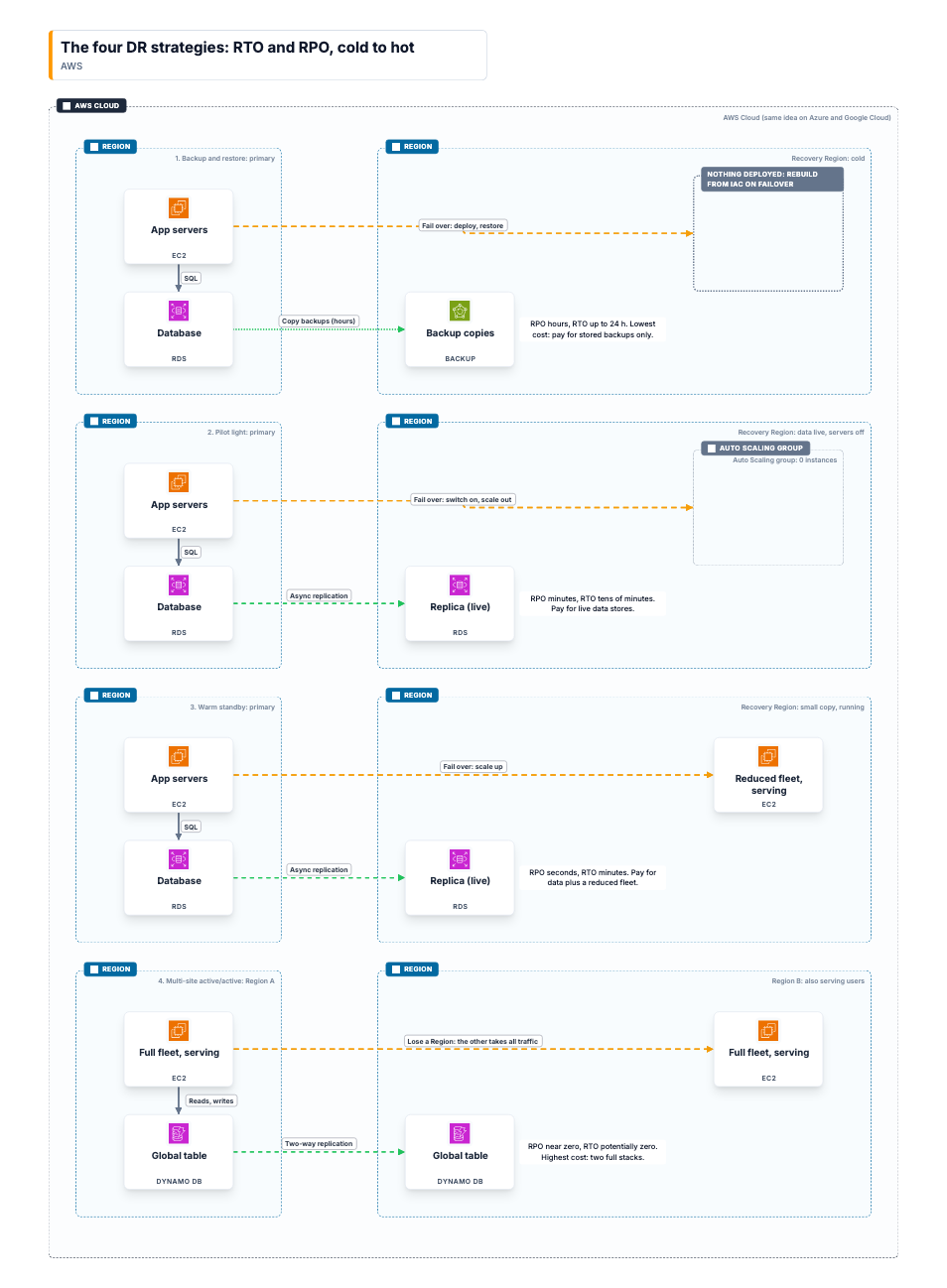 AWS · Azure · Google CloudThe four DR strategies: RTO and RPO, cold to hotWhat RTO and RPO mean, with a worked example, and the four disaster recovery strategies from backup and restore to active/active: what runs, what it costs, and how to choose.