// diagrams › kubernetes
External Secrets: prompt secret delivery without exposing values
A Kubernetes External Secrets diagram should explain how an application receives a value without containing that value. This example draws the reconciliation and consumption paths using symbolic names, with authentication left explicit rather than guessed.
Opens a copy in the editor, in a new tab, ready to change. No account needed.
What’s in this diagram
services and parts
- External secret store
- External Secrets Operator
- ExternalSecret
- Kubernetes Secret (symbolic)
- Billing pod
groups
- Kubernetes cluster
- platform namespace
- billing namespace
Key points
- Separate the external store, operator and resulting Kubernetes Secret.
- Show the ExternalSecret resource in the application namespace.
- Use symbolic names and mark provider authentication as implementation-specific.
The whole story, step by step: External Secrets: prompt secret delivery without exposing values.
More diagrams
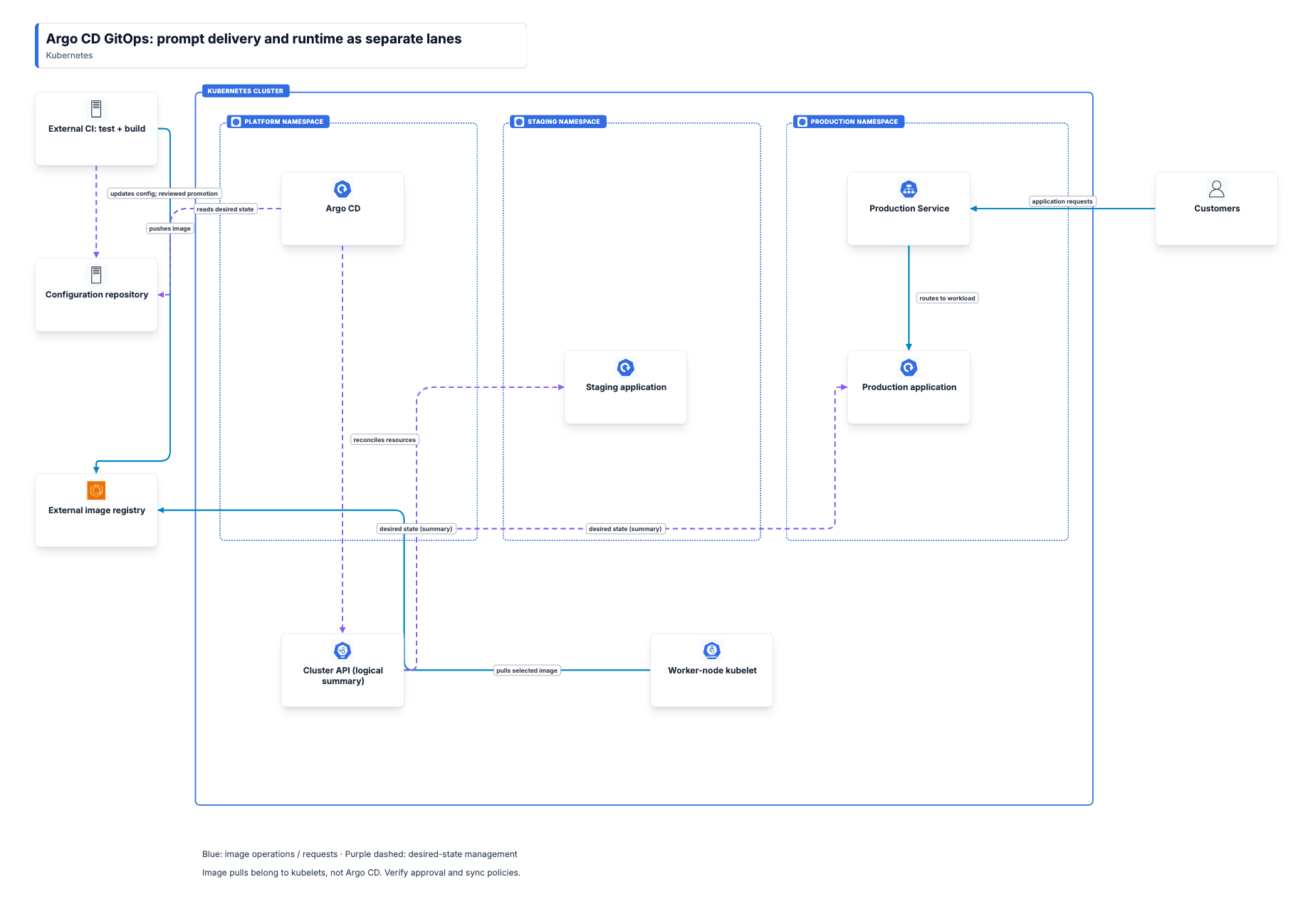 KubernetesArgo CD GitOps: prompt delivery and runtime as separate lanesAn Argo CD GitOps diagram should show how desired state reaches the cluster while keeping customer traffic separate. This example draws a short delivery chain and makes production promotion a repository change that a reviewer can identify.
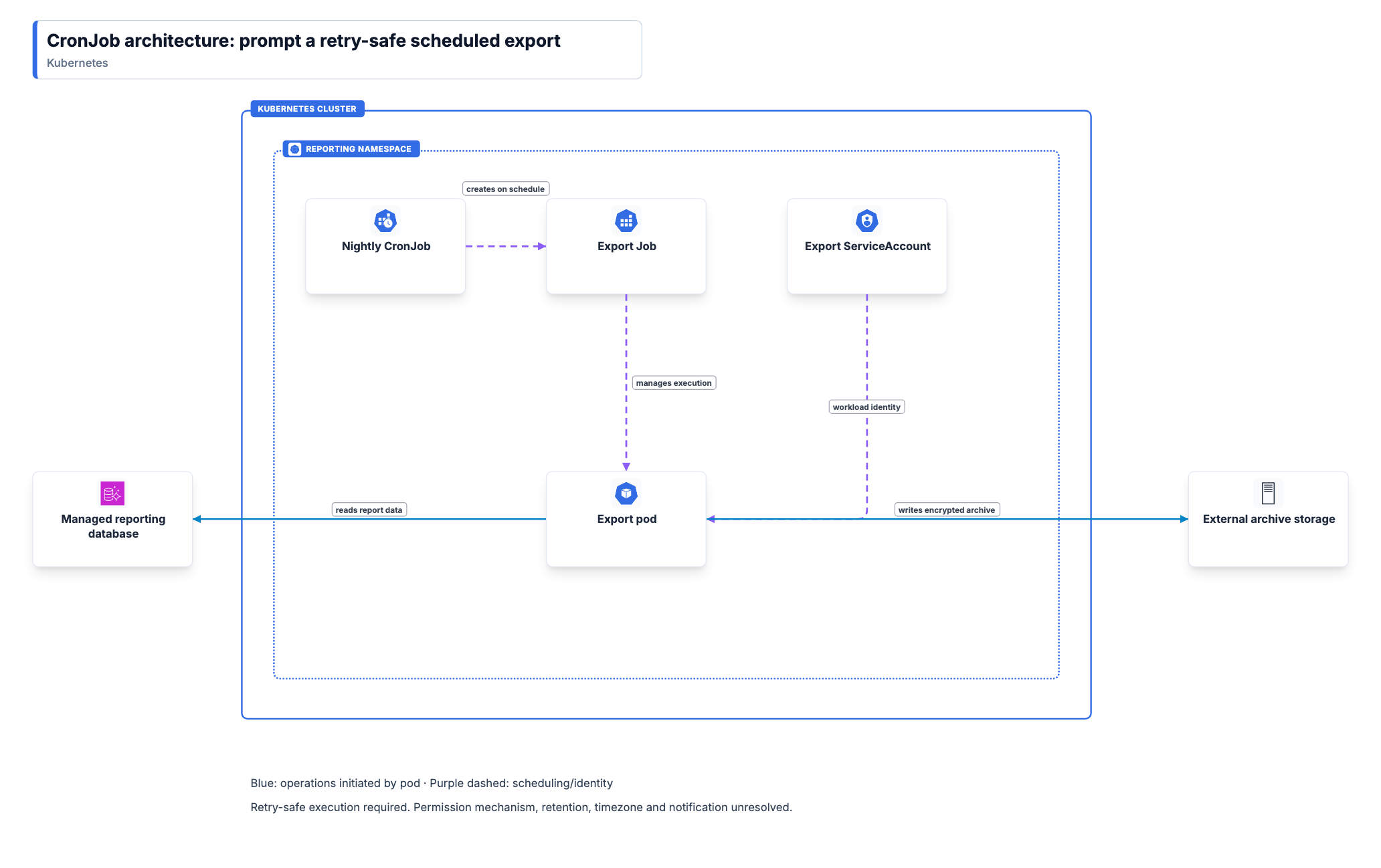 KubernetesCronJob architecture: prompt a retry-safe scheduled exportA Kubernetes CronJob diagram can explain more than a clock pointing at a pod. This example follows a reporting export from its schedule to an archive, while showing where permissions and recovery assumptions belong.
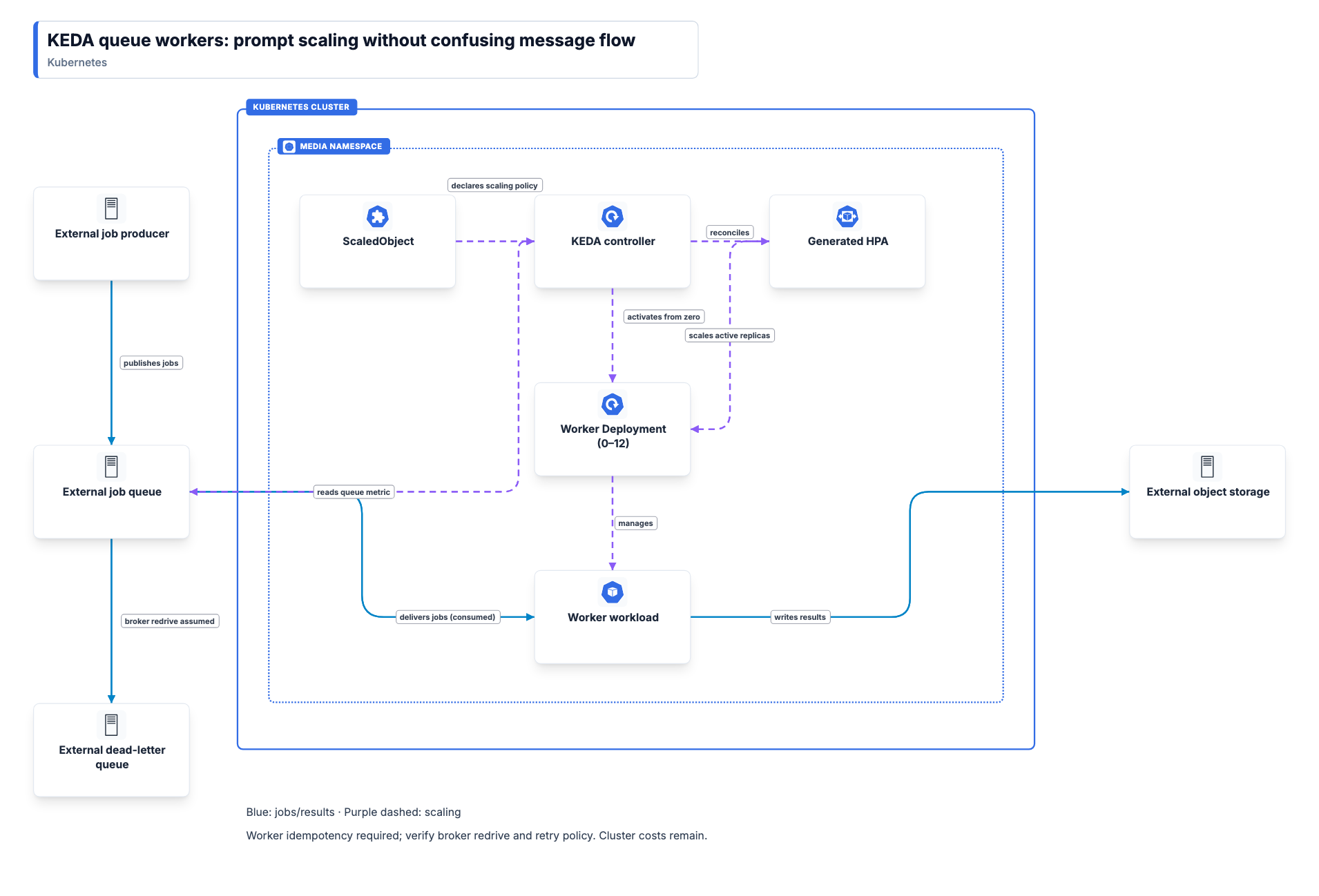 KubernetesKEDA queue workers: prompt scaling without confusing message flowA KEDA Kubernetes diagram needs two stories: workers processing jobs and controllers deciding how many workers should exist. This example keeps the queue, object store and failure destination outside the cluster, and makes scaling a separate management relationship.