OpenID Connect sign-in: authorization code flow with PKCE
OpenID Connect adds identity to OAuth 2.0: a signed ID token that tells an app who signed in. The sign-in flow drawn step by step, what is inside an ID token and how to validate it, which token goes where, logout, and when to use OIDC, OAuth or SAML.
Opens a copy in the editor, in a new tab, ready to change. No account needed.
What’s in this diagram
services and parts
- You
- App you sign in to (relying party)
- /authorize (authentication)
- /token endpoint
- Signing keys (JWKS)
- /userinfo
groups
- OpenID provider
Key points
- OAuth gives an app an access token for an API. OpenID Connect adds an ID token that tells the app who signed in.
- Ask for
scope=openidand use the authorization code flow with PKCE. It is the same OAuth flow with one more token back. - The ID token is for the app, never for an API. The access token is for the API, and the app should not read it.
- Validate every ID token: signature, issuer, audience, expiry and nonce.
The whole story, step by step: OpenID Connect explained: ID tokens, flows and when to use OIDC.
More diagrams
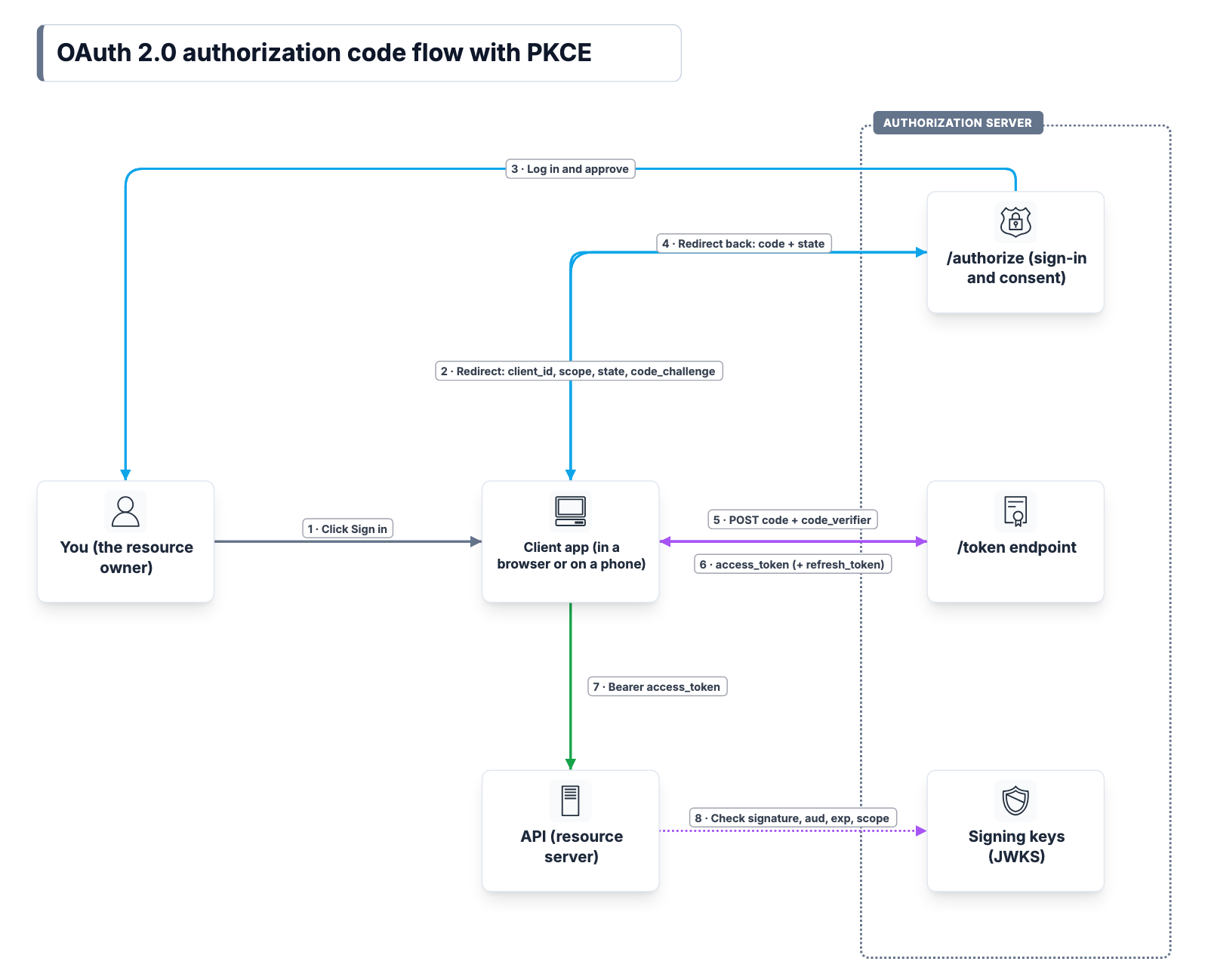 SecurityOAuth 2.0 authorization code flow with PKCEOAuth 2.0 lets an app act for you without seeing your password. Here is every flow drawn step by step: authorization code with PKCE, with and without a client secret, the retired implicit flow, client credentials and the device flow, and which one to use.
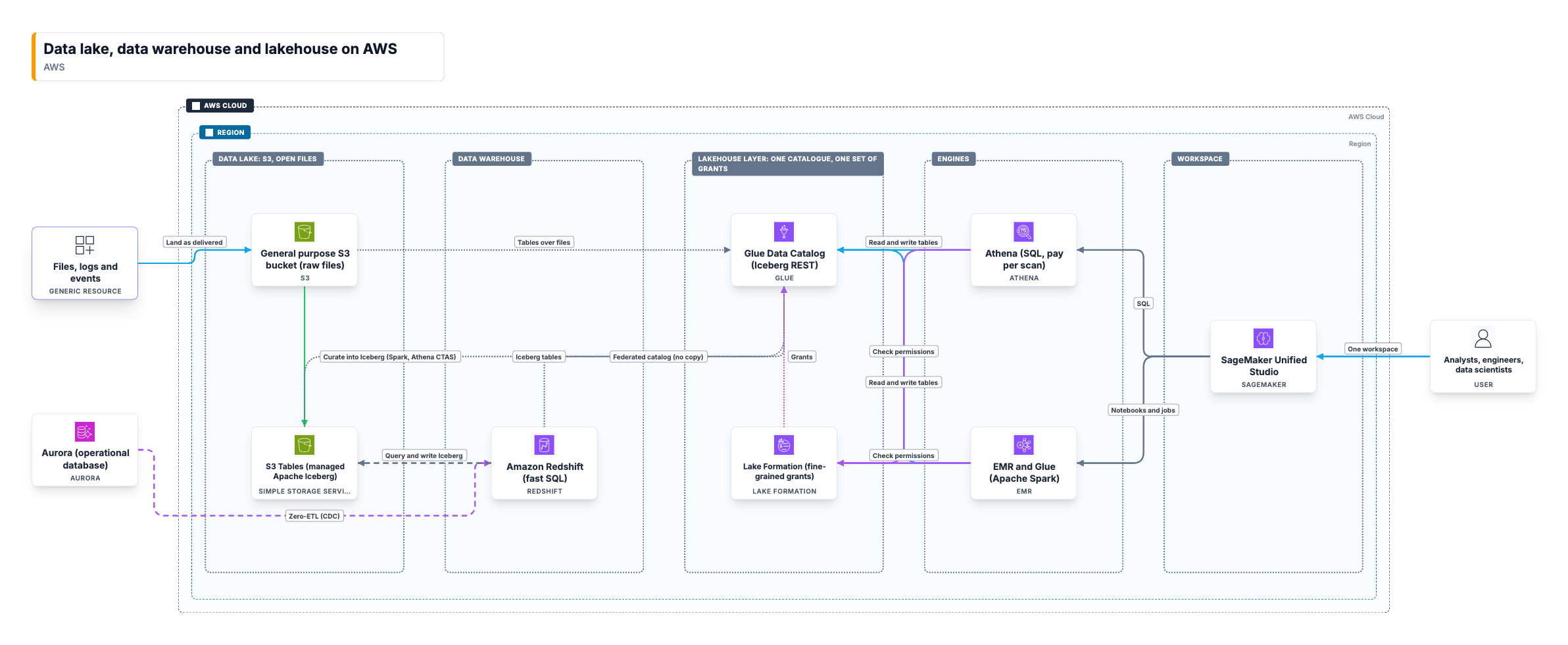 AWSData lake, data warehouse and lakehouse on AWSS3, Glue and Athena vs Amazon Redshift vs Apache Iceberg tables under one catalogue: what each is on AWS, where each fits in one diagram, and which to start with.
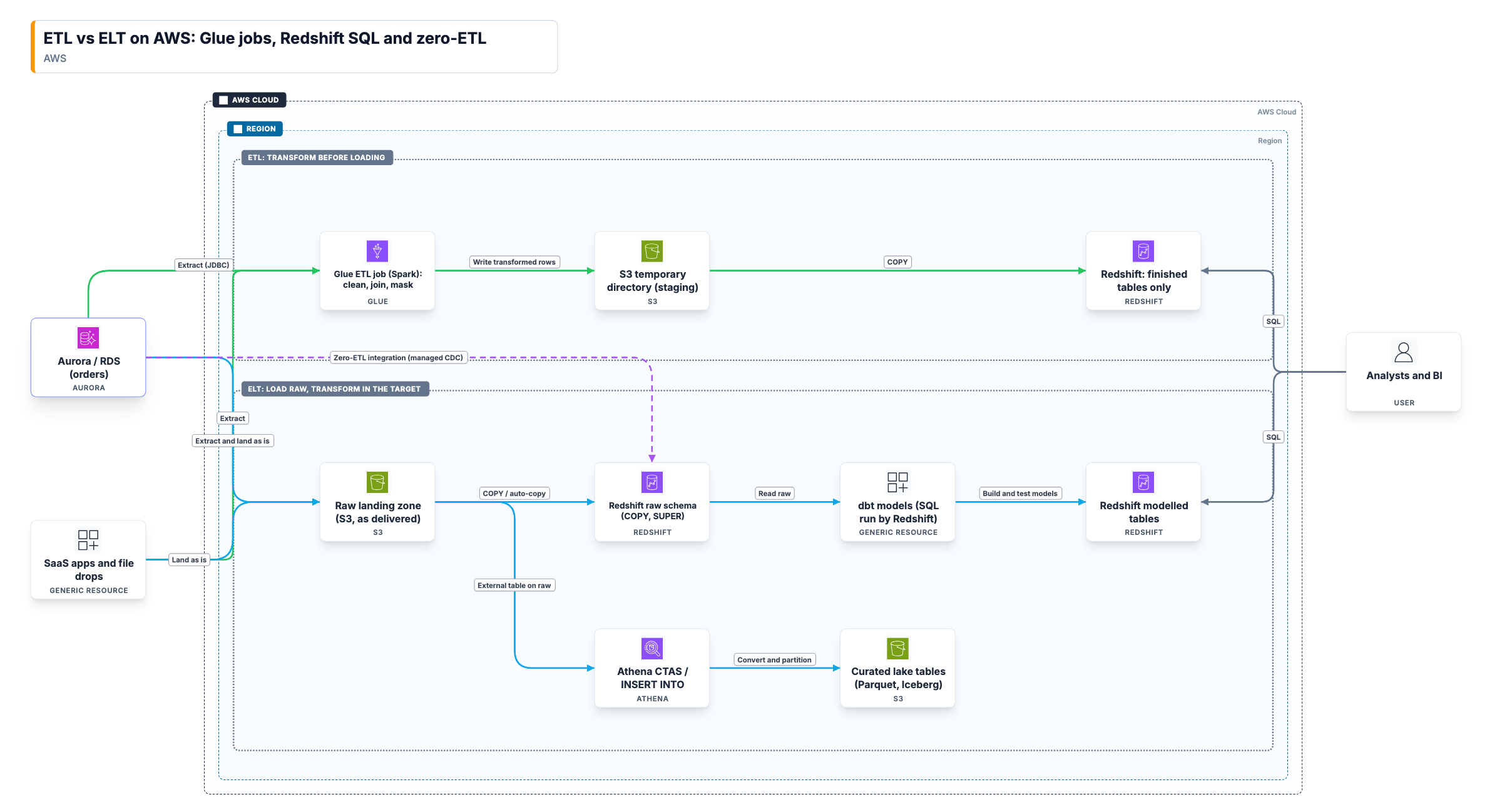 AWSETL vs ELT on AWS: Glue jobs, Redshift SQL and zero-ETLETL vs ELT on AWS, drawn side by side: Glue Spark jobs that transform before loading, raw loads transformed in Redshift or with Athena, and where zero-ETL fits.