ETL vs ELT on AWS: Glue jobs, Redshift SQL and zero-ETL
ETL vs ELT on AWS, drawn side by side: Glue Spark jobs that transform before loading, raw loads transformed in Redshift or with Athena, and where zero-ETL fits.
Opens a copy in the editor, in a new tab, ready to change. No account needed.
What’s in this diagram
services and parts
- Aurora / RDS (orders)
- SaaS apps and file drops
- Analysts and BI
- Glue ETL job (Spark): clean, join, mask
- S3 temporary directory (staging)
- Redshift: finished tables only
- Raw landing zone (S3, as delivered)
- Redshift raw schema (COPY, SUPER)
- dbt models (SQL run by Redshift)
- Redshift modelled tables
- Athena CTAS / INSERT INTO
- Curated lake tables (Parquet, Iceberg)
groups
- AWS Cloud
- Region
- ETL: transform before loading
- ELT: load raw, transform in the target
Key points
- ETL transforms on a separate engine before loading. ELT loads raw data first and transforms it inside the warehouse or lake.
- On AWS, ETL usually means a Glue Spark job. ELT means SQL in Redshift, often organised with dbt, or Athena CTAS on the lake.
- ELT keeps the raw copy, so you can rebuild when the logic changes. ETL can keep personal or messy data out of the target altogether.
- Zero-ETL replaces the extract and load, not the transform. It is ELT with the pipeline run for you.
The whole story, step by step: ETL vs ELT on AWS: Glue jobs, Redshift SQL and zero-ETL.
More diagrams
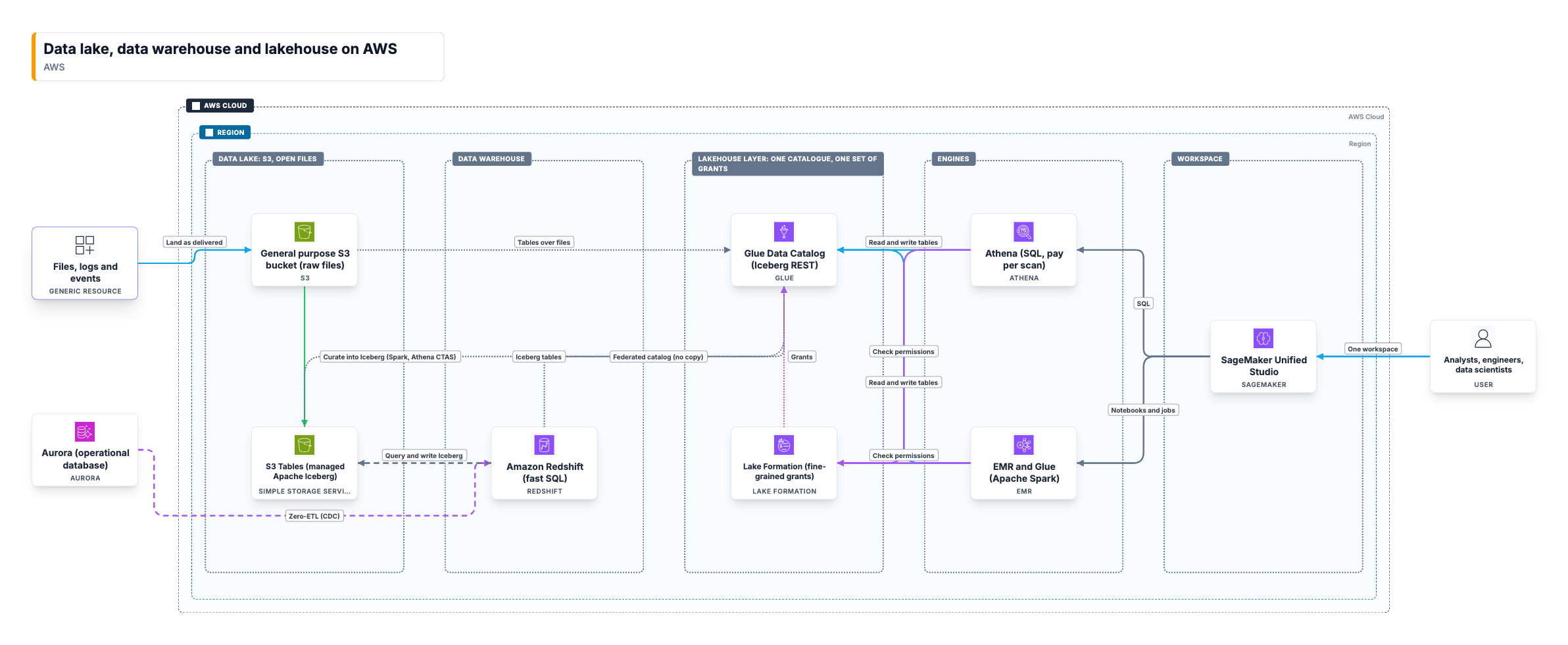 AWSData lake, data warehouse and lakehouse on AWSS3, Glue and Athena vs Amazon Redshift vs Apache Iceberg tables under one catalogue: what each is on AWS, where each fits in one diagram, and which to start with.
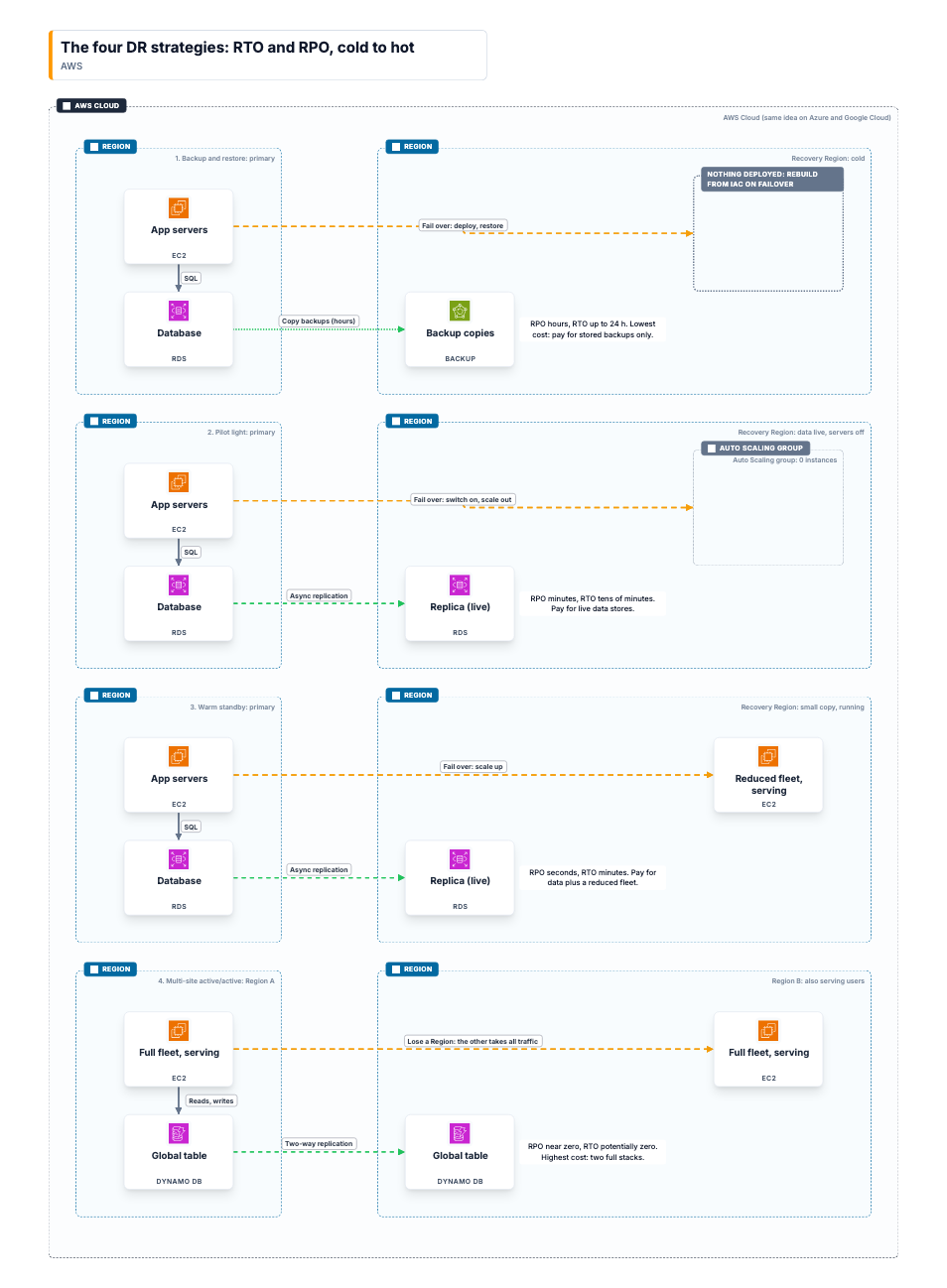 AWS · Azure · Google CloudThe four DR strategies: RTO and RPO, cold to hotWhat RTO and RPO mean, with a worked example, and the four disaster recovery strategies from backup and restore to active/active: what runs, what it costs, and how to choose.
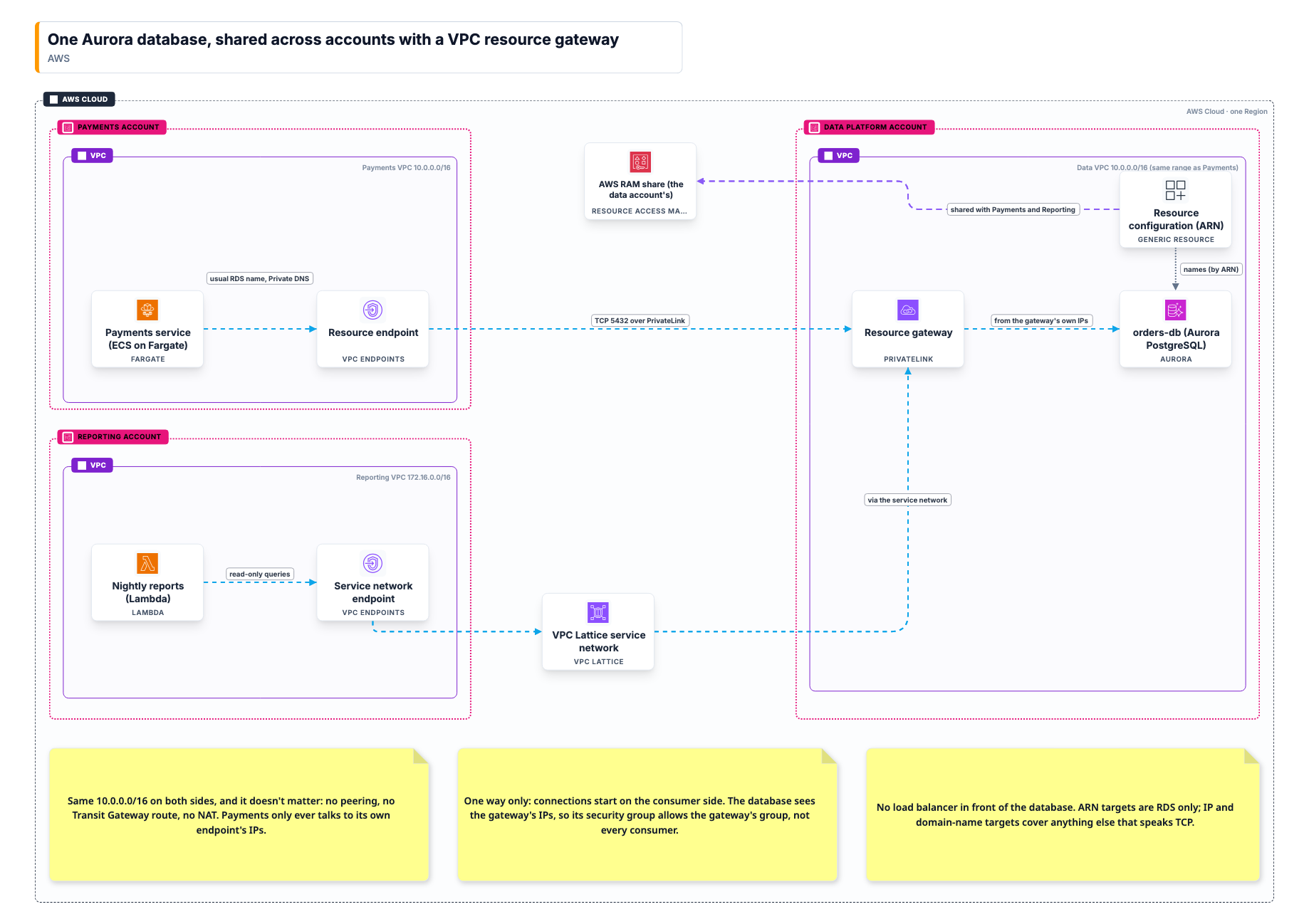 AWSOne Aurora database, shared across accounts with a VPC resource gatewayOne Aurora database reached from two AWS accounts, without VPC peering, a Transit Gateway or a load balancer: how resource gateways, resource configurations and resource endpoints fit together, even with overlapping CIDRs.