Zone-redundant web app on Azure App Service with private endpoints
Microsoft's zone-redundant App Service baseline, drawn and explained: Application Gateway with WAF, private endpoints, VNet integration, private DNS, and what it costs to run and deploy.
Opens a copy in the editor, in a new tab, ready to change. No account needed.
What’s in this diagram
services and parts
- Users
- Application Gateway + WAF (zone-redundant)
- VNet integration (App Service outbound)
- Private endpoint: App Service
- Private endpoint: Key Vault
- Private endpoint: SQL Database
- Private endpoint: Storage
- Key Vault (TLS certificate, app secrets)
- Private DNS zones
- App Service (zone-redundant, 2+ instances)
- Application Insights and Azure Monitor
- SQL Database (zone-redundant)
- Storage (ZRS, firewall deny by default)
groups
- Azure region (availability zones)
- Virtual network
- Application Gateway subnet
- App Service integration subnet
- Private endpoints subnet
Key points
- One public entry point: Application Gateway terminates TLS, applies WAF rules, and forwards privately.
- Private endpoints in, VNet integration out: App Service, SQL Database, Key Vault and Storage all refuse public traffic.
- Private DNS zones are what make the private addresses work; forget them and nothing resolves.
- Zone redundancy needs a minimum number of instances, and those instances cost money even at night.
The whole story, step by step: Azure App Service baseline architecture, explained.
More diagrams
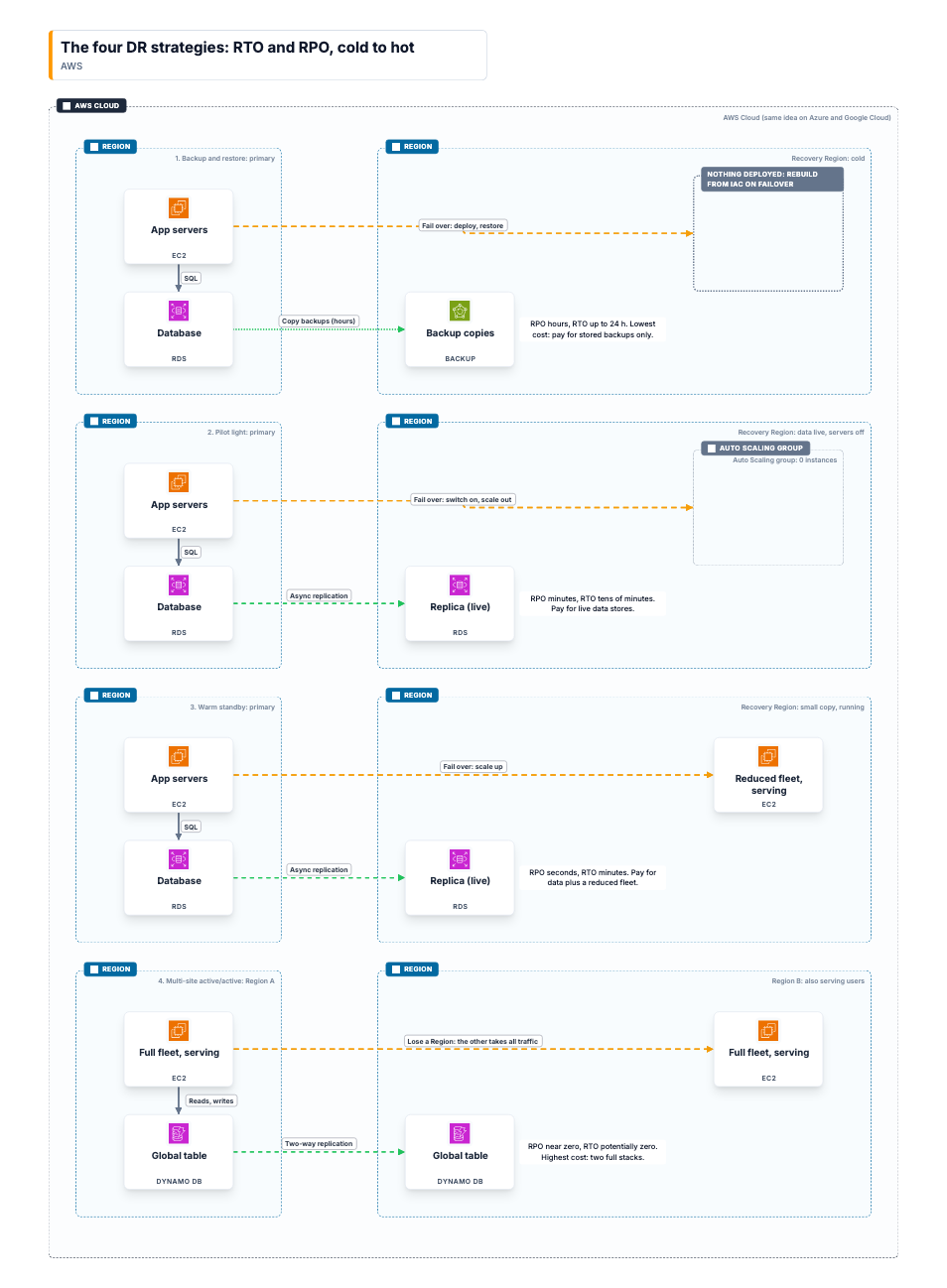 AWS · Azure · Google CloudThe four DR strategies: RTO and RPO, cold to hotWhat RTO and RPO mean, with a worked example, and the four disaster recovery strategies from backup and restore to active/active: what runs, what it costs, and how to choose.
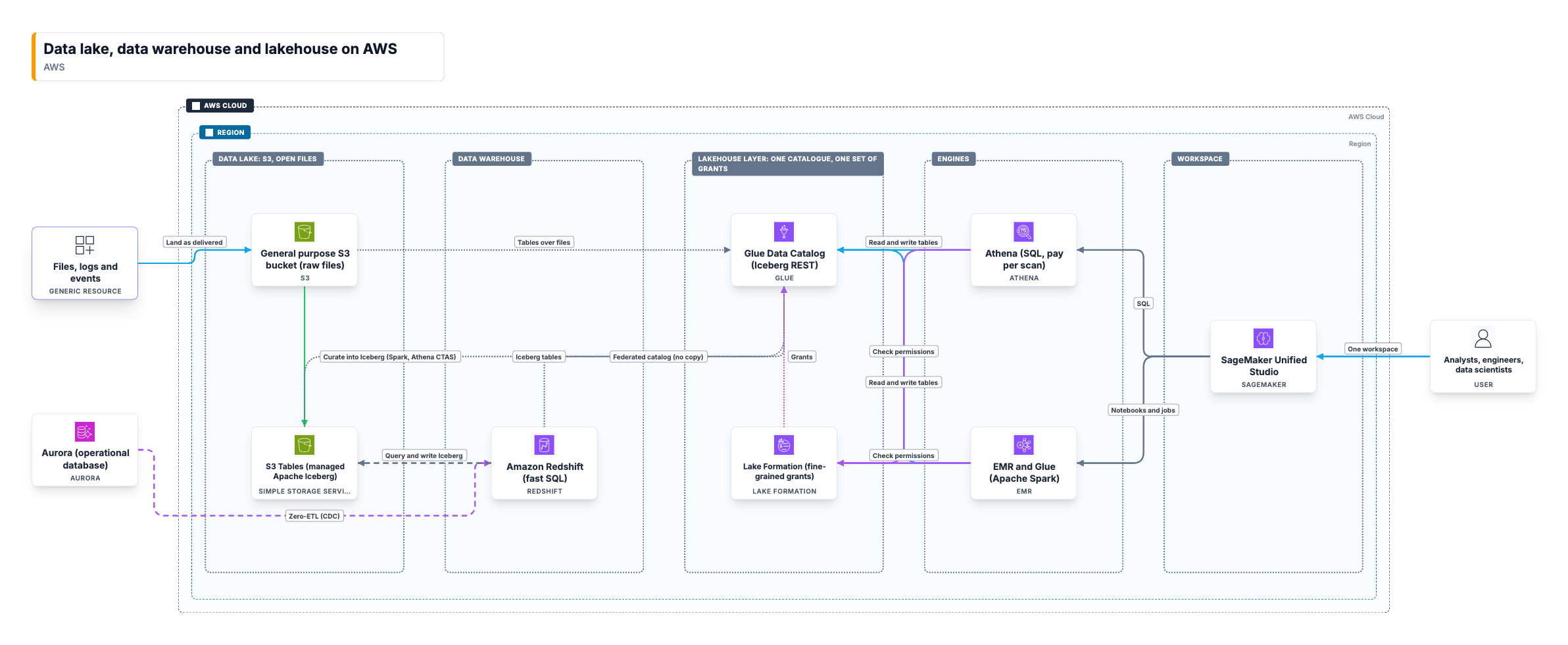 AWSData lake, data warehouse and lakehouse on AWSS3, Glue and Athena vs Amazon Redshift vs Apache Iceberg tables under one catalogue: what each is on AWS, where each fits in one diagram, and which to start with.
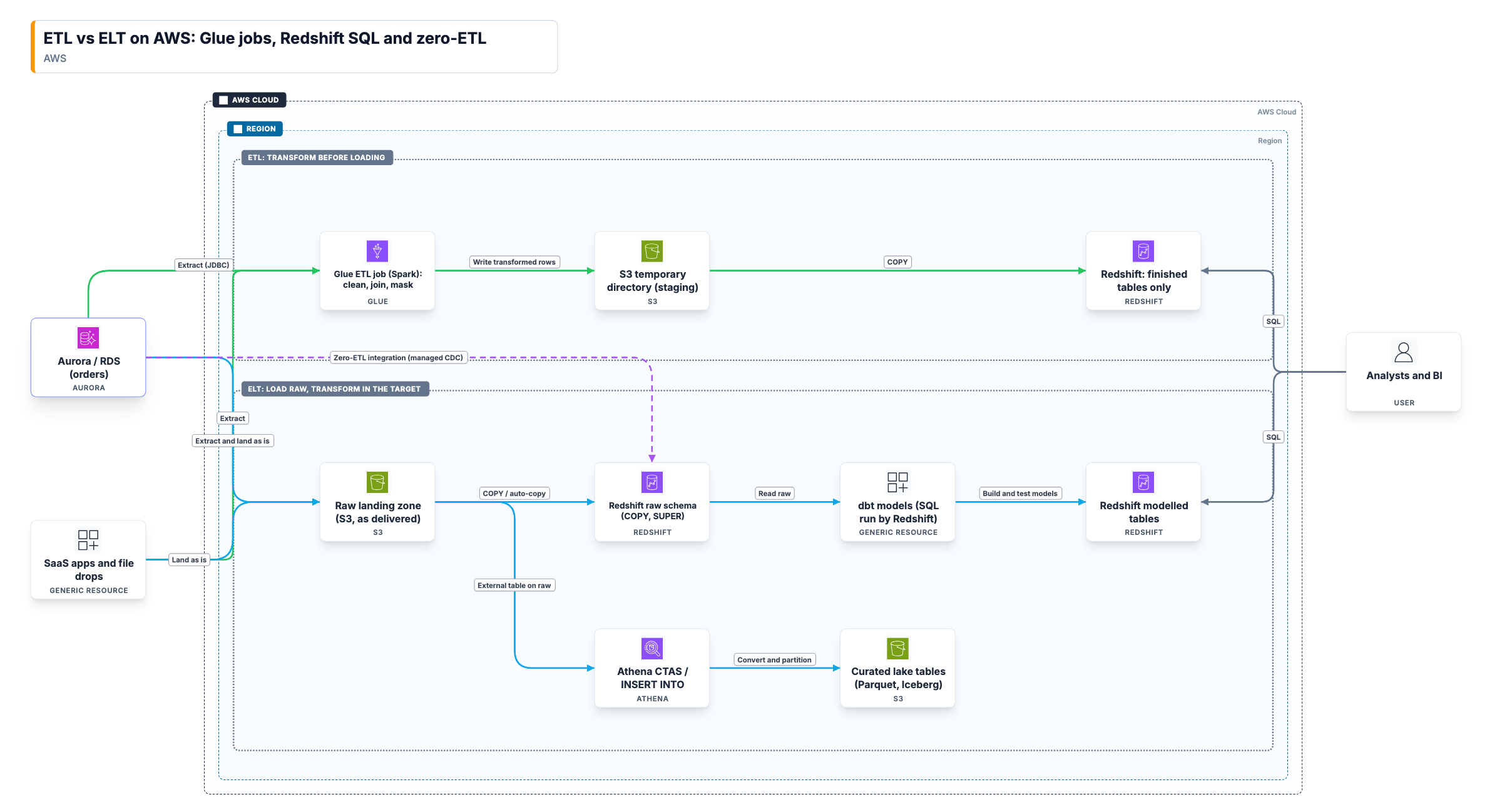 AWSETL vs ELT on AWS: Glue jobs, Redshift SQL and zero-ETLETL vs ELT on AWS, drawn side by side: Glue Spark jobs that transform before loading, raw loads transformed in Redshift or with Athena, and where zero-ETL fits.