// blog › using archhy
Using archhy
15 posts on Using archhy.
How to prompt archhy: 10 Kubernetes diagram examplesWrite clearer architecture briefs in archhy, then try ten original Kubernetes prompts covering traffic, scaling, GitOps, storage and multi-cluster views.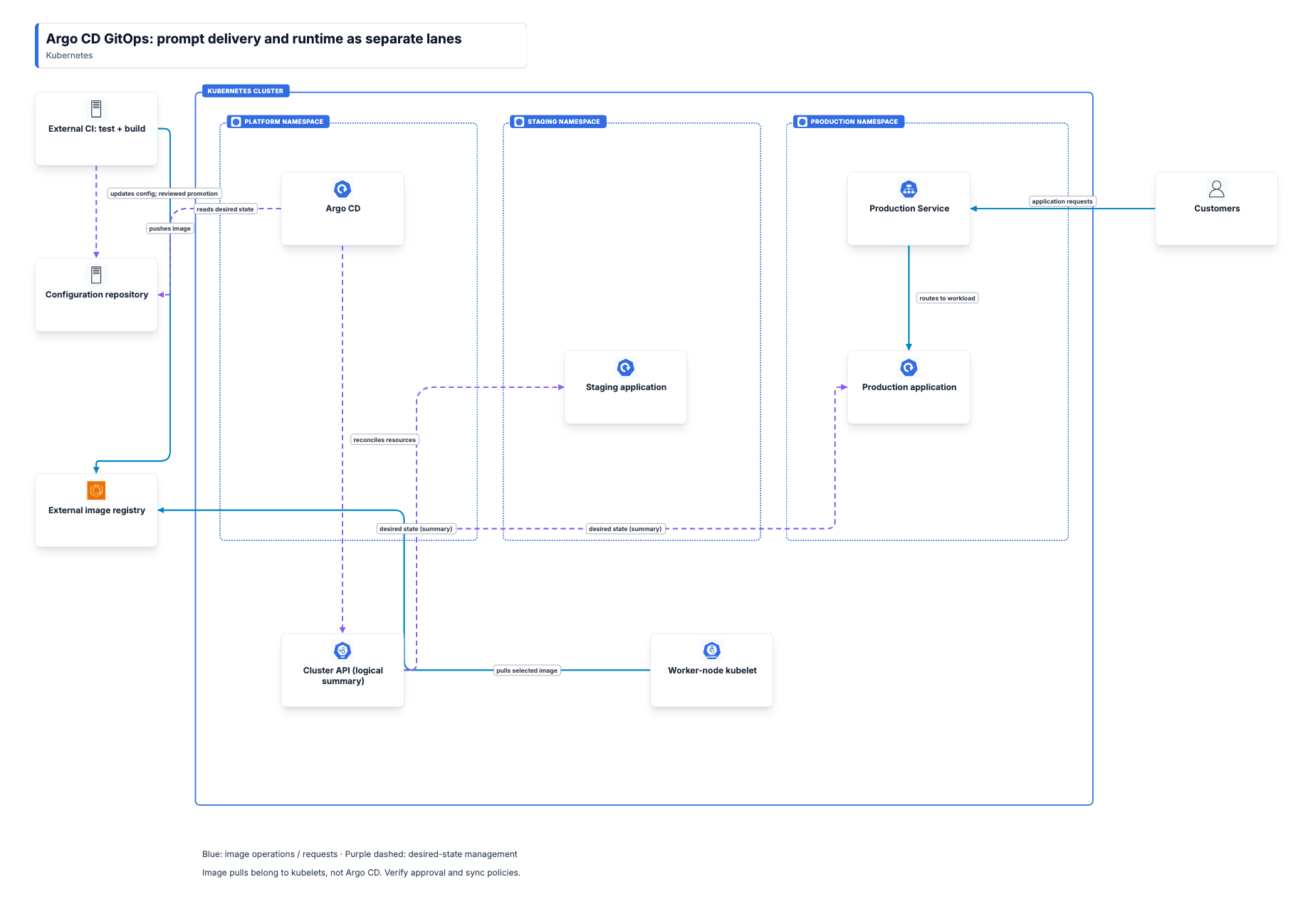 Argo CD GitOps: prompt delivery and runtime as separate lanesAn Argo CD GitOps diagram should show how desired state reaches the cluster while keeping customer traffic separate. This example draws a short delivery chain and makes production promotion a repository change that a reviewer can identify.
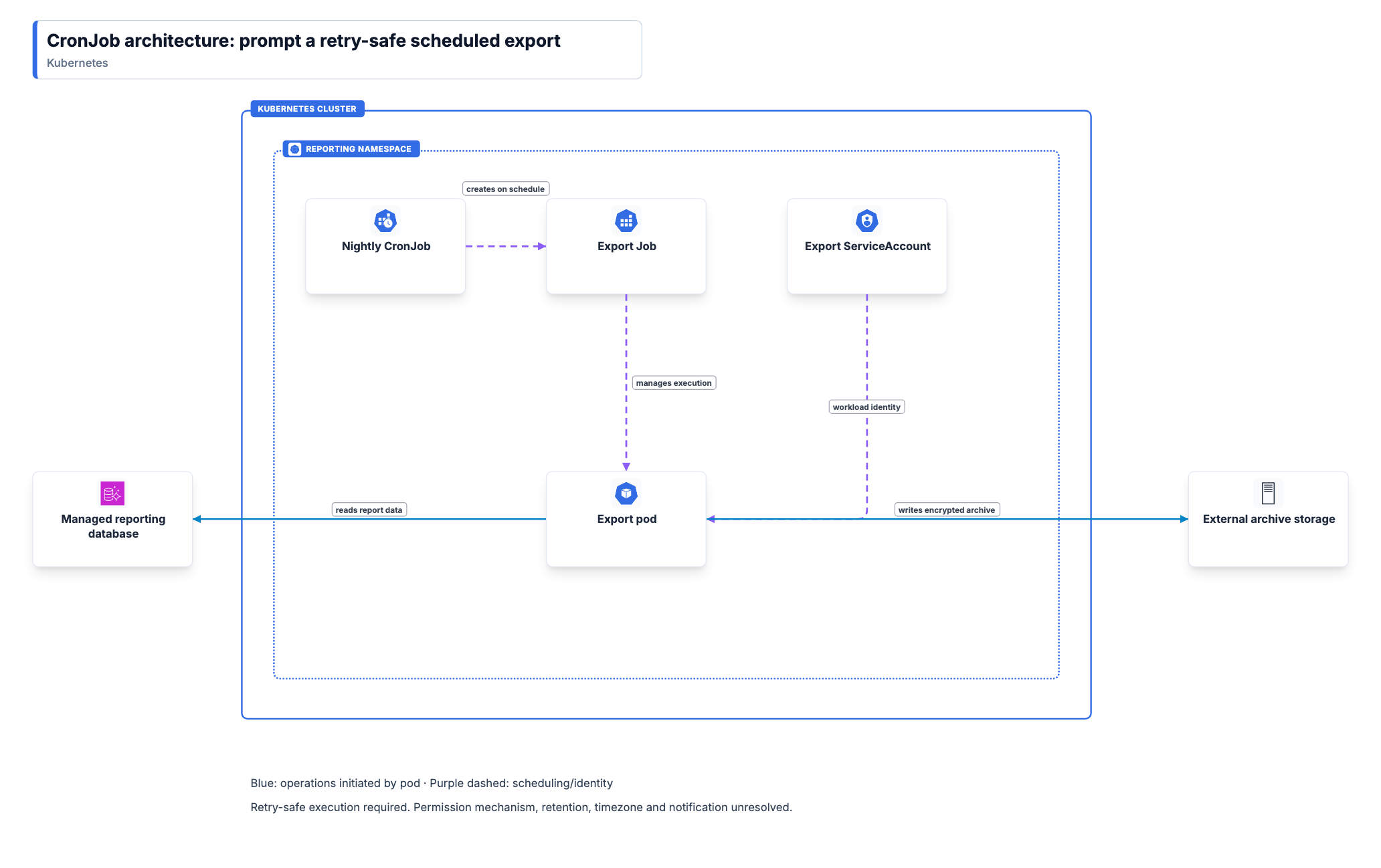 CronJob architecture: prompt a retry-safe scheduled exportA Kubernetes CronJob diagram can explain more than a clock pointing at a pod. This example follows a reporting export from its schedule to an archive, while showing where permissions and recovery assumptions belong.
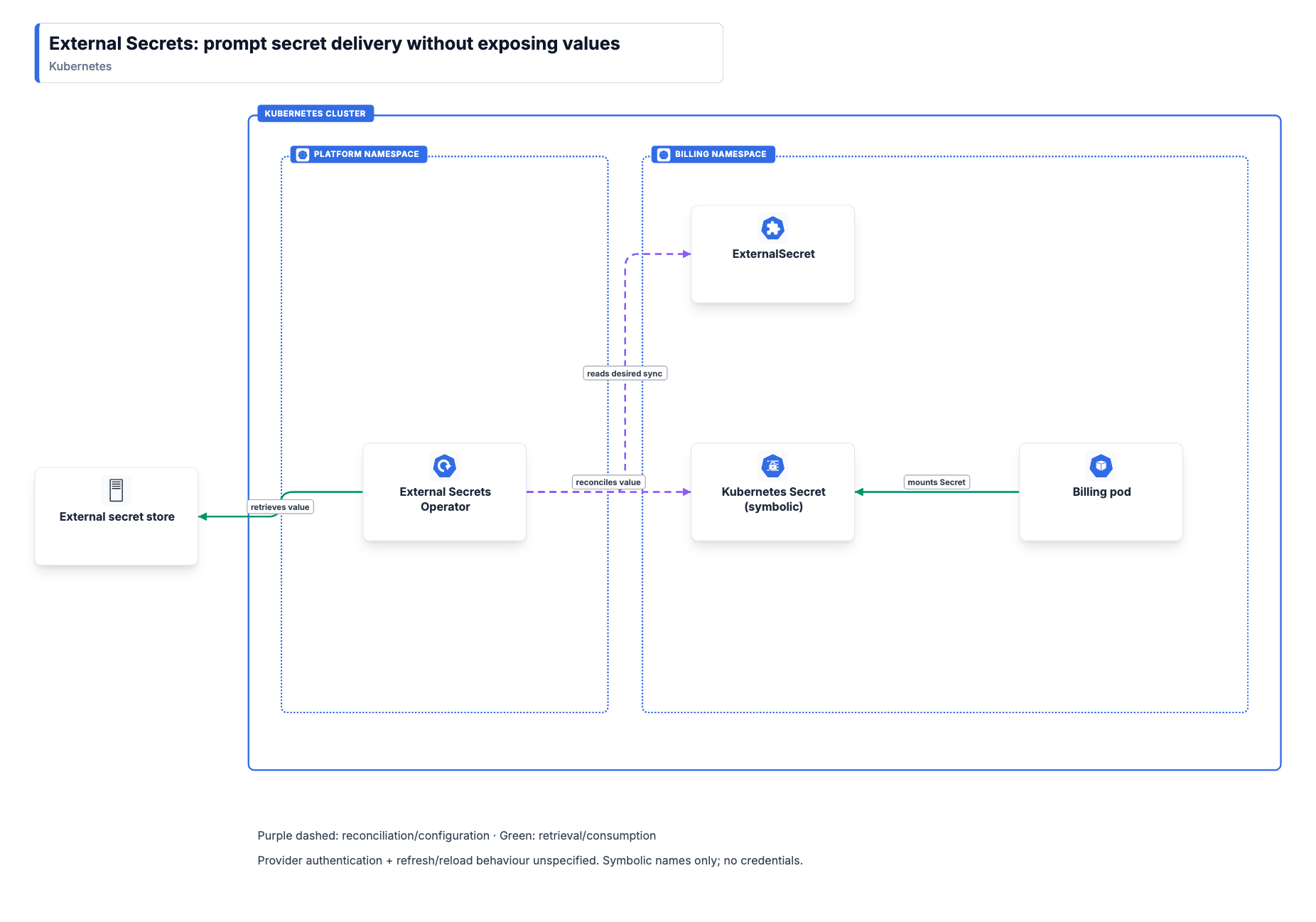 External Secrets: prompt secret delivery without exposing valuesA Kubernetes External Secrets diagram should explain how an application receives a value without containing that value. This example draws the reconciliation and consumption paths using symbolic names, with authentication left explicit rather than guessed.
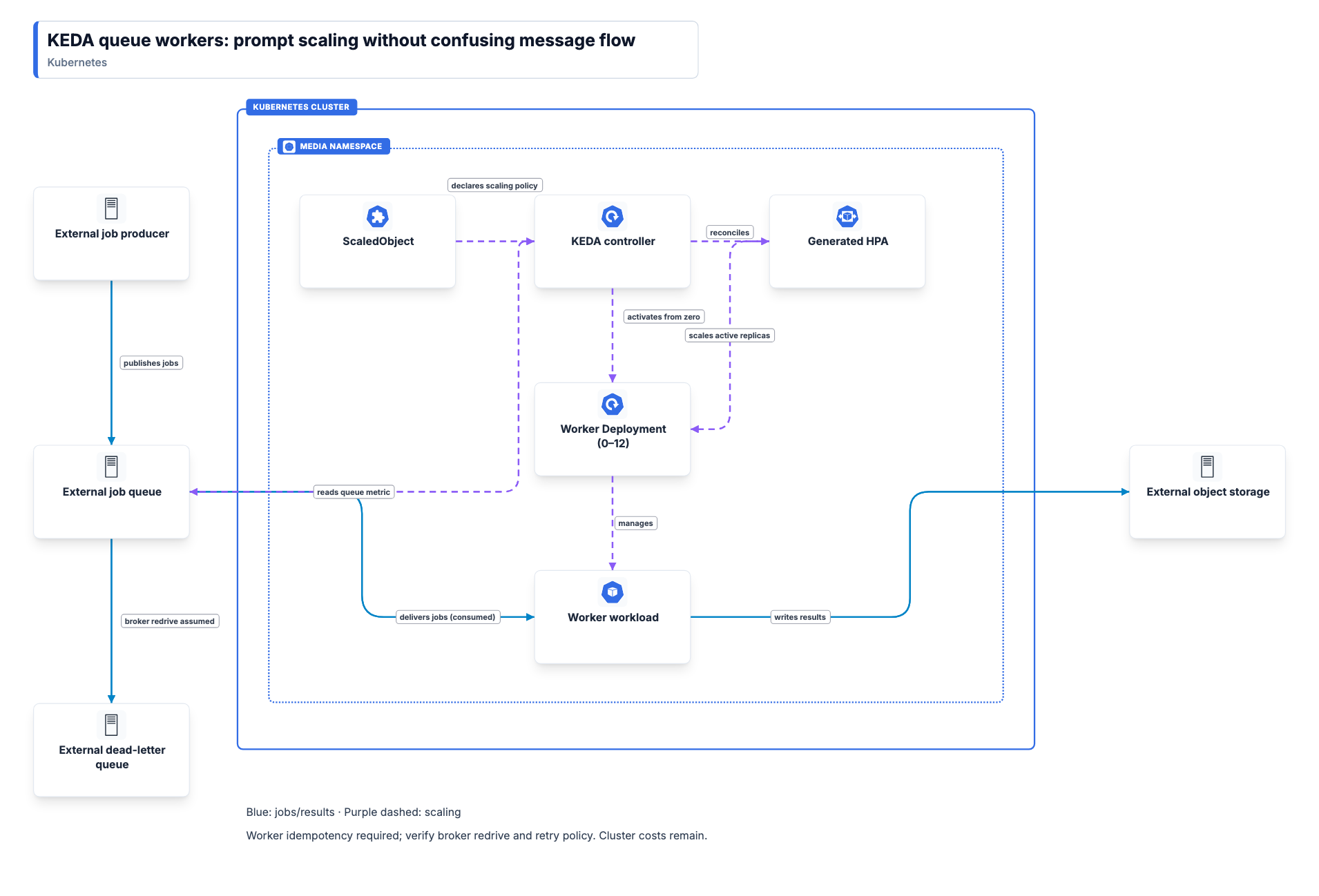 KEDA queue workers: prompt scaling without confusing message flowA KEDA Kubernetes diagram needs two stories: workers processing jobs and controllers deciding how many workers should exist. This example keeps the queue, object store and failure destination outside the cluster, and makes scaling a separate management relationship.
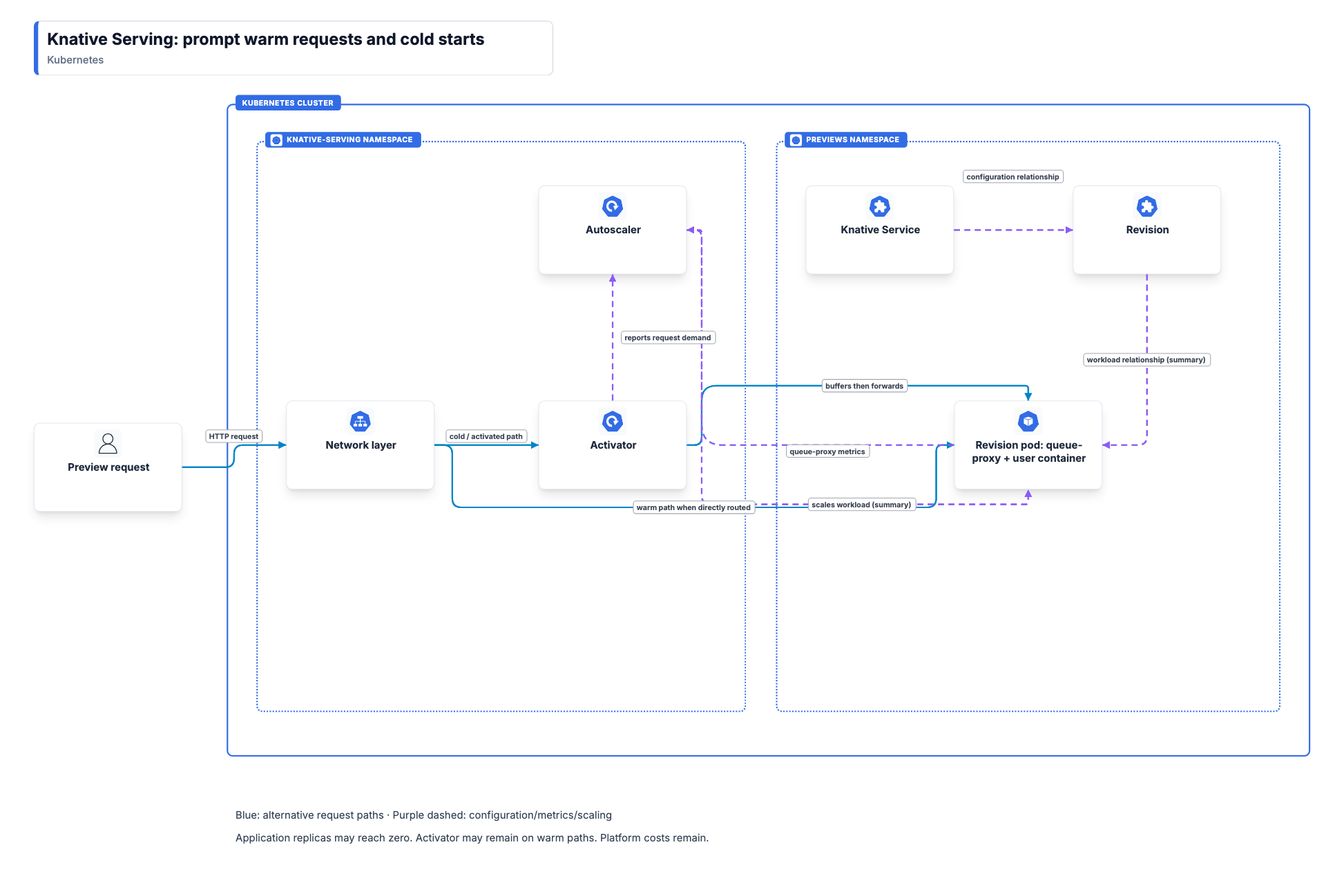 Knative Serving: prompt warm requests and cold startsA Knative Serving diagram should make the conditional cold-start path clear. This example separates platform resources from the application, then shows how the request path changes when application replicas have scaled down.
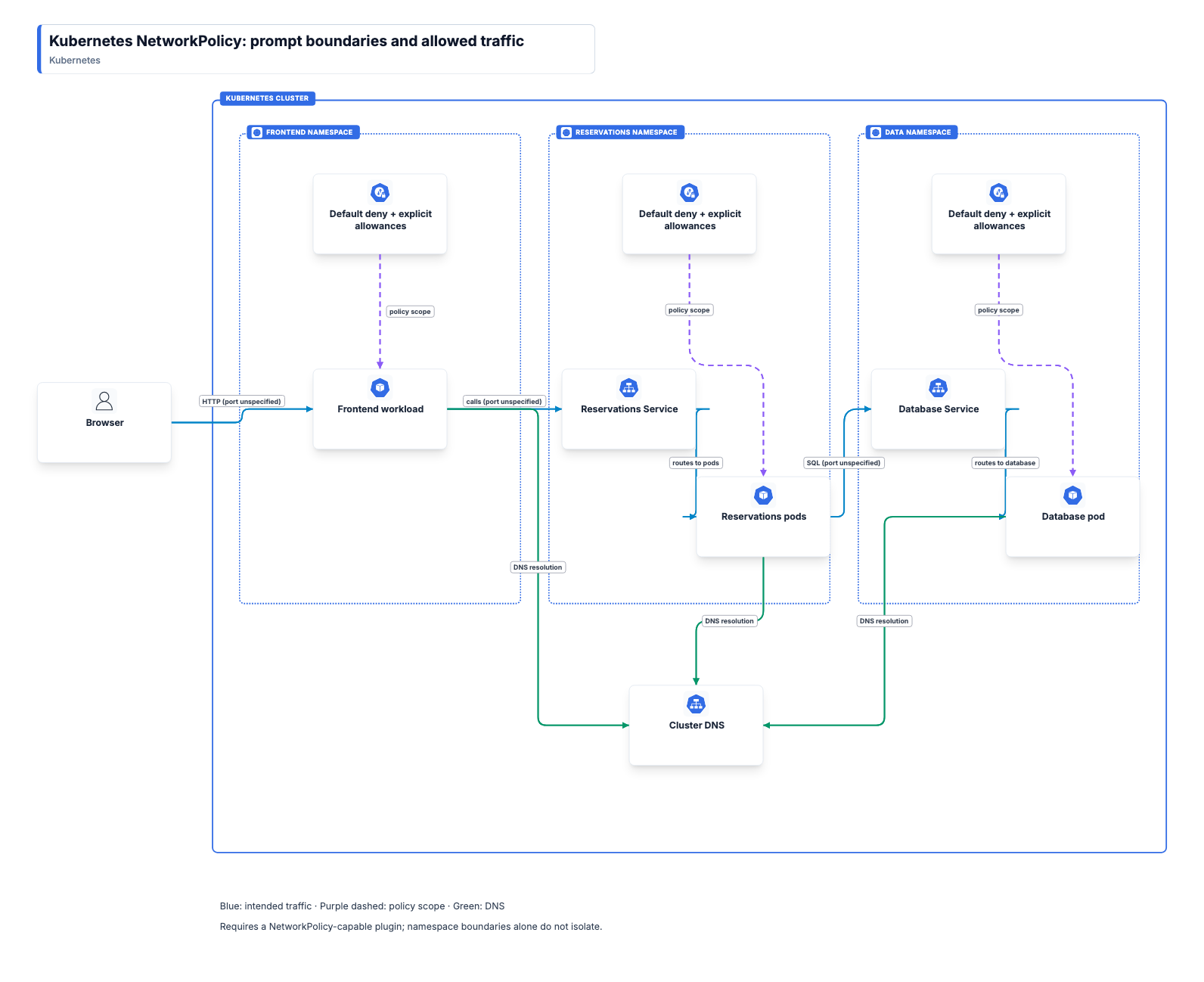 Kubernetes NetworkPolicy: prompt boundaries and allowed trafficA Kubernetes NetworkPolicy diagram should explain which traffic is intended to be allowed, without making a namespace look like a firewall appliance. This example uses a booking application to distinguish visual grouping, workload selection and the connections an operator needs to verify.
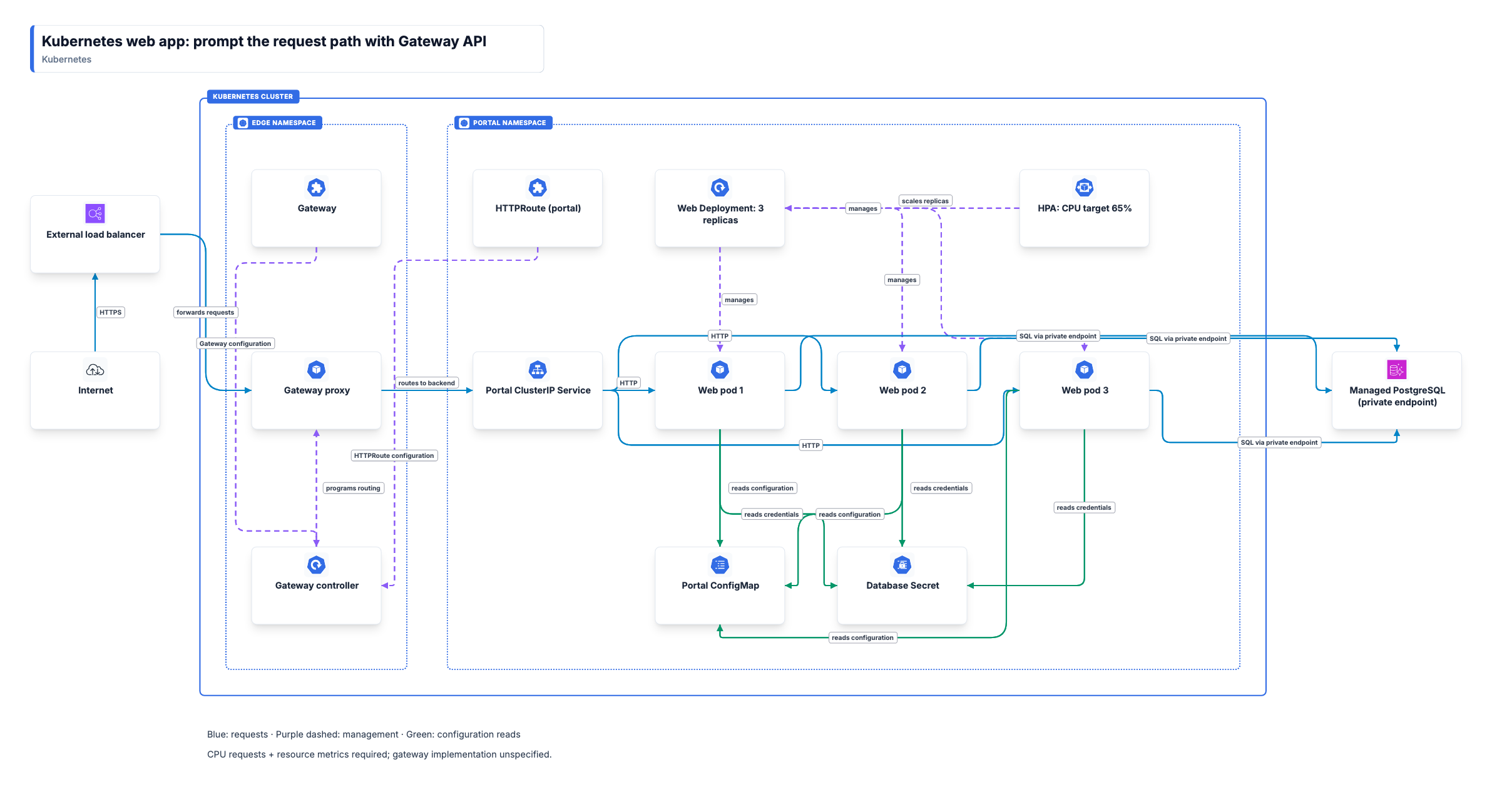 Kubernetes web app: prompt the request path with Gateway APIA Kubernetes Gateway API diagram is most useful when the reader can trace a customer request without mistaking configuration for another network hop. This first example in our prompting series draws a small customer portal, then separates its runtime path from the objects that configure and scale it.
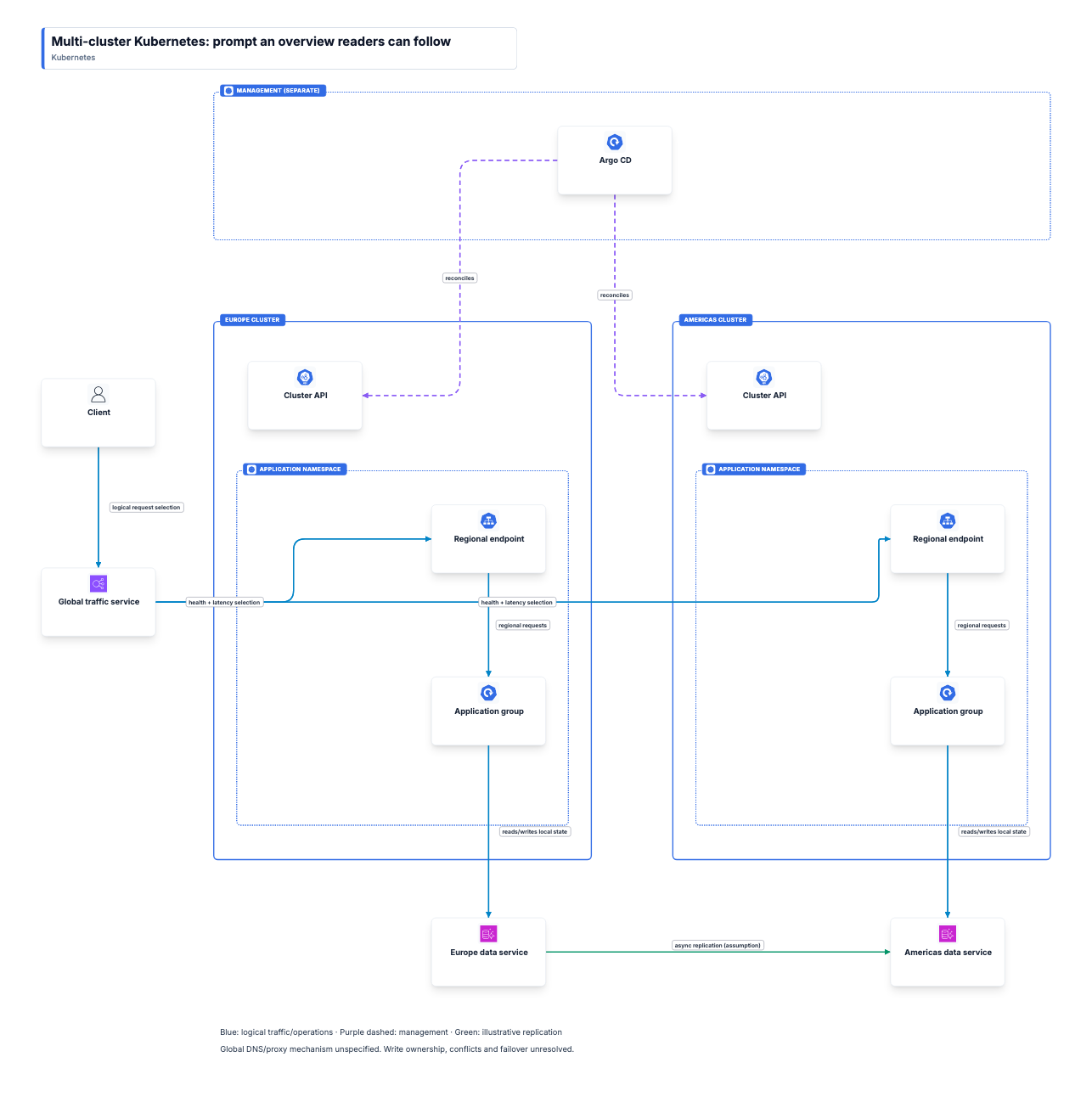 Multi-cluster Kubernetes: prompt an overview readers can followA Kubernetes multi-cluster diagram can become unreadable before it explains anything. This example stays at the regional overview level: traffic selection, two independent clusters, management and application state replication.
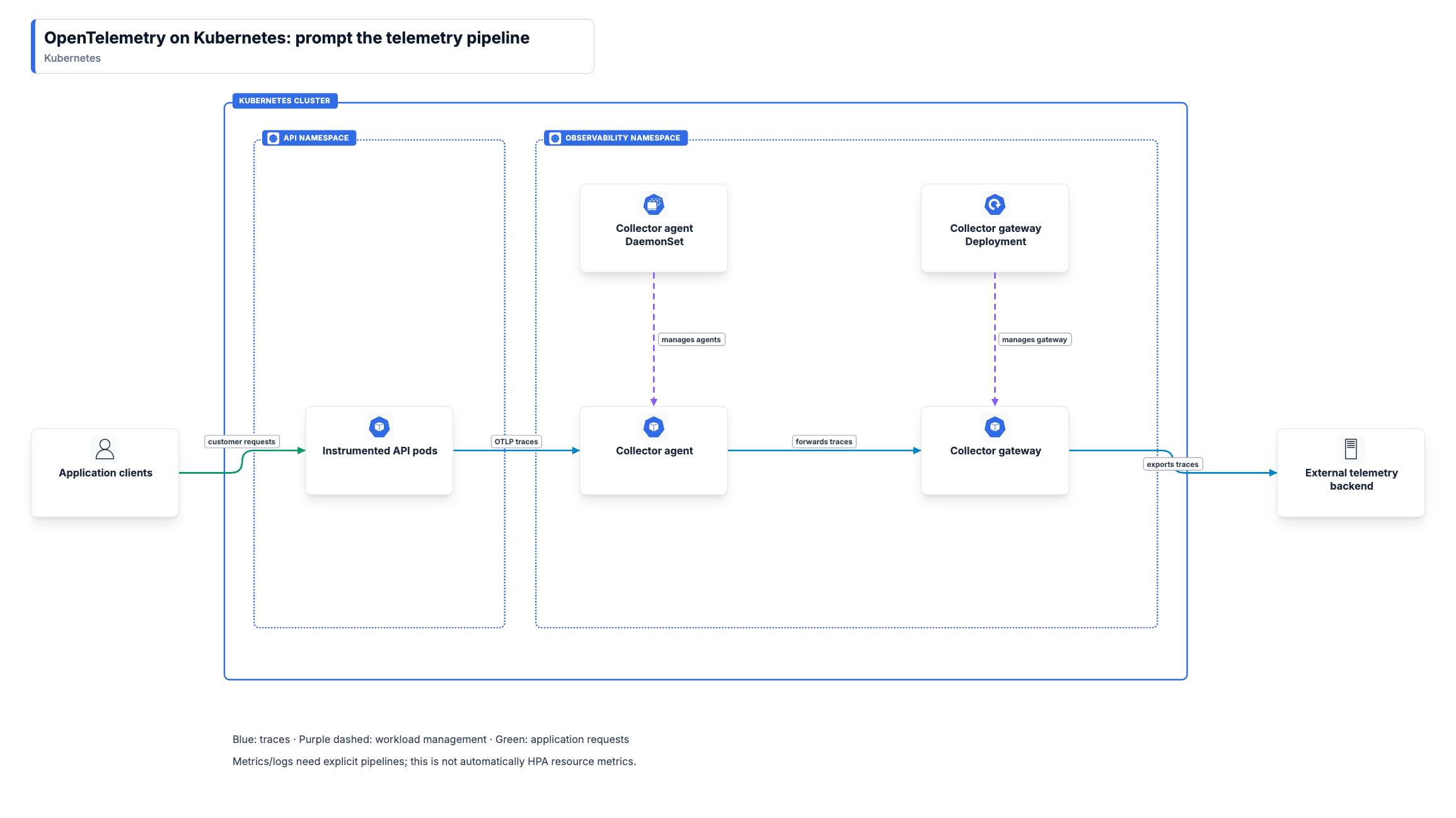 OpenTelemetry on Kubernetes: prompt the telemetry pipelineA Kubernetes OpenTelemetry diagram is a view of telemetry delivery, not another diagram of every application dependency. This example uses a Collector agent and gateway pattern to explain how traces reach an external backend.
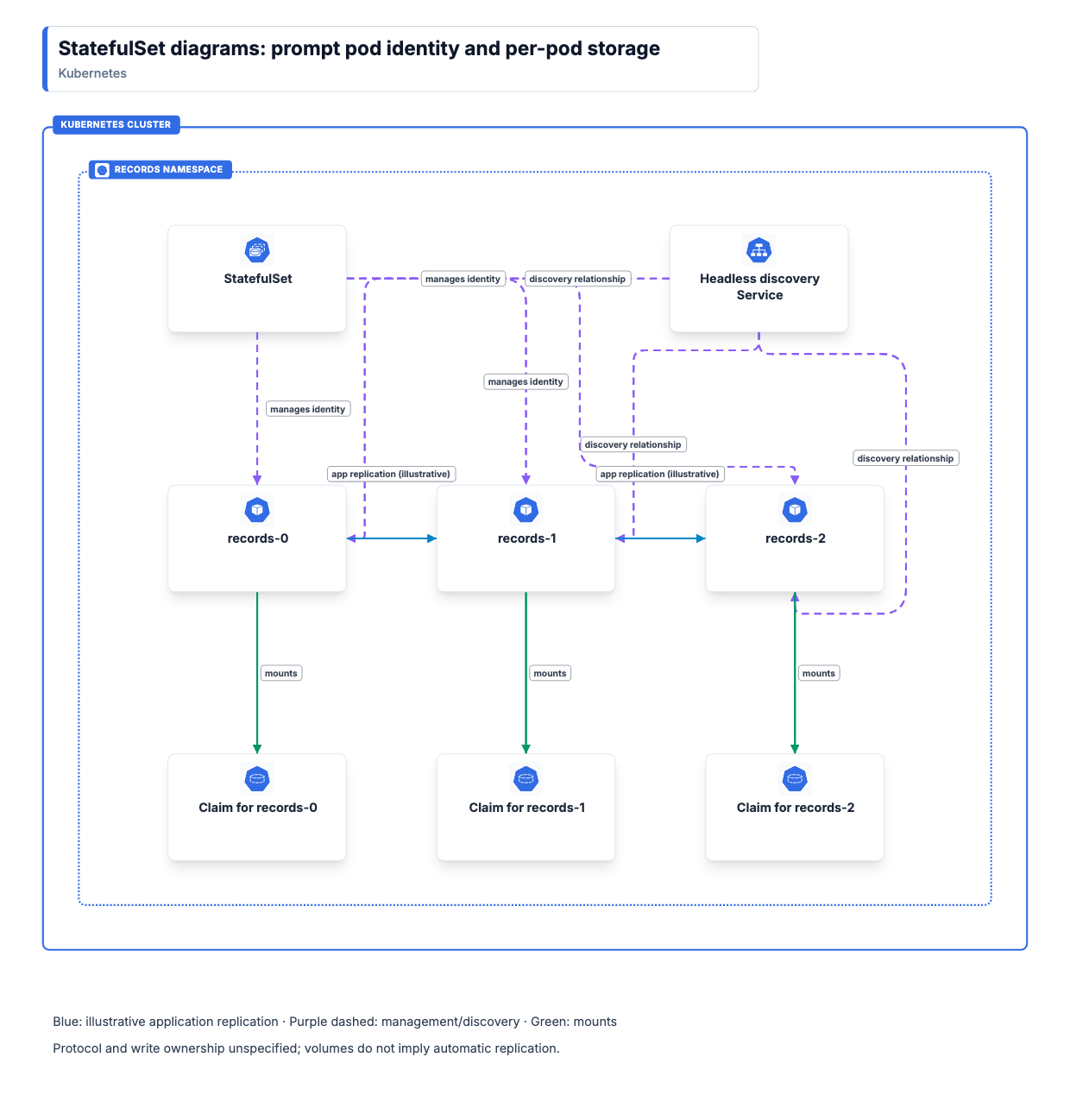 StatefulSet diagrams: prompt pod identity and per-pod storageA Kubernetes StatefulSet diagram should make stable identity and storage ownership easy to inspect. This example draws three members of a generic stateful application, then deliberately separates discovery, volume mounts and application replication.A new archhy.com, a new look and safety netsA new home page and logo, the editor at archhy.com/app, five looks, view links you can turn off, named undo, and warnings before work could be lost.Rails, shapes and callouts in archhyShape a rail run by run, move either end without losing its label, turn shapes, draw lines end to end and any polygon, and turn info boxes into callouts.Drawing that behaves the way you expectDouble click, Enter and Escape do the obvious thing, services resize with a grip, icons stay centred, labels go where you want, and grid and snap are clear switches.A faster canvas that works on your phonearchhy is now far quicker on big diagrams, pinch and pan work everywhere, and phones get their own layout with a bottom toolbar and sheets.
Argo CD GitOps: prompt delivery and runtime as separate lanesAn Argo CD GitOps diagram should show how desired state reaches the cluster while keeping customer traffic separate. This example draws a short delivery chain and makes production promotion a repository change that a reviewer can identify.CronJob architecture: prompt a retry-safe scheduled exportA Kubernetes CronJob diagram can explain more than a clock pointing at a pod. This example follows a reporting export from its schedule to an archive, while showing where permissions and recovery assumptions belong.External Secrets: prompt secret delivery without exposing valuesA Kubernetes External Secrets diagram should explain how an application receives a value without containing that value. This example draws the reconciliation and consumption paths using symbolic names, with authentication left explicit rather than guessed.KEDA queue workers: prompt scaling without confusing message flowA KEDA Kubernetes diagram needs two stories: workers processing jobs and controllers deciding how many workers should exist. This example keeps the queue, object store and failure destination outside the cluster, and makes scaling a separate management relationship.Knative Serving: prompt warm requests and cold startsA Knative Serving diagram should make the conditional cold-start path clear. This example separates platform resources from the application, then shows how the request path changes when application replicas have scaled down.Kubernetes NetworkPolicy: prompt boundaries and allowed trafficA Kubernetes NetworkPolicy diagram should explain which traffic is intended to be allowed, without making a namespace look like a firewall appliance. This example uses a booking application to distinguish visual grouping, workload selection and the connections an operator needs to verify.Kubernetes web app: prompt the request path with Gateway APIA Kubernetes Gateway API diagram is most useful when the reader can trace a customer request without mistaking configuration for another network hop. This first example in our prompting series draws a small customer portal, then separates its runtime path from the objects that configure and scale it.Multi-cluster Kubernetes: prompt an overview readers can followA Kubernetes multi-cluster diagram can become unreadable before it explains anything. This example stays at the regional overview level: traffic selection, two independent clusters, management and application state replication.OpenTelemetry on Kubernetes: prompt the telemetry pipelineA Kubernetes OpenTelemetry diagram is a view of telemetry delivery, not another diagram of every application dependency. This example uses a Collector agent and gateway pattern to explain how traces reach an external backend.StatefulSet diagrams: prompt pod identity and per-pod storageA Kubernetes StatefulSet diagram should make stable identity and storage ownership easy to inspect. This example draws three members of a generic stateful application, then deliberately separates discovery, volume mounts and application replication.A new archhy.com, a new look and safety netsA new home page and logo, the editor at archhy.com/app, five looks, view links you can turn off, named undo, and warnings before work could be lost.Rails, shapes and callouts in archhyShape a rail run by run, move either end without losing its label, turn shapes, draw lines end to end and any polygon, and turn info boxes into callouts.Drawing that behaves the way you expectDouble click, Enter and Escape do the obvious thing, services resize with a grip, icons stay centred, labels go where you want, and grid and snap are clear switches.A faster canvas that works on your phonearchhy is now far quicker on big diagrams, pinch and pan work everywhere, and phones get their own layout with a bottom toolbar and sheets.