// blog › guides
Guides
6 posts on Guides.
Architecture patterns vs design patterns vs messaging patternsArchitecture, design and messaging patterns describe the same software at three zoom levels: the whole system, the code inside one program, and how programs pass work to each other. What each one is, how they fit together and when to reach for which.How we made the FortiDraw page in archhy: annotated screenshots, step by stepA worked example of a product one-pager made in archhy: real screenshots marked up four ways, feature cards with demo links, a quick sketch and a call to action.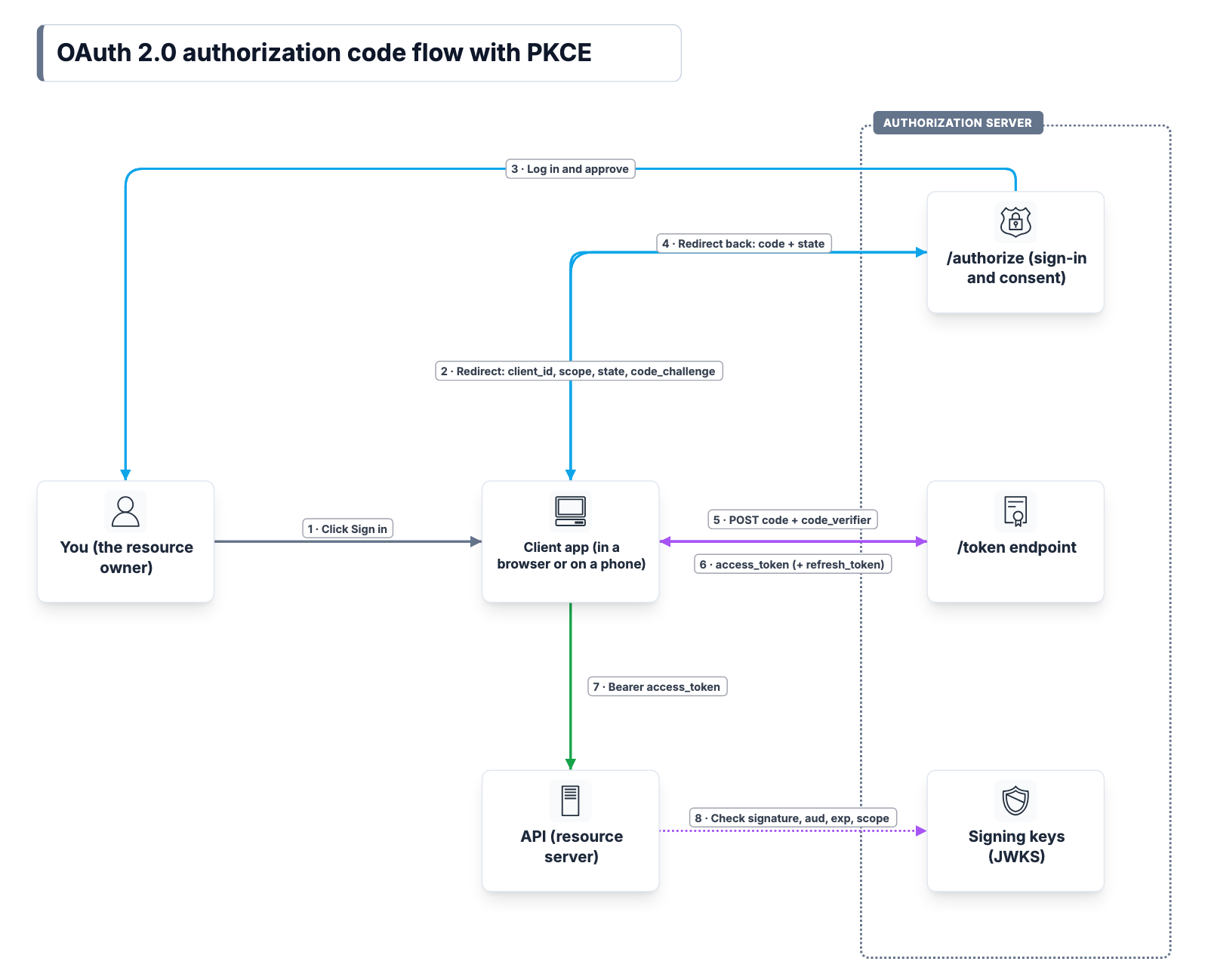 How OAuth 2.0 works: every flow, drawn outOAuth 2.0 lets an app act for you without seeing your password. Here is every flow drawn step by step: authorization code with PKCE, with and without a client secret, the retired implicit flow, client credentials and the device flow, and which one to use.
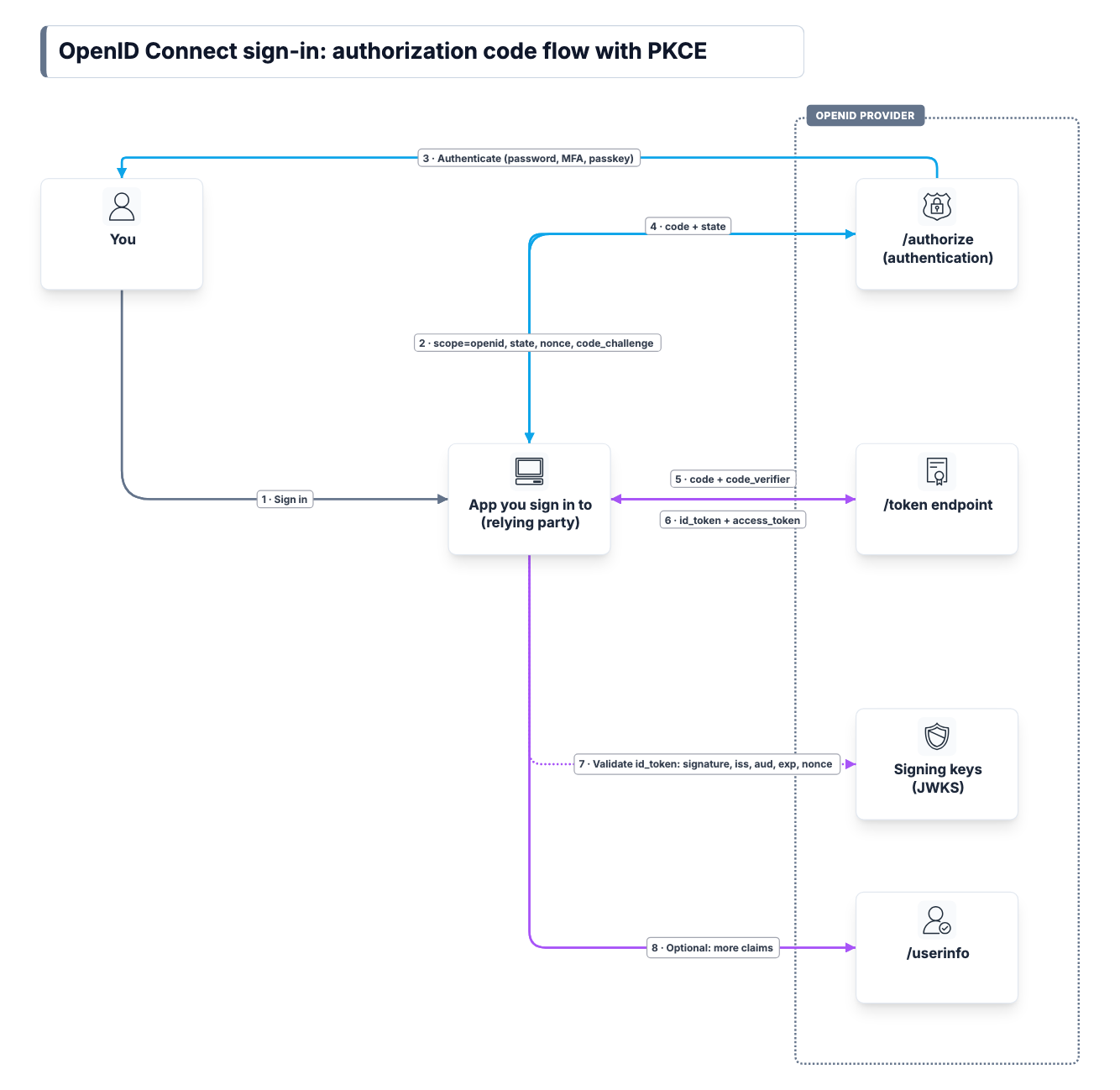 OpenID Connect explained: ID tokens, flows and when to use OIDCOpenID Connect adds identity to OAuth 2.0: a signed ID token that tells an app who signed in. The sign-in flow drawn step by step, what is inside an ID token and how to validate it, which token goes where, logout, and when to use OIDC, OAuth or SAML.How to make a cheat sheet in archhyA one-page visual cheat sheet for a course, a new starter or your team: open our working example, see how it is built, then make your own in minutes.How to prompt archhy: 10 Kubernetes diagram examplesWrite clearer architecture briefs in archhy, then try ten original Kubernetes prompts covering traffic, scaling, GitOps, storage and multi-cluster views.
How OAuth 2.0 works: every flow, drawn outOAuth 2.0 lets an app act for you without seeing your password. Here is every flow drawn step by step: authorization code with PKCE, with and without a client secret, the retired implicit flow, client credentials and the device flow, and which one to use.OpenID Connect explained: ID tokens, flows and when to use OIDCOpenID Connect adds identity to OAuth 2.0: a signed ID token that tells an app who signed in. The sign-in flow drawn step by step, what is inside an ID token and how to validate it, which token goes where, logout, and when to use OIDC, OAuth or SAML.How to make a cheat sheet in archhyA one-page visual cheat sheet for a course, a new starter or your team: open our working example, see how it is built, then make your own in minutes.How to prompt archhy: 10 Kubernetes diagram examplesWrite clearer architecture briefs in archhy, then try ten original Kubernetes prompts covering traffic, scaling, GitOps, storage and multi-cluster views.